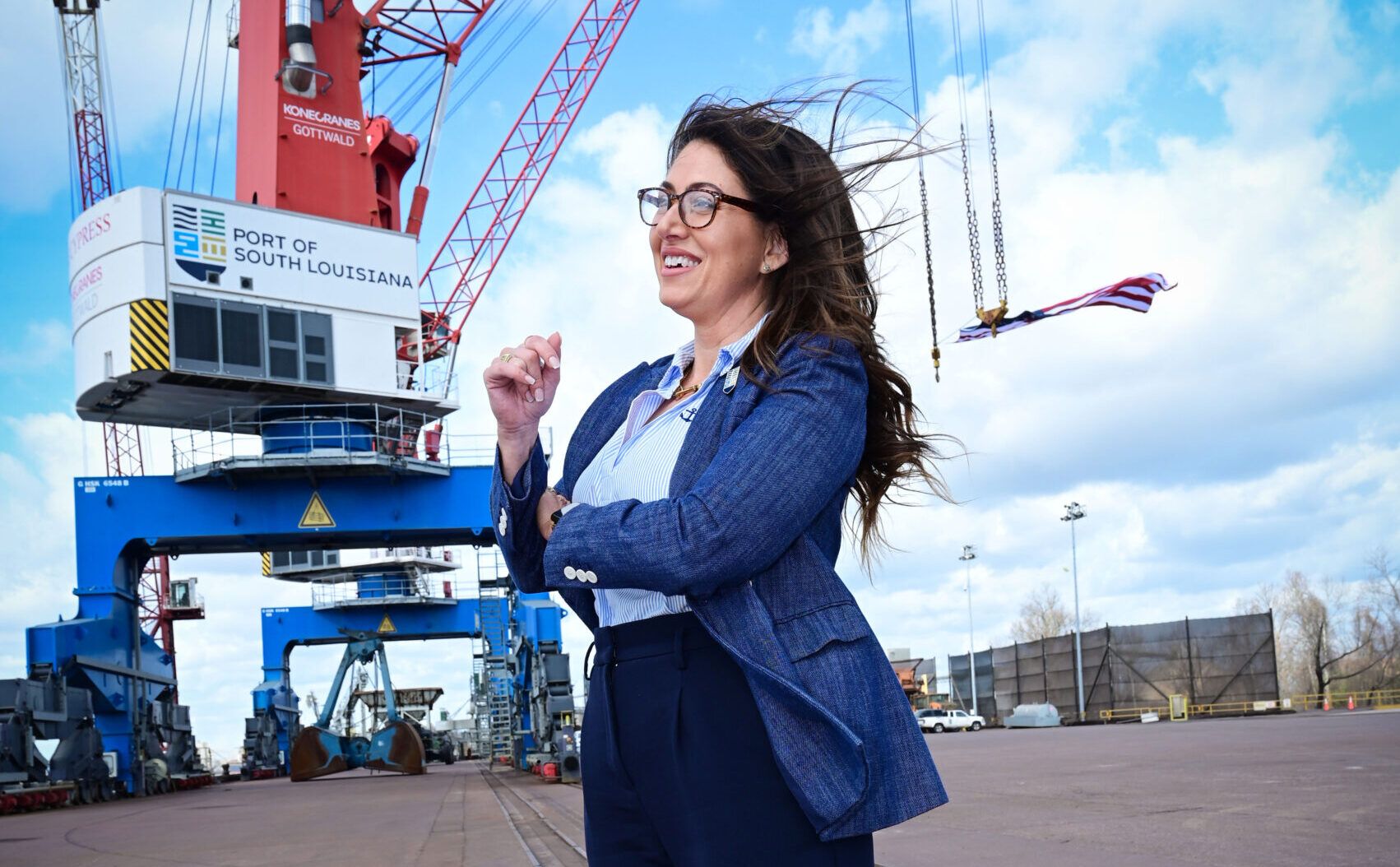
Over the last five years or so, Julia Fisher-Cormier’s roles in local and state government have come in quick succession. She’s been in high demand, having gained a reputation for getting things done quickly and with little fanfare.
She’d already cut her teeth in public service on the St. Charles Parish Council when first appointed to the Port of South Louisiana as chief commercial officer in 2020.
While there, Fisher-Cormier helped drive more than $1 billion in new foreign investment, retain and expand key tenants, revitalize the Globalplex Intermodal Facility and reverse a decade-long decline in tonnage with consecutive years of growth.
Then in 2024, Gov. Jeff Landry tapped her to lead the Office of Multimodal Commerce, where as commissioner she oversaw funding and policy for Louisiana’s ports, waterways, rail, aviation and trucking systems.
She also managed more than $120 million in port and aviation infrastructure funding, advanced state-supported passenger rail initiatives and secured a federal planning grant benefiting Louisiana’s 32 active ports. “One of the governor’s priorities was that the ports collaborate more,” she adds. “He was hoping for someone to help push that initiative forward, so that was my task.”
The next year, DOTD Secretary Glenn Ledet made her another offer: Become deputy secretary of the department and lead his newly established Office of Transformation, where she would oversee initiatives to streamline operations, reduce regulatory barriers, modernize agency practices and improve fiscal efficiency.
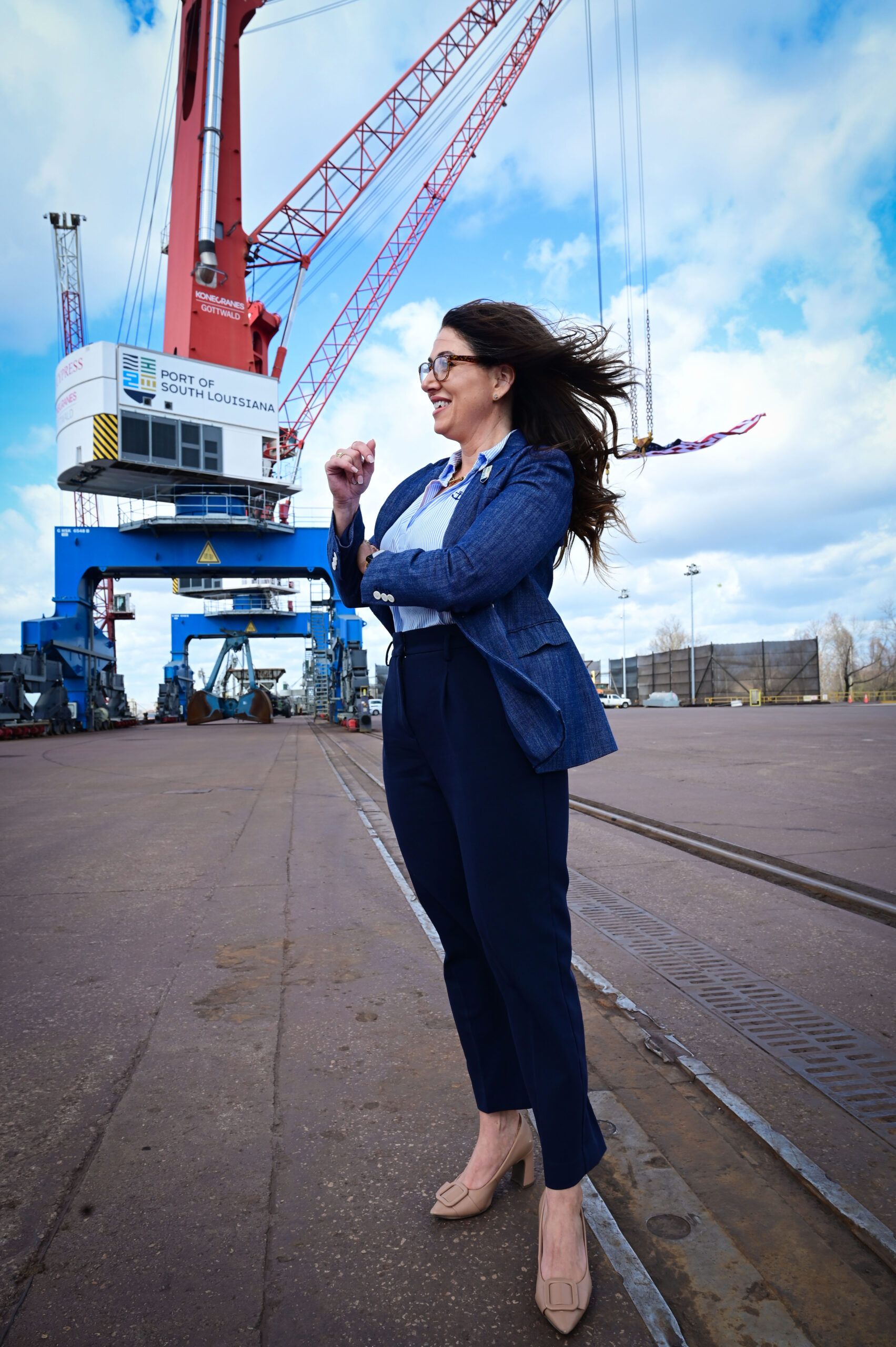
Ultimately, though, returning to the Port of South Louisiana as its new executive director in December felt a lot like coming home for Fisher-Cormier. She’d grown up a mere stone’s throw from the Monsanto plant in Luling (now Bayer), and she still lives in St. Charles Parish today. 10/12 Industry Report recently interviewed her about the port’s recent successes and her goals.
What has been the toughest career challenge over the last few years?
About two weeks into my position at the Office of Multimodal Commerce, a bill in the legislature created the Louisiana Ports and Waterways Investment Commission. Several legislators had tried to bring about more collaboration among the ports in the past, but until that moment there had been no strategic plan.
As a result, all 41 ports in the state were coming at me from different directions with different thoughts and opinions. Our staff was also very divided due to years and years of miscommunication and misunderstandings, and in addition to that, the legislators all had their opinions about what we should do.
It was kind of messy, but we worked through it. We had a lot of conversations with the various stakeholders, and we worked to find a common ground where everyone felt comfortable. It felt like they threw me into the sharks almost on day one, but we got it done.
The passage of that bill was a momentous occasion for all of Louisiana. It gave us a directive to create a strategic plan for the ports, which we had never had in Louisiana. We just gathered together, talked about how we could make this make sense and broke it down into smaller bites.
What are you most excited about in your new role at the port?
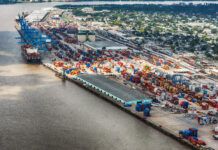
The Port of South Louisiana is rooted in agriculture. We have seven of the nine grain terminals in the state of Louisiana in our jurisdiction, so we’re feeding the world. Of course, another big piece of our pie is in petrochemicals and energy, and we want to continue to foster that development. We have a lot of heavy hitters in our stakeholder portfolio up and down this river, and we’re here to help expand and grow those and help them pivot if needed.
We know that energy has taken a couple of different winding turns and we want to be available to help. Are there funding efforts you need? Is there some sort of government entity that you’re having trouble with? Can we help you develop something new or different or to expand?
We also have the opportunity to bring in new business because of our thousands of acres of riverfront property available for development. Some, in fact, are close to fruition so we’ll be able to go public with that soon and talk about what we’re doing.
Of course, we have to make sure that we have the right infrastructure for development. We’ve got to make sure we have our basics in place and that our road connections are sufficient.
What, specifically, is the port doing to improve its infrastructure?
Over the past six or seven years, we’ve been diligently whittling away at several transportation, infrastructure and drainage projects, not only around our port facility in Reserve, but up and down the tri-parish region (St. James, St. John and St. Charles).
In St. James Parish, the widening of Highway 3127 will be critical to our future functionality. It’s a two-lane highway now, but it’s heavily utilized by our truck traffic. We’re pushing for that, not only from an ease-of-use standpoint, but from a safety perspective.
In St. John Parish, there is an I-10 interstate connector that would connect directly to our Globalplex facility. That helps from a safety perspective, because we’ll be able to get our trucks out of residential areas. Then in St. Charles, there’s a Highway 90/I-310 project. We have a lot of truck traffic that comes through Highway 90 from different ports and this would alleviate that traffic. Ultimately, we’re getting behind all three parishes and trying to help in any way we can to positively impact these areas.
What differentiates the Port of South Louisiana from others in the state?
We own an executive airport about two miles north of our Reserve headquarters. It makes us unique among Louisiana’s ports because we have all four modes of transportation (ship, truck, rail and aviation) available to us.
It’s currently just general aviation, but we’re expanding the runway by about 1,500 feet to accept larger planes and pushing for additional expansions to appeal to the cargo side of aviation. It would be a pretty large undertaking because we’d have to add an additional runway. We may be moving on that in the next couple of years.
It ultimately could be used by shipping companies such as FedEx. We’ve had some interest in the past, so I think it’s time to rejuvenate that conversation.
Are there any challenges to achieving your goals?
The challenge is keeping up with the numbers of opportunities that are headed our way. I feel very strongly that we have the resources, staff and ability to keep up with the pace that LED and the state have set.
A pretty large share of it is right under our noses and there’s more to come. For example, when Hyundai came to town, the Port of Greater Baton Rouge made it very clear that they could handle the landside development but didn’t necessarily have the resources to handle the dockside development.
Both ports came to a very amicable agreement that we were going to split the project up. The Port of South Louisiana rose to the challenge, and I just feel honored and privileged to be part of the team that did that. DOTD, LED and DEQ were all at the table, as well as the two ports, and the various experts and partners. It was just the epitome of collaboration, and it seems to be paying off.
Looking ahead, we have 108 miles of river frontage that we can potentially develop and there’s a lot of room to grow. I really see that it’s going to be pivotal for us to continue to work with this whole-of-government approach. For many years, the port was very siloed and some of the other ports were as well.
I think if we continue to work lockstep with government agencies, we are going to be set for success.