

Shifting market dynamics, unresolved systemic issues and funding backlogs have forced the state’s five lower Mississippi River ports to abandon old paradigms and instead join forces to create a more unified strategy.
It represents a seismic shift for the ports, as they’ve historically behaved more like friendly competitors than collaborators.
Nevertheless, local and state leaders were becoming increasingly concerned that the old way of doing things might be costing the state business.
During the 2023 and 2024 sessions, state legislators passed Senate Bill 214 to create the Office of Port Development within Louisiana Economic Development, and House Bill 971 to create the Louisiana Ports and Waterways Investment Commission, which would oversee the development of a unilateral marketing strategy.
“It wasn’t hard to read between the lines,” says Joe Toomy, former chairman of the Port of New Orleans and an early proponent of port collaboration. “The Legislature wanted the ports working together.”
In 2025 under Toomy’s direction, they began collaboratively developing a marketing strategy aimed at expanding international trade, driving economic growth and attracting new business.
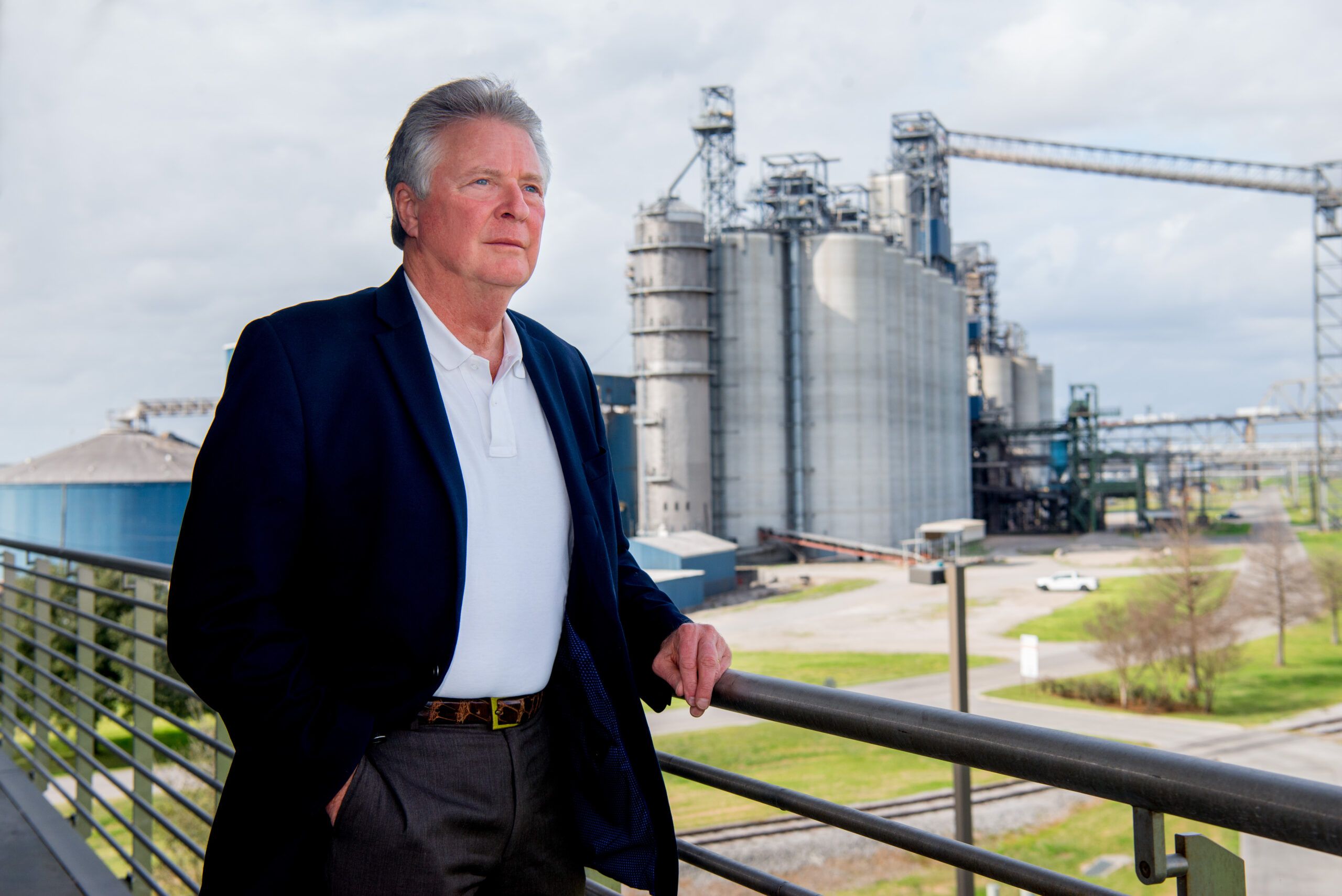
Finding a common voice, however, was a challenge in the beginning. “We’re a lot like five restaurants serving different types of food 60 miles apart,” says Jay Hardman, executive director of the Port of Greater Baton Rouge. “We had to figure out how to market all five of them effectively.”
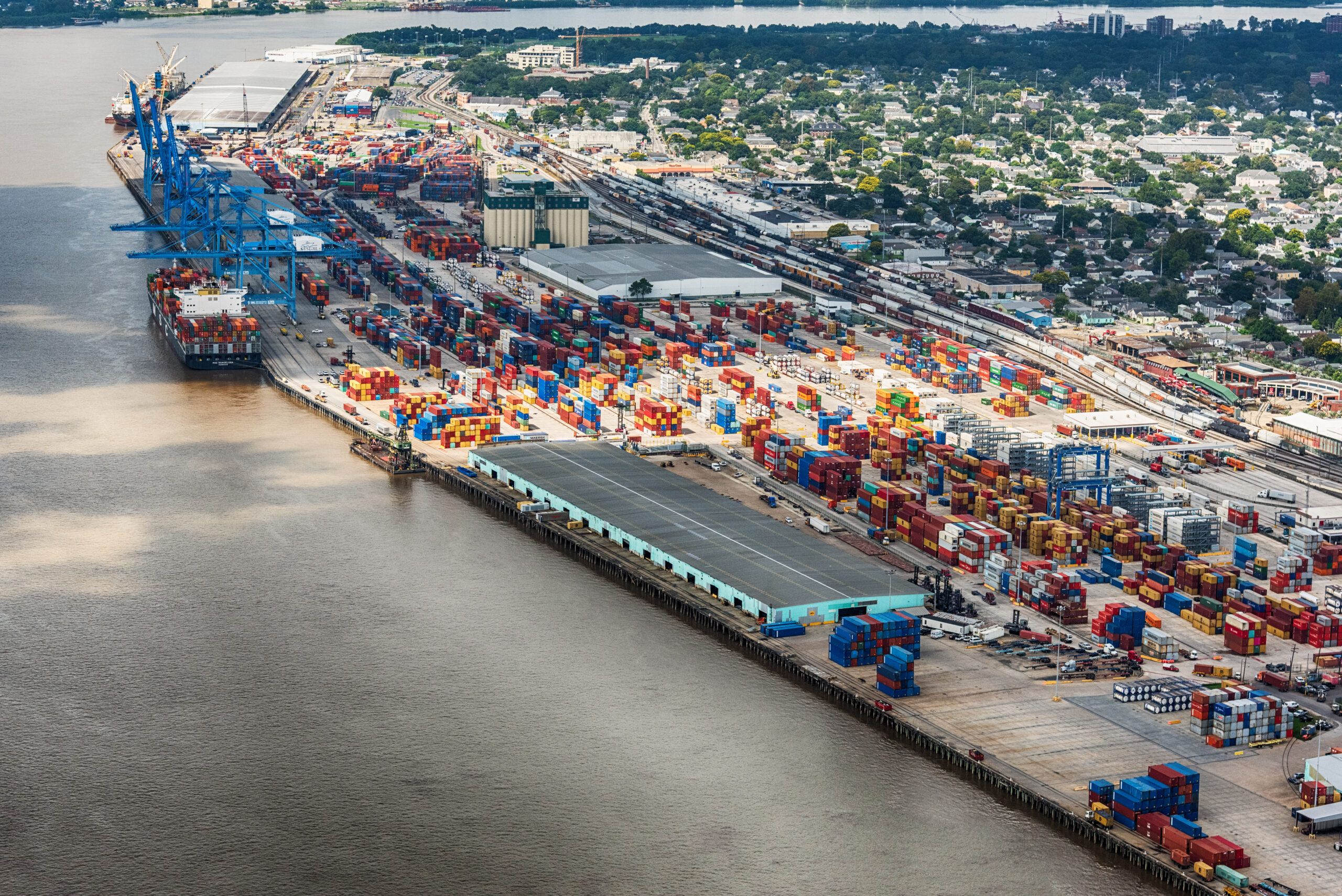
To assist them in the effort, the group authorized port and maritime economic consulting firm Martin Associates of Lancaster, Pennsylvania to conduct a cargo analysis of products and cargo movements in and out of the state, with all five ports—Port of Greater Baton Rouge, Port of New Orleans, Port of South Louisiana, St. Bernard Port and Louisiana Gateway Port—contributing to the cost.

The analysis will help identify new cargo opportunities and develop scenarios to capture potential cargo.
In turn, Polaris Analytics & Consulting was enlisted to help develop a new, unified marketing strategy.
“Ultimately, we’re creating a better brand and streamlined messaging for the international community,” Toomy says. “That sends a loud message to them and gives (Louisiana Economic Development) a stronger message as they put together economic development initiatives. We hope to create a more consistent, unified voice for the lower Mississippi River that will attract future investments and additional jobs.”
The final rollout of the plan is planned this spring.
There is evidence that their efforts might already be bearing fruit. Recently, the Port of Greater Baton Rouge allowed the Port of South Louisiana, through a cooperative endeavor agreement, to work directly with Hyundai Steel in Ascension Parish (which falls within the Port of Greater Baton Rouge’s jurisdiction) in the development of their dock system. That’s significant, as the dock will facilitate the offloading of approximately 4 million tons per year of iron ore to support the $5.8 billion facility’s production of 3 million tons of ultra-low-carbon steel sheets.
A Lingering Problem
Port directors hope their recent collaborations will produce additional returns by strengthening their collective ability to attract funding. Port infrastructure investment is a stated priority at LED, but the Port Priority Fund consistently lags far behind demand.
“The backlog on projects approved and in line to be funded is $200 million, and the state’s Port Priority Fund gets just $39 million a year … so just do the math,” Hardman says. “If you get approval now, you’re probably five years out before you can see any funding.”
As a result, the state’s ports must often craft some rather complex funding arrangements just to make projects happen. Typically, they’ll use their own funds for reimbursement later or get loans and/or bonds for temporary financing. Tenants also commonly help finance projects that will directly benefit them.
Port NOLA, for example, is financing its new $1.8 billion Louisiana International Terminal mega-project in St. Bernard Parish through a public-private partnership between Port NOLA, the State of Louisiana, New Jersey-based Ports America and Geneva, Switzerland-based Mediterranean Shipping Co. (through its terminal development and investment arm Terminal Investment Limited).
The Louisiana Office of Multimodal Commerce under the Louisiana Department of Transportation & Development is searching for ways to remedy the Port Priority Fund shortfall, most recently proposing the hiring of a full-time grant writer to assist the ports in pursuing and winning federal grants.
The agency is currently waiting for the proper “signoffs” from Louisiana State Civil Service, with hopes that it will be approved sometime later this year. That would be particularly helpful for the smaller ports that don’t have the staff to pursue the grants.
Finding additional state money, however, will be trickier. “A subcommittee of the Ports and Waterways Investments Commission is looking into that,” says Andrew Kilshaw, commissioner of the Office of Multimodal Commerce, “but whatever we pursue would have to be approved during a fiscal session of the legislature. Of course, we must do it in a way that’s a political reality. You can’t take any money from highways and bridges, since they’ve got a backlog of their own. And you can’t necessarily go find something on the river and just tax it … then you’ll run into issues with the federal government.”
Increasing the gas tax and dedicating some of the money to the ports could be one option, but nothing can be proposed until the next fiscal session of the Legislature.
Meanwhile, the state’s ports are moving forward with their own plans. The Port of Greater Baton Rouge, for example, is currently revamping its strategic plan for the first time in 15 years, and expects to have a draft of the plan—along with an economic impact study—completed by the third quarter of this year.
It’s also working with grain elevator operator Louis Dreyfus Co. to begin accepting crushed soybean meal by rail and barge.
“It will enable the rail delivery of about 1 million-plus tons per year of the product,” Hardman says. “That fits well with the elevator’s utilization cycle … we get a big surge of product during the harvest season for corn and soybeans, then we hit a lull. That’s just when the crushed soybeans (exported as animal feed) begin to move.”
The overall cost of the infrastructure improvements is nearly $30 million to upgrade conveyance equipment and rail dumps where the rail cars are emptied. The project is currently in the early design phase, with an anticipated completion in late 2027.
And at the Port of South Louisiana in Reserve, the development of infrastructure both on- and off-site tops its list of priorities.
“We’re making sure that we have the right infrastructure,” says port Executive Director Julia Fisher-Cormier. “We’ve got to make sure we have our basics in place and that our road connections are sufficient.”
Over the last six to seven years, that port has been advocating for several transportation, infrastructure and drainage projects. Its large footprint gives it significant potential for growth—at present, some 108 miles of river frontage could be developed—and infrastructure will be a key component for making that happen.
“In St. James Parish, the widening of Highway 3127 will be critical to our future functionality,” she says. “It’s a two-lane highway now, but it’s heavily utilized by our truck traffic. We’re pushing for that, not only from an ease-of-use standpoint, but from a safety perspective.”
Additionally, an I-10 interstate connector in St. John Parish would connect directly to the port’s Globalplex facility, and in St. Charles Parish improvements to Highway 90/I-310 are underway.
“We have a lot of truck traffic that comes through Highway 90 from different ports, and this would alleviate that traffic,” Fisher-Cormier adds. “Ultimately, we’re getting behind all three parishes and trying to help in any way we can to positively impact these areas.”
Port of Lake Charles Rides A Big Wave
More state funding always helps, but the Lake Charles Harbor & Terminal District currently finds itself benefiting from a proliferation of LNG “throughput” revenue—a fee charged to LNG based for their exports—lease revenue and hurricane-related FEMA funding.
The port has some 5,500 acres in its jurisdiction, the majority of which is used by industry, LNG, casinos and port terminals. And the ship tonnage going down the Calcasieu Ship Channel—at 64 million tons—ranks it at No. 10 among largest ports in the U.S.
“About 18 million of that is just our tenants,” says Ricky Self, executive director of the Lake Charles Harmor & Terminal District.
In fact, the port has broken new records in tonnage every year since 2022. “Our projected tonnage this year and revenues will surpass 2025, which was a previous record,” he says. At present, Cameron LNG (one of its tenants) exports a minimum of 16 ships per month, but its monthly average is 18.
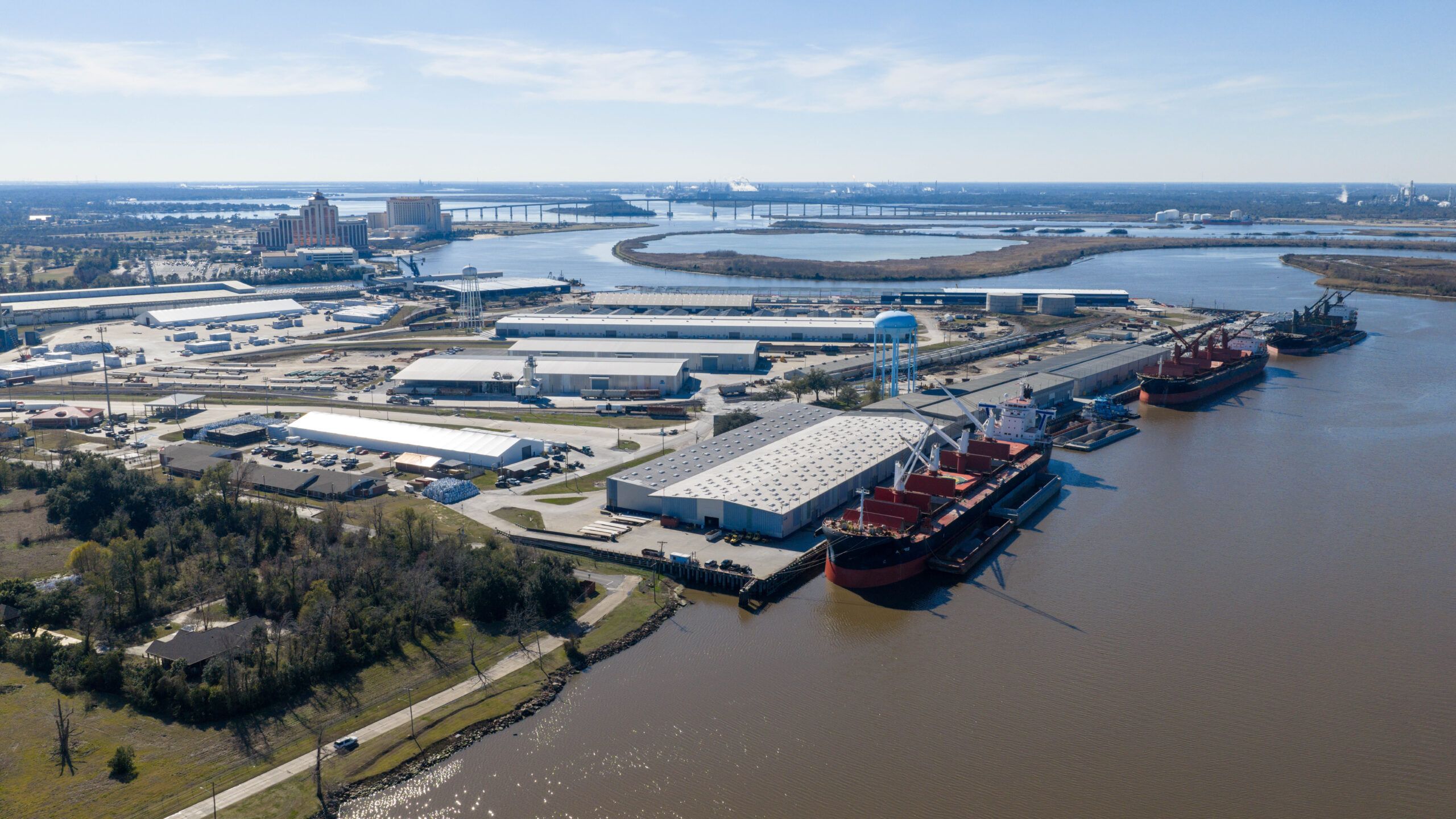
In turn, the port is using its increasing revenue stream to repair assets on site, much of which was damaged by the previous hurricanes.
“Looking at both new and existing projects over 2026 to 2030, we expect to spend some $437 million,” Self says. “That’s a lot for us. To accomplish that, we’re utilizing a significant amount of our cash reserves, as well as borrowing about $50 million. Other funds have come from FEMA, because of hurricanes Laura and Delta, capital outlay funding and the Ports Priority Program.”
Two projects currently in the beginning stages of study are included in the Water Resources Development Act: one to deepen the ship channel to 45 feet; the other to extend the eastern jetty.
Timelines and costs for the projects have yet to be determined.
“Our entire channel will ultimately go down to 45 feet,” Self says. “That will allow even deeper draft vessels.”
While the LNG industry can easily operate with the current draft, the additional depth would give them more under-keel clearance and eliminate any navigational concerns.
That will be critical as the LNG market grows. “Louisiana LNG just announced a $17.5 billion project on port property,” the port executive adds. “That market will continue to grow, and we’ll be ready for them.”