

Much has been made about the impending industrial boom and the corresponding strains on Louisiana’s skilled labor workforce, but there is an equally pressing need for professionals to lead them.
It’s not a new problem.
Enrollment numbers have been increasing in the state’s industry-related engineering and management programs for years, growing in tandem with the sector’s expanding footprint.
For example, what used to be a relatively small cohort of construction management graduates at LSU has grown exponentially to some 2,000 students, prompting the university to approve its first-ever School of Construction in December.
The school will reside within a new $107 million, 148,000-square-foot Construction & Advanced Manufacturing Building, scheduled to break ground in 2027.
And in Lafayette, the University of Louisiana at Lafayette has begun funneling additional money into its College of Engineering. By year’s end, they expect to complete a new $55 million, 70,000-square-foot Engineering Student-Centered Collaborative Building, designed to modernize engineering education and foster interdisciplinary collaboration.
Companies are also filling the void. In 2023, MMR Group in Baton Rouge launched MMR University, or MMR-U—an internal learning and development program tailored to augment higher education and professional skillsets over a 2.5-year period.
Complemented by new classroom facilities at MMR’s Baton Rouge headquarters, MMR-U combines in-person instruction with hands-on lessons, virtual learning opportunities, field experience and personal mentorship from MMR professionals.
Tulane’s distinct Experiential Approach

Meanwhile, Tulane University is promoting its own distinctly unique program: a one-year, specialized STEM-designated graduate program housed at the Freeman School of Business that prepares students for leadership roles in both traditional and renewable energy sectors.
Launched in 2011, the Master of Management in Energy, or MME, focuses heavily on the “business of energy,” emphasizing financial modeling, risk management and trading.
“The whole point of the program is to focus on the business of energy,” says Eric Smith, a teacher in the MME program and associate director of the Tulane Energy Institute. “While this does require teaching students about the economic tools used to screen projects, we also put a lot of effort into educating students about the role played by policy in setting the stage for successful endeavors.”
Perhaps most unusual is the program’s degree of cross-collaboration with the university’s science, engineering and law schools.
“We also interface heavily with local energy companies ranging from LLOG to Sempra and Entergy, all of which receive regular visits from our students,” Smith adds. “We interface with smaller companies as well, on consulting projects designed to assist local companies in making smart energy decisions.”
Another differentiator is its connection to Tulane’s Freeman Business School.
As a result, the curriculum places a strong emphasis on energy and finance.
“We’re training students to think about energy from a business perspective and to manage the businesses of energy,” says Pierre Conner, executive director of the Tulane Energy Institute. “It’s intended to get students to understand the fundamentals of the energy business.”
A relatively small cohort of 30 enroll in the program annually, comprised of students with undergraduate degrees in finance and business, those returning from the workforce to transition into the energy space, or a variety of other backgrounds.
The experiential program covers the entire scope of “all things energy.” Rather than depending upon textbooks that might be outdated, students work on real-world, real-time projects.
“We work with industry and develop a capstone that includes projects that they are working on, and the students apply the culmination of their coursework to these industry projects,” Conner says. “In that way, we’re clearly modifying the program to the current markets and situation.”
Twice annually, he gets input from a 35-member Executive Advisory Council comprised of representatives from across the industrial landscape. “They give me feedback on what’s important,” he adds, “and that helps me identify where there’s a need.
“In the end, we place students in power jobs, trading jobs, and in upstream, midstream, downstream operations, as well as power, utilities and renewables.”
Alejandro Rengifo, a current MME student at Tulane and president of the newly created Tulane Energy Institute Club, left his job at a brokerage firm to enroll in the program in 2025.
The native of Colombia plans to return to the workforce as a commodity and energy trader after graduating in May, armed with an extensive amount of first-hand industry knowledge.
Rengifo is currently performing in-depth research on LNG projects across Louisiana, Texas, Mexico, South America and Africa. “We’ve been analyzing supply chains, infrastructure development and market entry opportunities,” Rengifo says.
As a student in the program, he has gained first-hand exposure to the energy sector by visiting several Louisiana energy facilities, including Waterford 3, Cameron LNG and Chalmette Refining.
“Through the MME program, there’s collaboration with a wide array of players in the industry,” he adds. “Much of my research has required that I work with project owners in Colombia. I’ve also had a chance to talk to some representatives of Mexico who wanted to do business with U.S. companies.”
After School Connection

Beyond school, there is a growing interest among young professionals in continuing their education and maintaining connections with other like-minded professionals.
In New Orleans, membership in the local chapter of Young Professionals in Energy, or YPE, has been steadily increasing, and the national chapter of the group has grown to more than 40,000 members.
In essence, YPE provides a platform for networking, career development and knowledge sharing to foster professional growth. Members of the New Orleans Chapter of YPE come from more than 200 diverse companies across the region, including Shell, Adams and Reese, Gasology, Tulane University, Worley, Laborde Marine, the Grow Louisiana Coalition and others.
“If you have something in your line of work that ties to the energy industry in south Louisiana, you can be a part of this group,” says Noah Taliancich, a sales executive at Crescent Power Systems in New Orleans. Taliancich, who holds a bachelor’s degree in management and an MME from Tulane, serves as a co-chair for the local chapter.
YPE hosts events throughout the year, typically in a continuing education format led by industrial or energy owners or university faculty.
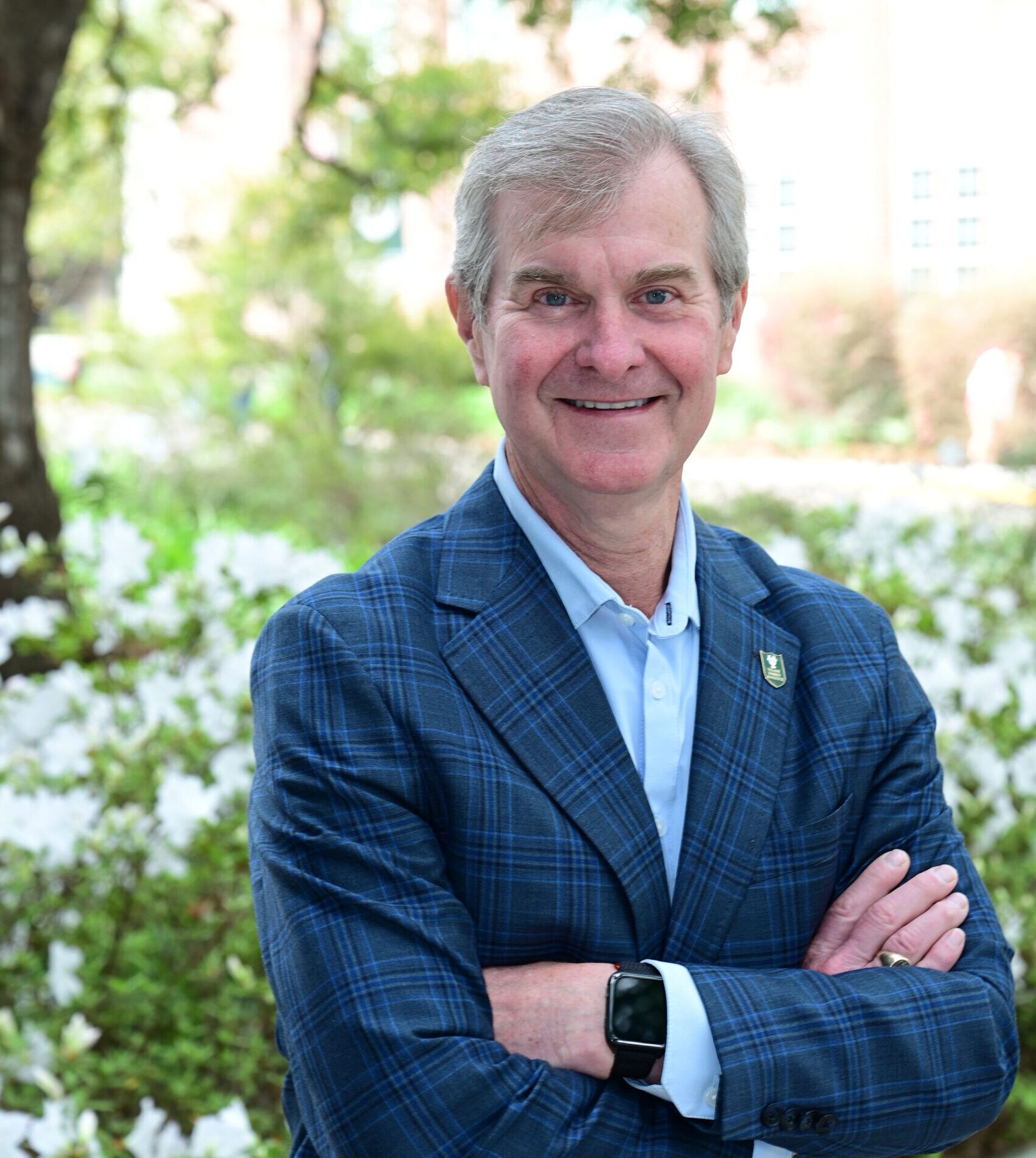
In one recent seminar, Tulane’s Conner and Smith led a discussion on geopolitical events and their impacts on the energy industry, and gave updates on renewable energy developments and new technologies.
“During one session, we had some folks from Entergy Louisiana talk about resource planning and what their internal resources look like for staffing,” Taliancich says. “They also discussed their plans for handling the demand for the electrical load that’s needed in the next five to 10 years.”
Of course, networking is another primary attraction for YPE members. When Taliancich initially joined the group and met current chapter President Kyle Kincaid, they discovered their companies were working on the same project. “It was just one of those ‘small world’ instances where our companies are already working together and we didn’t even know about it,” he says.
Ultimately, Taliancich hopes that YPE will expose young professionals to the number of opportunities in the state’s energy space.
“The biggest personal driver for me, as a Louisiana native, is to show young professionals that they can advance in the energy industry here, and that there is work in Louisiana,” he adds. “We just need to show them.”