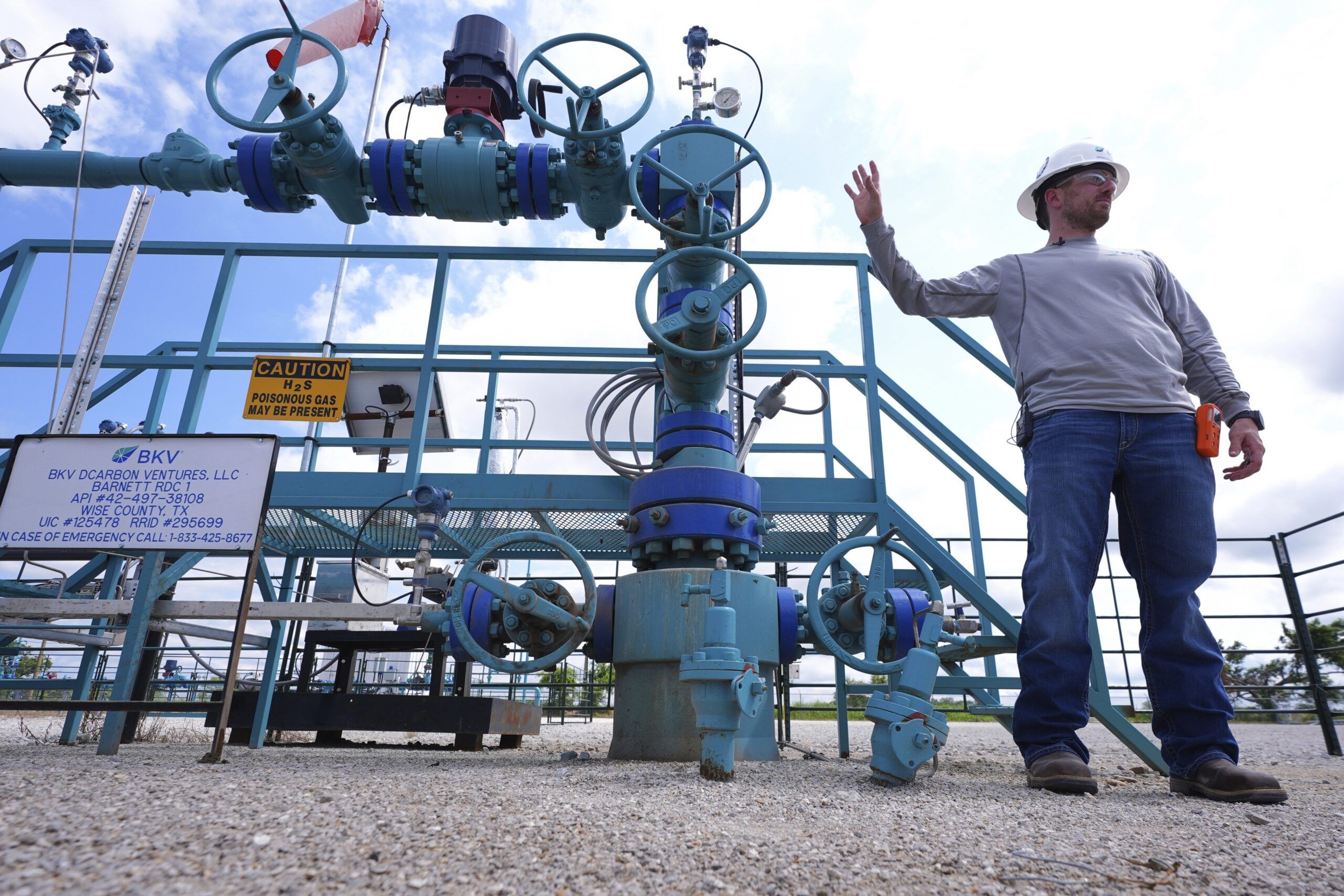
The back-to-back cancellations of two Louisiana mega projects last summer provided a stark warning that growing community resistance is having a very real impact on industrial investments with a carbon sequestration component.
Air Products announced in June that it was abandoning its $4.5 billion Louisiana Clean Energy project in Ascension Parish, and in the same month SunGas Renewables cancelled its $2.5 billion Beaver Lake Renewable Energy methanol facility near Alexandria. Both investments had endured protracted battles with area residents over their carbon capture plans.
Greg Upton, associate professor-research, LSU Energy Institute, says the regulatory uncertainty around Class VI well permits and growing community resistance likely played big roles in the decisions.
“These industrial companies need buyers that want a lower carbon product,” Upton says, “but if they don’t have a viable path for getting a Class VI permit it becomes harder to find customers willing to sign a contract due to the uncertainty.”
Upton expects to see a decline in the numbers of projects featuring a carbon capture component in his Gulf Coast Energy Outlook due out this fall—despite the Section 45Q federal tax credit remaining in effect until Jan. 1, 2033. The tax credit provides substantial, predictable and non-dilutive cash injections directly tied to the volume of carbon dioxide captured and stored.
Eric Smith, associate director of the Tulane Energy Institute, says much of the current problem is tied to “imminent domain” issues, granting the power of the government to take private property for public use.
“We have a group of people who don’t like it from an ideological standpoint and never will like it, but every country on Earth has an ability to compel people to allow right of ways for various infrastructure projects,” Smith says. “Unfortunately, we’re permitting the wells but not the pipelines to connect to the wells.”
That leaves Gov. Jeff Landry with an interesting dilemma as he attempts to balance future industrial development with the antipathy from voters opposed to eminent domain. In fact, Landry placed a moratorium on new Class VI well permit applications in October 2025, which remains in effect.
“I’m convinced that the sequestration technology is safe and proven, but citizens in certain parishes are not on board,” Smith says. “The political mess created by Air Products in Lake Maurepas is one example. A second is in Calcasieu Parish where the local citizens—who supported the LNG buildout—apparently haven’t made the connection between carbon reduction and the sale of LNG into the export market.”
In Calcasieu, Venture Global has promised to incorporate CCS into its LNG operations to offset greenhouse gas outputs, but local pushback has intensified.
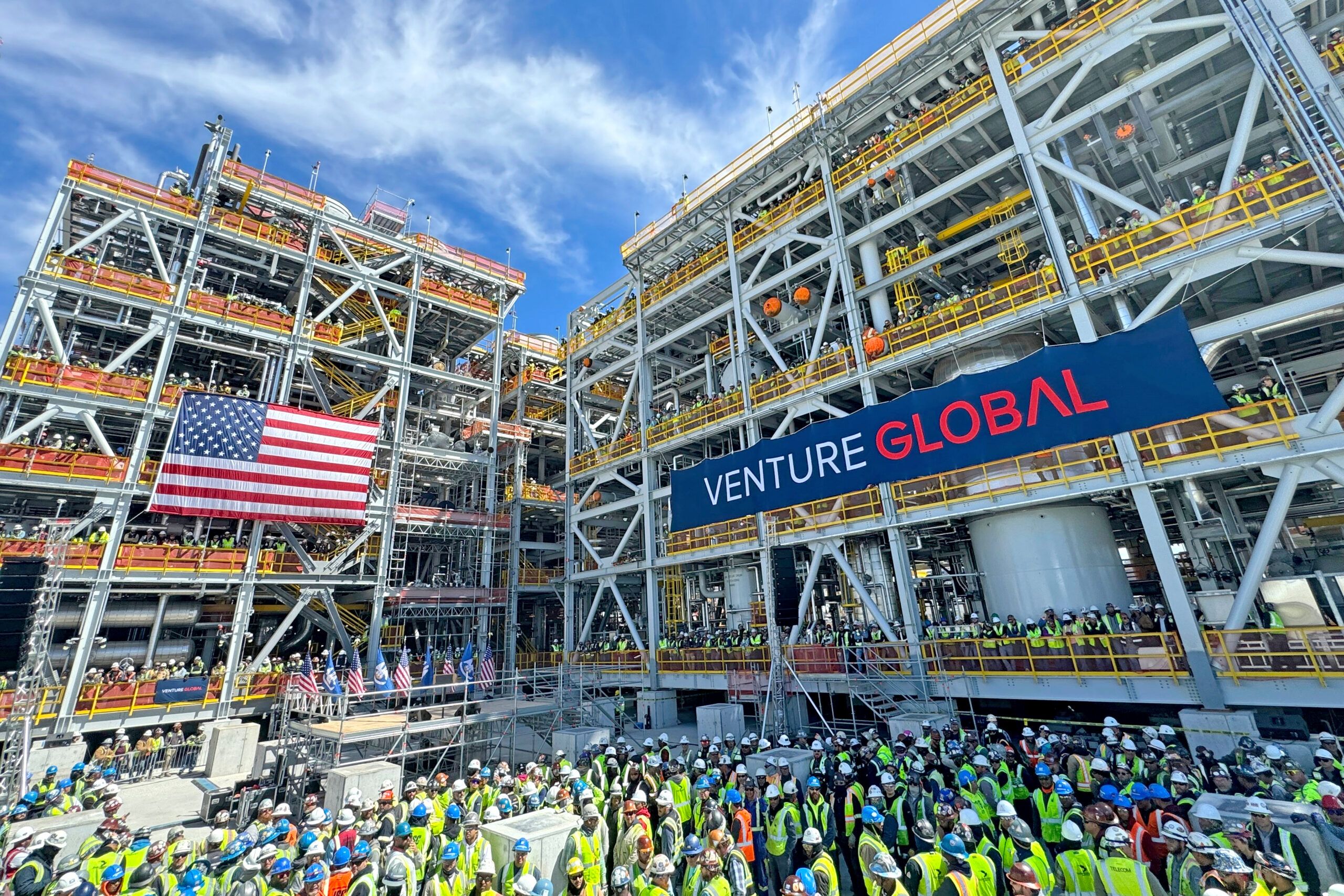
Meanwhile, the citizens of adjacent Cameron Parish have been largely supportive of CCS, which Smith credits to the strong relationship between Cameron LNG and parish residents. “There’s not a happier group of Louisiana citizens, financially, than the people who live or own land in Cameron Parish,” he adds. “They’re very aware of the importance of the LNG market.”
Much of the time, the problems lie in where companies plan to sequester the carbon and whether new pipelines will be necessary. Baton Rouge economist Loren Scott of Loren C. Scott & Associates says imminent domain issues are likely what killed the Beaver Lake Renewable Energy facility near Alexandria, since they’d planned to send the captured carbon to neighboring Vernon Parish by pipeline.
“The combination of people along the pipeline route objecting and the people in Vernon Parish objecting certainly helped kill the project,” Scott says. “My forecast for Alexandria would have been a lot more optimistic if they’d gotten both the Applied Digital data center (valued at $3.6 billion) and Beaver Lake. They would have been rocking and rolling.”
Other projects that have fallen by the wayside might be indirectly tied to the CCS issue, although economic variables are also at play. “What I’ve noticed is that any owner that planned to build a facility fueled by something other than fossil fuels is having the most difficulty making the numbers work,” he says. “They haven’t been able to make the math work or there’s been some change in the market such as a loss in demand.”
The cancellations reflect broader headwinds facing the renewables energy market. For example, companies around the world have delayed or canceled hydrogen projects amid escalating construction costs, weaker-than-expected demand and reduced federal support. Earlier this year, the Trump administration scaled back hydrogen incentives and canceled billions of dollars in planned investments tied to regional hydrogen hubs.
Looking ahead, Scott expects the debate over carbon capture to intensify unless state leaders take a more active role in supporting the technology. “My hope is that somewhere along the line, the governor is going to start picking up the baton and start coming out more in favor of CCS, approving more Class VI wells, which are necessary in order to inject this stuff into the ground,” Scott says.
Regarding environmental concerns over sequestration, “let’s not throw the baby out with the wash,” Tulane’s Smith says. “If we think there are environmental concerns and that there is a technical solution that would allow for affordable monitoring of these wells, why aren’t we working on those projects?
“But I don’t think the problem is a technical one; I think it’s political.”
Getting Creative
The success of future CCS investments might hinge on finding different avenues for transportation and sequestration.
In that vein, ExxonMobil is perhaps ahead of the game—the company is using the already established Denbury pipeline network it acquired in 2023 (purported to be the largest carbon pipeline system in the U.S.) to transport captured carbon from plants along the Gulf to underground storage sites or for enhanced oil recovery (EOR), whereby captured carbon is injected into depleted oil reservoirs to push crude toward production wells.
Meanwhile, CF Industries’ Blue Point One low-carbon ammonia facility near Donaldsonville, which broke ground in August, plans to sequester its carbon at the Pelican Sequestration Hub in Livingston Parish. The hub is owned by energy companies 1PointFive and Enbridge. “I believe the pipelines are already in place, so I don’t expect they will have any issues,” Scott says.
Additionally, the River Parish Sequestration Project near the RiverPlex MegaPark in Ascension plans to develop a $566 million CCS project once its Class VI well permit is approved. The facility will be run by Blue Sky Infrastructure.
And in Caldwell Parish, the $2-billion Strategic Biofuels Louisiana Green Fuels facility at the Port of Columbia is bypassing the need for pipelines entirely by sequestering its carbon on site. “That one is likely to move forward … and they already have a Class VI well permit to do that,” Scott says. “They also plan to build a powerplant to be fueled by wood waste, which will help the struggling timber industry in that part of the state.”
While the Air Products and Beaver Lake cancellations were undoubtedly impactful, Scott can think of no better time for them to have happened. “Under normal times that would have been a big loss the state, but it all gets lost in the billions of dollars in projects that are still coming down the pike,” he adds.
“If we’d had $1 billion in projects, statewide, in 2012 we would have considered that a good year. Now, we’ve got more than $100 billion in industrial investment and that was before SpaceX was announced at $100 billion. It’s like nothing I’ve ever seen before.”