
Louisiana has no shortage of energy expertise, industrial assets or promising research. The harder challenge has been connecting them—turning discoveries in the lab into commercial technologies, preparing workers for the jobs those technologies create and giving emerging companies a place to prove they can operate at industrial scale.
FUEL is positioning itself as the connective tissue.
Since securing a $160 million, 10-year award from the National Science Foundation in 2024, the LSU-based organization has evolved into far more than a source of early-stage capital. It is investing in workforce development, building specialized innovation infrastructure and creating pathways for Louisiana scientists and engineers to move their research from the university into the marketplace.
The broader reach is not a departure from FUEL’s original mission. It is the execution of a five-year strategic plan built around 12 goals and overseen by a governing board that includes industry representatives, investors, academic leaders and state officials.
“If I were a preacher, FUEL’s strategic implementation plan would be my Bible,” says Mike Mazzola, executive director of Future Use of Energy in Louisiana. “Our board maintains that plan to ensure we’re achieving our purpose.”
That purpose is ambitious: Capitalize on Louisiana’s existing industrial strengths and position the state as a leader in energy innovation, carbon management and industrial decarbonization.
For energy executives, the potential payoff extends beyond promising technology. FUEL is attempting to assemble the talent, facilities, capital and industry partnerships needed to move new ideas toward commercial deployment—and encourage more Louisiana researchers to build companies in the state.
“We want to take advantage of the resources we already have here,” Mazzola says. “Rather than chasing what the Joneses are doing someplace else, we’re focusing on what our core strengths are right here.”
Increasingly, that means connecting workforce training, research, startup support and industrial deployment as parts of a larger strategy.
FUEL is supporting technical education, helping researchers become entrepreneurs, giving startups access to specialized facilities and pairing emerging technologies with industrial sites capable of testing and deploying them.
Its latest initiatives offer a clearer picture of how those pieces are beginning to come together.
Building the workforce pipeline
One of the clearest examples is FUEL’s growing investment in the workers who will be needed to support Louisiana’s evolving energy sector.
In August, the organization announced a one-year, $800,000 investment in the Louisiana Community and Technical Colleges system to enhance and expand energy-related programs at community colleges across the state. It is the first installment in what is expected to become a multiyear commitment.
Through the partnership, FUEL and LCTC plan to build on established best practices and advance energy education and workforce development statewide.
The initiative follows earlier FUEL investments in the field, including a $100,000 FUEL Scale award to River Parishes Community College in 2025.
The latest funding is intended in part to strengthen programs serving nontraditional learners pursuing degrees or certifications relevant to the energy industry.
“Louisiana’s energy sector supports a wide range of middle-skill jobs and career paths that create wealth-building opportunities for Louisiana residents,” Lacy McManus, FUEL’s director of workforce development, said in a press release. “These in-demand roles, however, require advanced technical training and programs aligned with industry needs.”
The innovation infrastructure
A trained workforce is only one piece of the equation.
Emerging energy companies also need specialized facilities where they can develop, test and scale capital-intensive technologies in real-world environments.
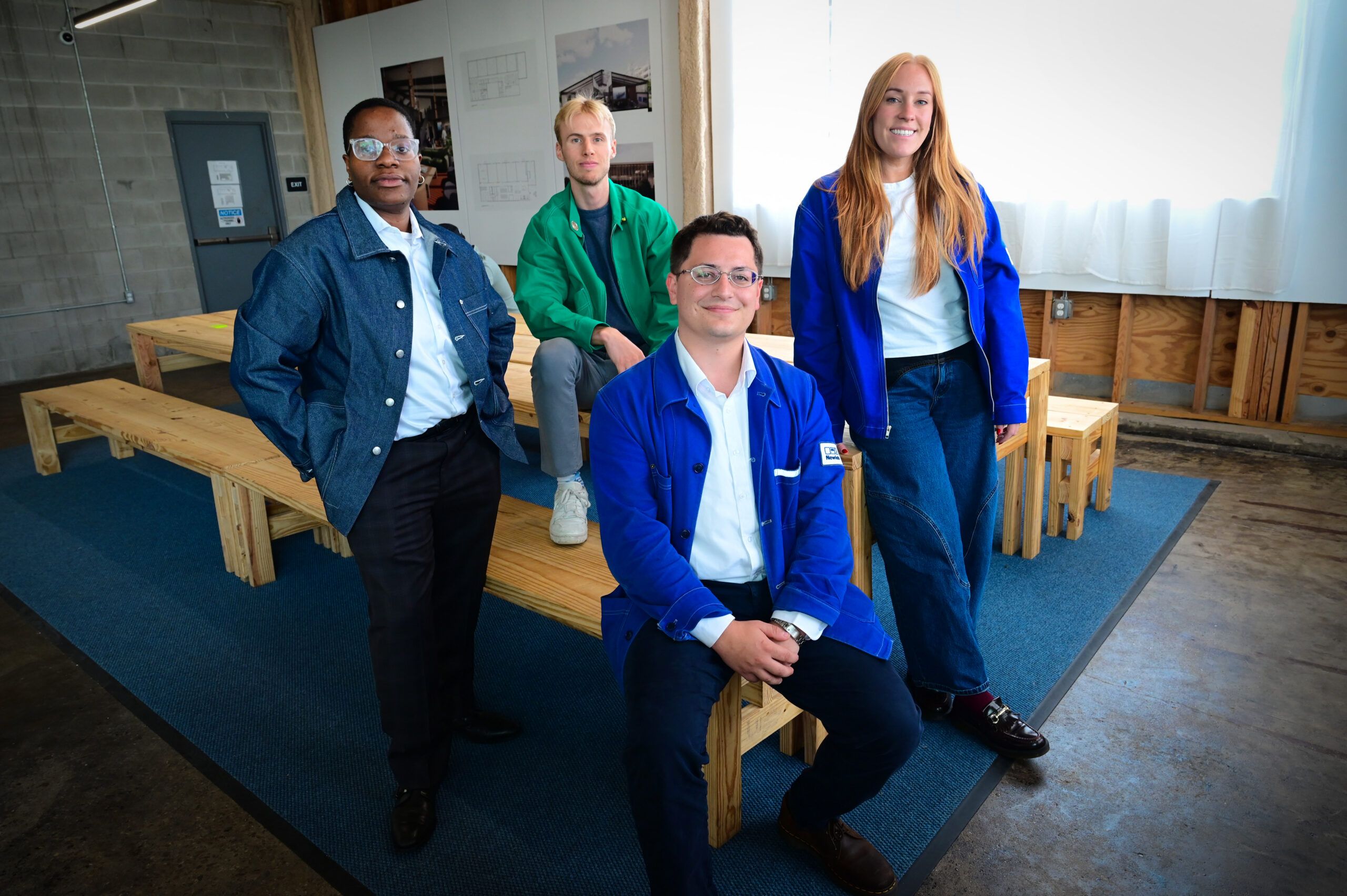
FUEL moved to address that need in 2025 by investing in Newlab, a New Orleans innovation hub designed to help startups scale technologies focused on clean energy, carbon management and maritime innovation.
Newlab currently operates from temporary facilities in the Garden District. In March 2027, it is expected to move into a $50 million permanent facility at the Bywater redevelopment site, funded by the city of New Orleans, Louisiana Economic Development, Greater New Orleans Inc. and FUEL.
“FUEL is more than a funding source for us,” says Cameron Poole, Newlab New Orleans’ director of strategy. “We’re meeting with them almost every week, since a lot of their programs sync with our needs.”
The Newlab facilities are intended to provide a platform for technologies that could potentially transform some of Louisiana’s key industries. That makes the hub’s work a natural fit with FUEL’s broader strategy.
“FUEL’s North Star is carbon management and utilization, and that’s a huge focus of ours,” Poole says. “We’re aligning these programs so our startups can meaningfully leverage their initiatives.”
Much of Newlab’s work so far has centered on carbon management and energy production. The organization is building the specialized laboratory infrastructure startups need to prototype, construct and deploy their technologies in real-world environments.
Some of those connections are already taking shape. Shell and Japan-based JERA Co. Inc. are each using Newlab to landscape, validate and deploy emerging technologies.
“A lot of these technologies are very capital intensive, and we have a global network of investors and regional partners that can help,” Poole says. “What’s exciting is that we’re starting to see some of the startups already receive startup equity.”
FUEL is also creating a pathway for Louisiana scientists and engineers to develop and commercialize their research without leaving the state.
In May, the organization announced the Louisiana Science Innovator BRIDGE program, a joint initiative with Washington, D.C.-based Activate. The program aims to build a connected hard-tech and carbon-tech innovation workforce across Louisiana by providing the entrepreneurial infrastructure needed to turn research into new energy companies.
“It’s a super important component to our plan,” Mazzola says. “We’ll be encouraging many of our graduates to use their research to start a company here rather than elsewhere.”
FUEL is currently searching for a coordinator to run the program.
Creating an ecosystem of startups
The growing network of early-stage companies in FUEL’s orbit offers one of the most tangible measures of the strategy’s progress. Its startup ecosystem currently includes 14 companies.
In May, FUEL announced a second round of proof-of-concept funding, awarding a combined $1.2 million to seven early-stage companies. The funding is intended to help close the gap between early research and market entry.
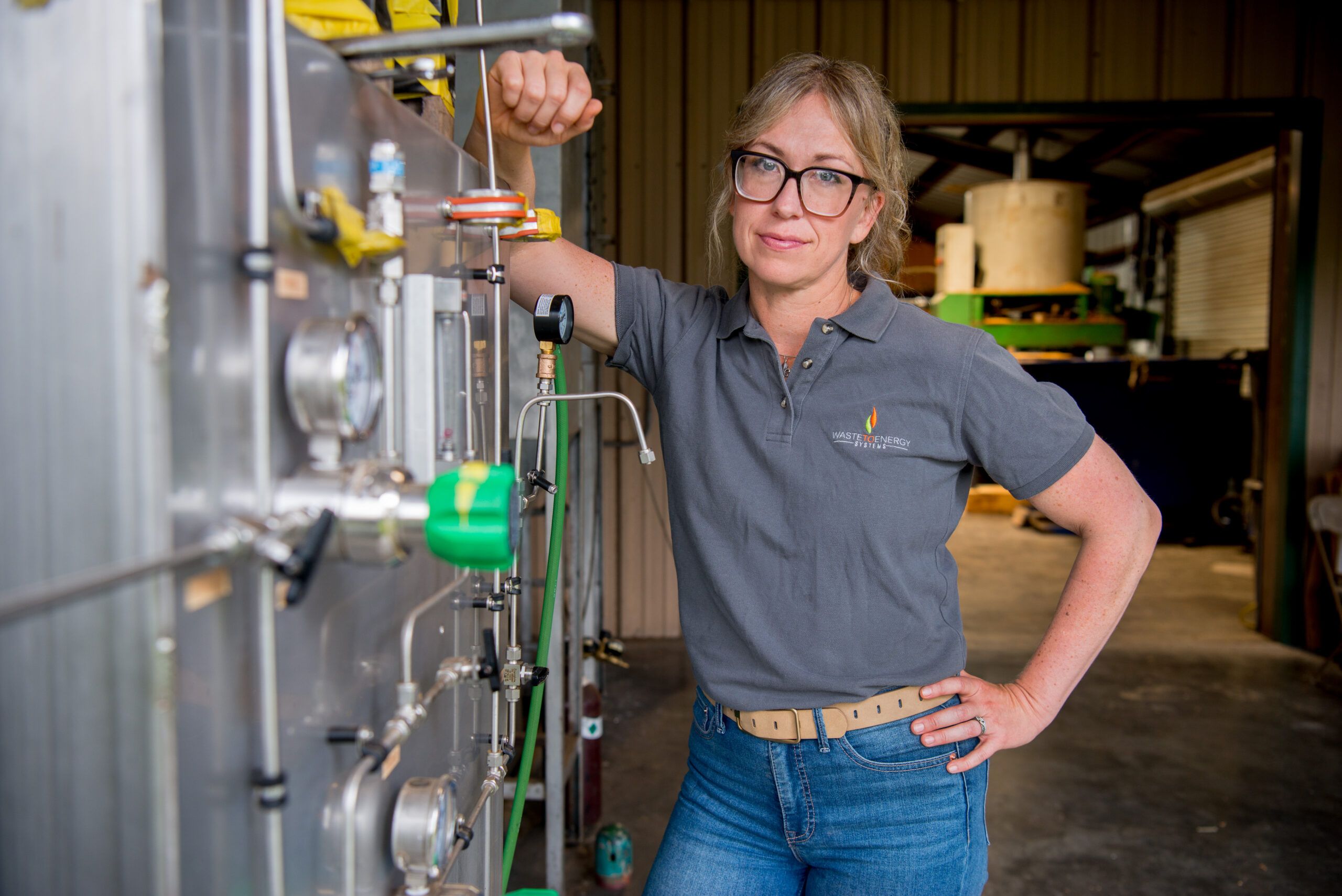
One recipient, Tickfaw-based Waste to Energy Systems, is using its $200,000 award to move a gasification technology beyond the research-and-development phase. The system converts biomass into heat and electricity using a single piece of equipment.
But the funding also comes with an additional objective: FUEL wants Waste to Energy to determine whether the technology can produce hydrogen from the resulting gas.
“They want us to see if we can strip hydrogen out of the gas,” says Alissa Mahoney, the company’s chief operating officer. “It’s a better option than pulling hydrogen out of air or water, and we’re not using any natural resources in the process.”
The idea originated more than a decade ago with Mahoney’s father, Albany Woodworks founder Richard Woods.His sawmill reclaims heart pine and cypress and remills the wood into a variety of products.
The operation also generated a recurring challenge: a pile of sawdust.
“We’d always had a pile of sawdust sitting around and he has always been a bit of an environmentalist, so he started thinking of ways to put it to use,” Mahoney says.
Woods built a small gasification system in 2010 and gradually increased its size over the years that followed. Mahoney now hopes the FUEL award will help move the technology out of R&D and into a real-world application.
Waste to Energy has purchased a syngas analyzer, enabling the company to optimize its processes. Initial testing indicates that the system has successfully stripped hydrogen from the gas, and the company is seeking third-party validation of the results.
“With any new technology, convincing people to change the way they think about things is the biggest challenge,” Mahoney says. “This funding has significantly helped us go down that path. We hope to walk away from this with a third-party validated sales package that gives customers reliable data.”
FUEL’s support has extended beyond the financial award. It also connected Waste to Energy with StartUP Northshore in Covington and Scale Up! Louisiana for assistance with business development.
“We realized there was some room for improvement on the business side, and that we needed to shift our thinking and how we approached things,” Mahoney says.
Connecting innovation with industry
Perhaps the clearest illustration of FUEL’s connective role can be found at Cornerstone Energy Park in Waggaman, where an established industrial site could provide emerging technologies with the assets and feedstocks needed to move toward commercialization.
Jacques Byrd, vice president of site development at Cornerstone Chemical Co., which owns the park, says FUEL’s emphasis on carbon utilization aligns with Cornerstone’s long-term vision. The company wants the park to become an integrated, sustainable industrial hub that advances green energy innovation while strengthening domestic manufacturing supply chains.
The 800-acre industrial park has 180 available acres, excess utility capacity and access to rail and water.
“We plug in nicely with their model,” Byrd says. “Our ammonia plant provides an abundant source of pure CO2,” he says, “and we already utilize some of it in our urea and melamine manufacturing.”
“FUEL was happy to see carbon utilization already happening in their backyard.”
FUEL is now connecting Cornerstone with developers of late-stage technologies seeking to commercialize their work and needing access to carbon or other industrial feedstocks.
“We’re also the primary recipients of FUEL funding for a study into utilizing carbon to make syngas,” Byrd says. “We’ll disburse a portion of that funding to a technology provider to build out a syngas facility at our plant, and from there we could go in any number of directions.”
It is the kind of connection FUEL’s strategy is designed to create: pairing an emerging technology with funding, an industrial partner, essential feedstocks and a site where it can be put to work. Taken together, those efforts reveal the larger ambition behind FUEL’s expanding portfolio—not simply to fund energy innovation, but to build the Louisiana ecosystem needed to carry it from research to commercial reality.