
In a welcome turnabout, south Louisiana’s fabrication industry is enjoying an unexpected renaissance, thanks to a proliferation of government shipbuilding contracts for everything from ice cutters to autonomous military vessels.
It has revitalized existing fabricators and attracted new ones, while leaving behind a decades-old dependence upon the offshore oil and gas market.
And while there’s a fair share of traditional boat building in the mix, the introduction of a new type of ship is getting most of the recent attention. In 2025, federal dollars began fueling the production of a variety of autonomous and AI-enabled vessels, and many local fabricators were quick to jump on board.
In December, Saronic Technologies made a big splash when it announced a $300 million, 300,000-square-foot expansion at its Franklin facility that will enable it to significantly upscale its production of Autonomous Surface Vehicles, or ASVs. Saronic, which acquired the facility from Gulf Craft in early 2025, expects construction to be completed by the end of 2026, with expanded operations beginning in 2027. About 1,500 jobs will be created in the process.
Chris Johnson, Saronic’s shipyard director in Franklin, says the company is executing the expansion while continuing production of other large autonomous vessels.
“Once the expansion is complete, the shipyard will have the capacity to produce up to 20 of the vessels (called Marauders) annually, strengthening domestic shipbuilding throughput and reinforcing our ability to deliver at speed and scale,” Johnson said in an emailed response.
Saronic has also partnered with Hornbeck Offshore Services in Covington to integrate autonomous vessels and advanced maritime software into offshore energy, defense and services operations, beginning with pilot deployments of the Marauder vessel.
Johnson doesn’t expect to have difficulty finding the workers he needs.
“As production capacity at regional shipyards has declined over the years, a significant amount of that talent was left underutilized, creating both a gap in opportunity and a deep bench of experience ready to be reactivated,” he notes.
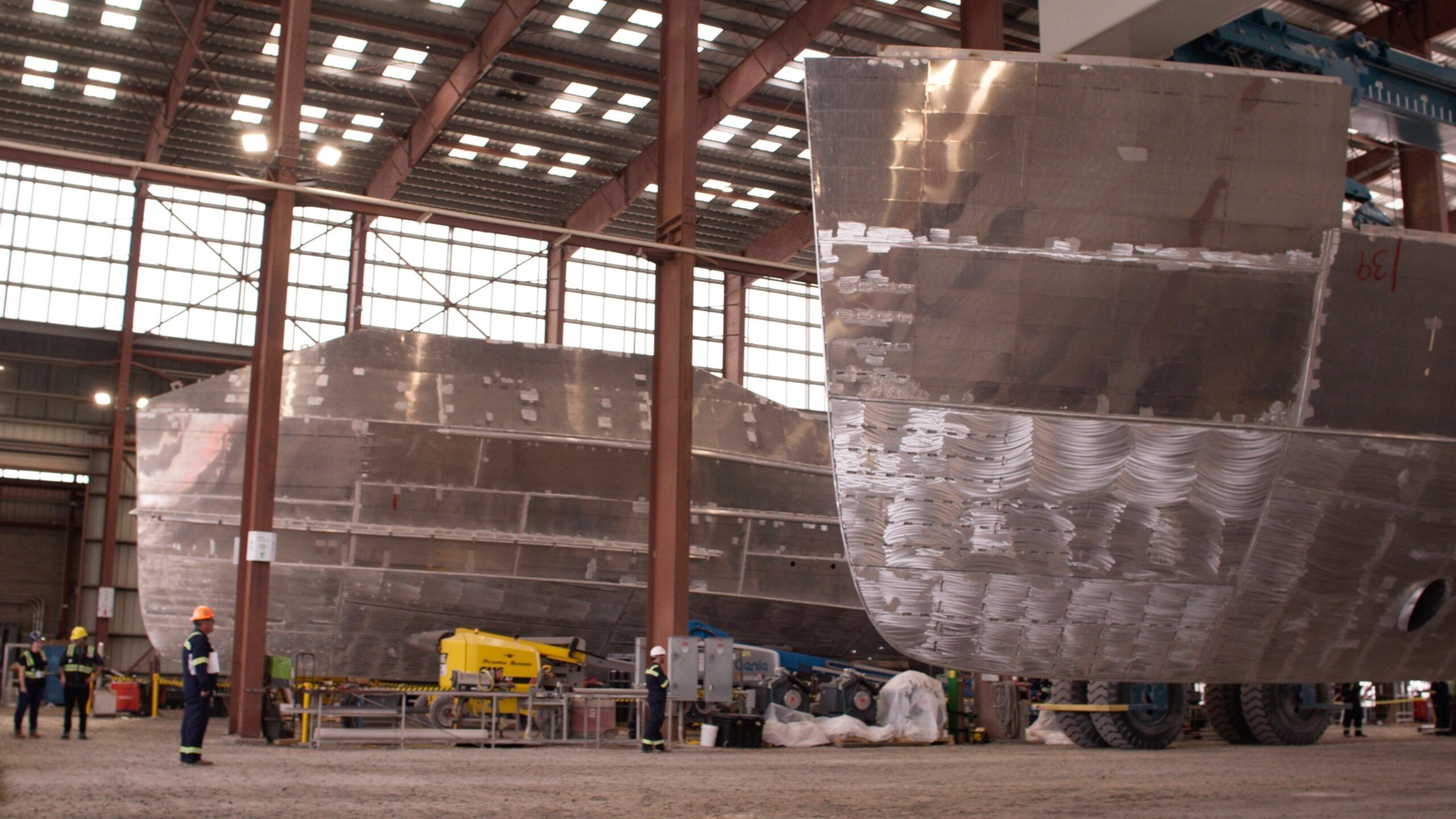
Meanwhile, Metal Shark’s Jeanerette and Franklin facilities are benefitting from its January acquisition by Miami-based Magnet Defense, which is expected to strengthen the shipbuilder’s ability to produce autonomous maritime platforms at scale and accelerate the production of AI-enabled vessels.
Magnet Defense develops autonomous unmanned surface vessels to support U.S. national security and allied maritime operations, while Metal Shark designs and builds mission-specific vessels for the U.S. Navy, U.S. Coast Guard and military forces from allied nations. By integrating Metal Shark’s facilities, workforce and manufacturing expertise, Magnet Defense plans to transition from prototype development to sustained, high-volume production.
In Lockport, Thoma-Sea Marine Constructors is also building advanced high-tech vessels, including two NOAA oceanographic ships capable of deploying uncrewed systems and drones, as well as conducting autonomous, data-driven research.
And in Amelia, Conrad Shipyard has entered into a production agreement with Boston-based Blue Water Autonomy to deploy autonomous surface vessels at fleet scale for the U.S. Navy.
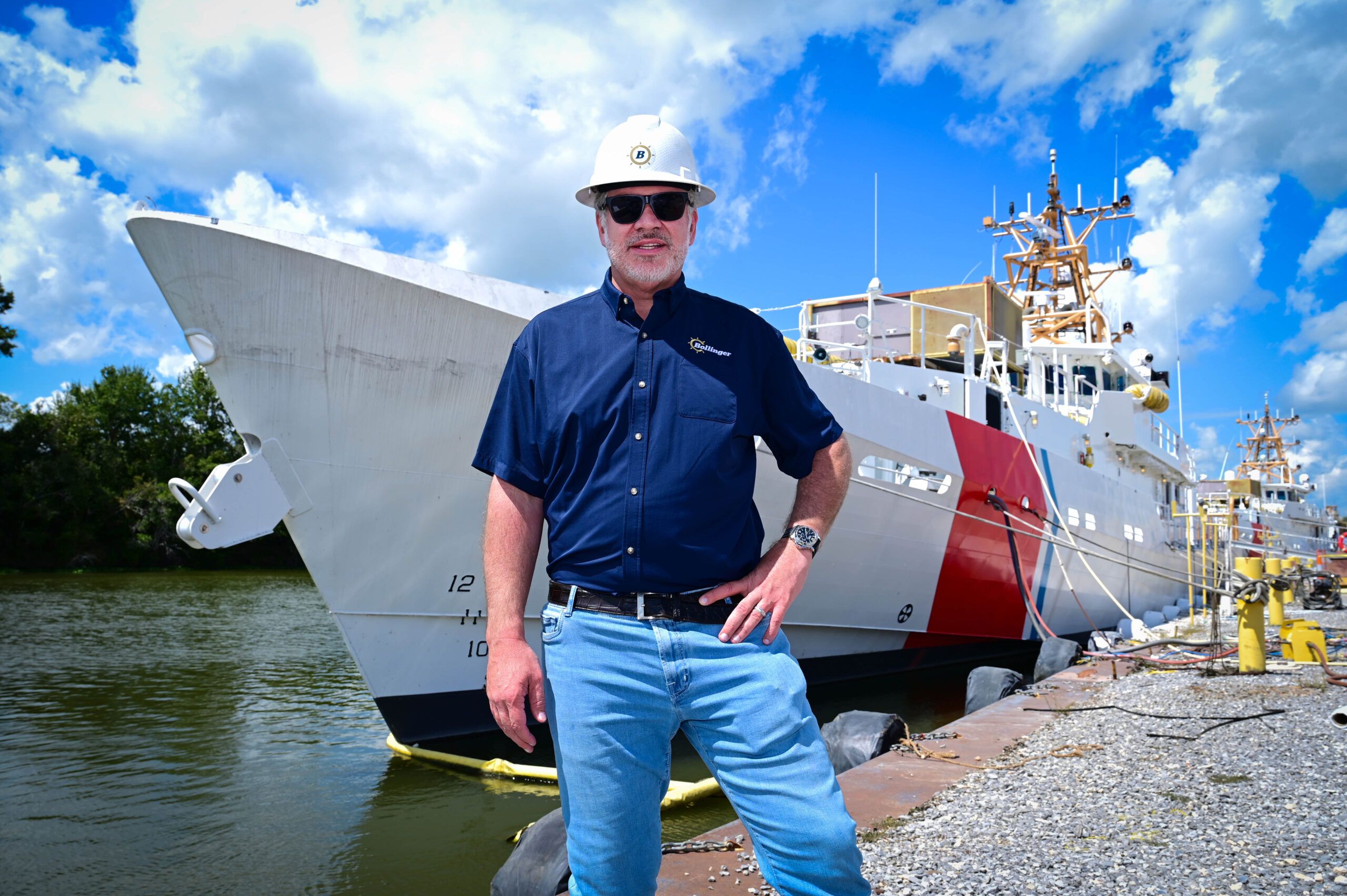
Federal shipbuilding contracts aren’t limited to autonomous vessels, however, as Bollinger Shipyards in Lockport recently landed a sizeable contract with the U.S. Coast Guard.
“For years, Bollinger has built Fast Response Cutters for the Coast Guard,” says Loren Scott, an economist with Loren C. Scott & Associates in Baton Rouge. “Then in December, they were awarded another huge contract that could increase their workforce from 650 to nearly 1,000.”
Authorized by 2025’s “One Big Beautiful Bill,” the contract calls for the fabrication of a fleet of Arctic Security Cutters, or ASCs, which is a new class of medium polar icebreakers that will expand the U.S. operational presence in the Arctic.
“The bill put another $1 billion into the FRC program and $2.1 billion for the ASCs,” Scott notes. “That’s been great for Bollinger. They have this great record of building these ships; now they’re getting even more work.”
Nevertheless, some regional leaders fear the rapid ramp up across nearly the entirety of Louisiana’s shipbuilding industry could lead to an unprecedented strain on the area’s pool of welders.
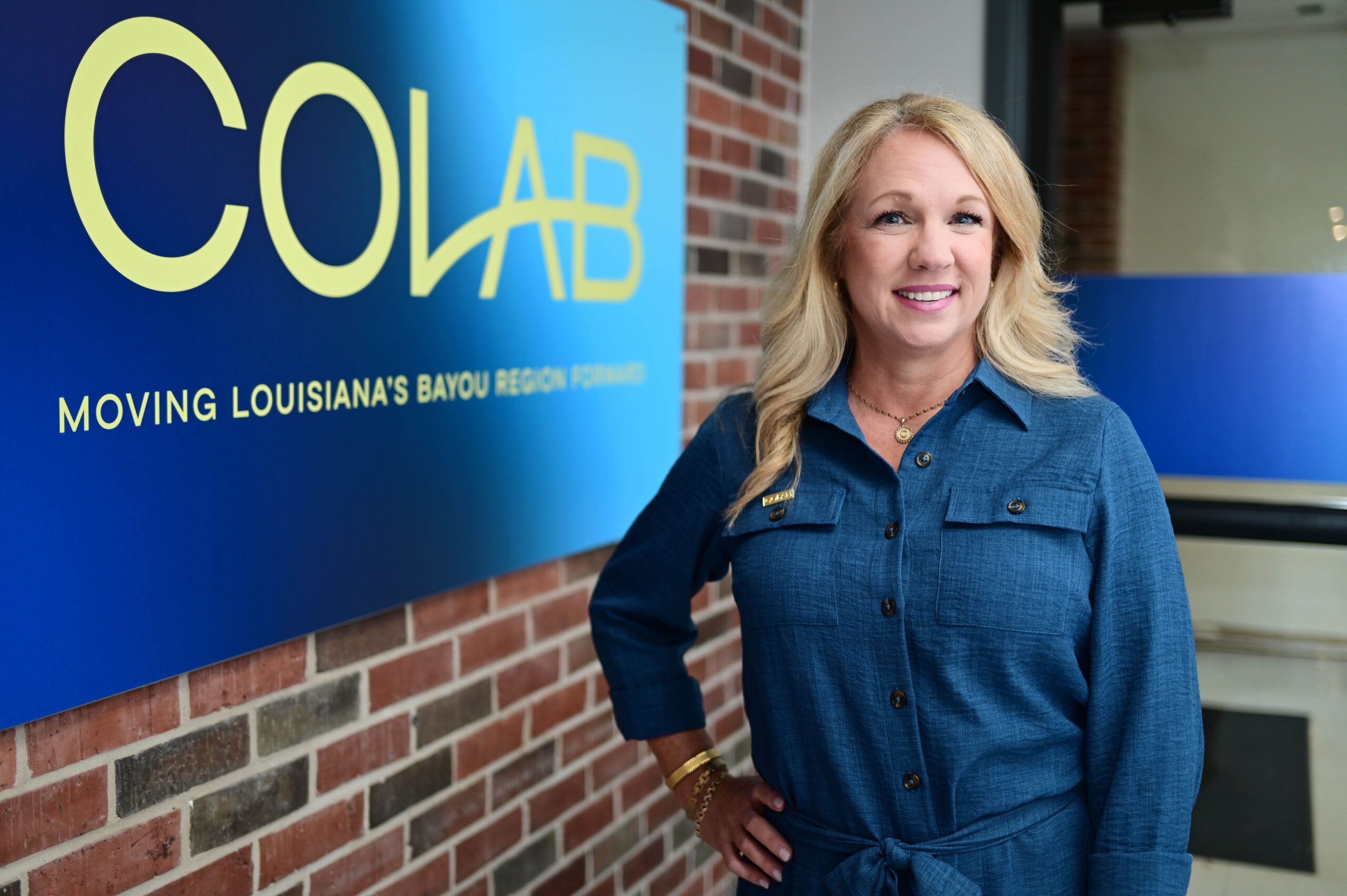
“We have so many defense contracts coming out of the Bayou Region that it blows my mind,” says Christy Zeringue, president and CEO of COLAB, a regional economic development organization in Thibodaux. “The primary challenge will be filling all those positions.”
To proactively tackle the issue, area technical colleges have begun collaborating with local fabricators to determine future needs. “I know of one plan to train 500 welders in five years,” Zeringue says. “They’re just looking for the people to fill those positions.”
For existing welders, though, it should be a relatively easy transition. “Whether you’re welding an offshore rig or a Coast Guard cutter, a welder is a welder … that’s why we’re so uniquely positioned for diversification in this area,” she notes. “We’re able to take those same skills and either re-skill or upskill so that businesses have a steady stream of workers.”