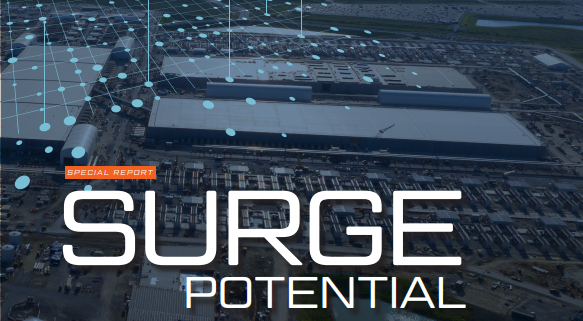
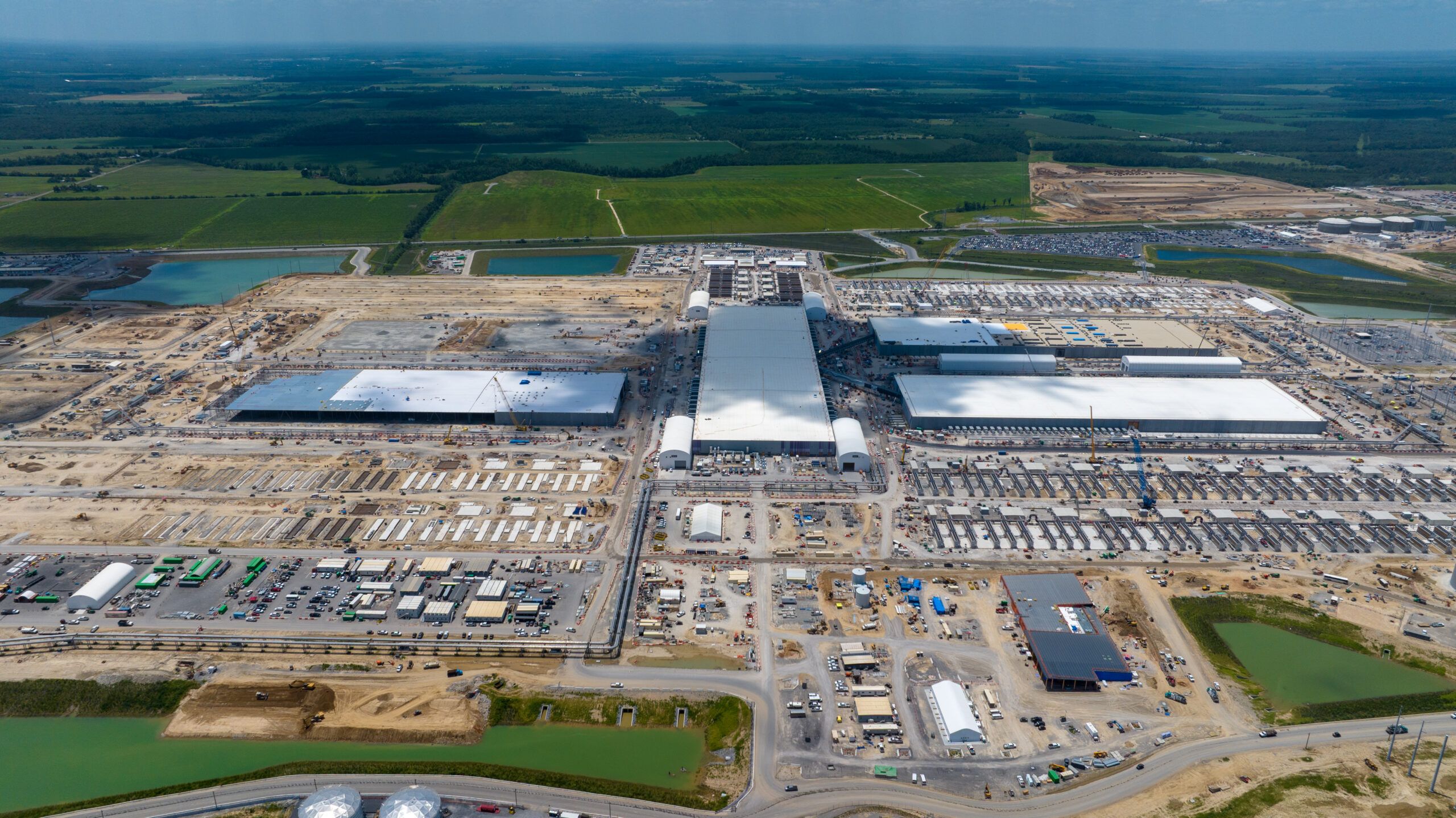
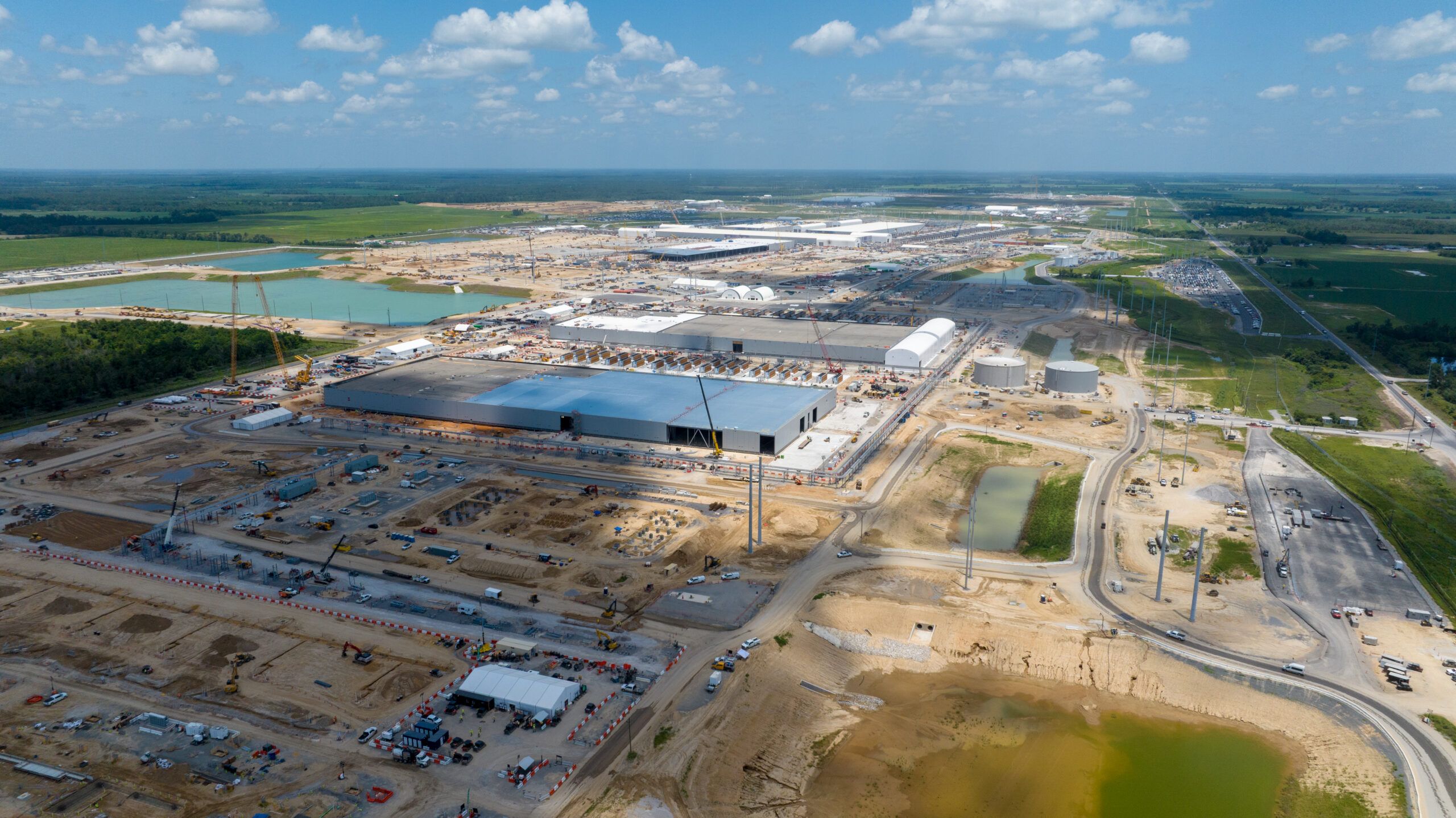
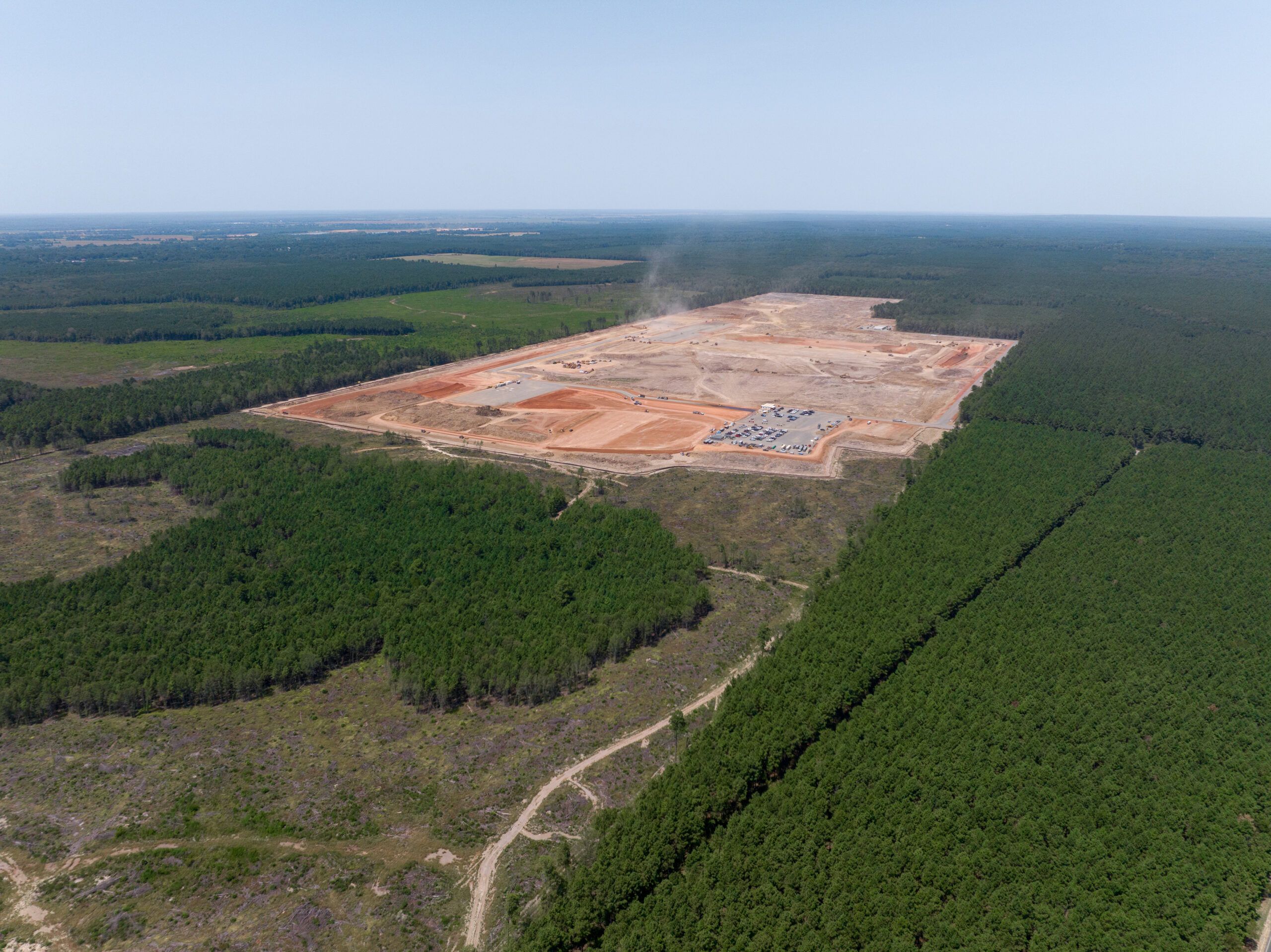
Regions of the state long known for their economic stagnation—or sluggish growth at best—are now experiencing an unprecedented surge in just about everything. All four of the state’s AI data center projects—Meta, Amazon, Delta Forge 1 and Hut 8—are under construction simultaneously, collectively representing more than $81.6 billion in investment.
Sales tax revenue numbers are among the first to tell the tale, with percentage increases in some cities and parishes reaching triple digits in year-over-year comparisons. Property values and tax revenues are expected to follow suit, along with corresponding increases in housing demand, hotel occupancies, retail revenues and a host of other data sets.

Most of the current work is taking place in the northern half of the state. “The north shall rise again,” jokes Justyn Dixon, president and CEO of the North Louisiana Economic Partnership in Shreveport.
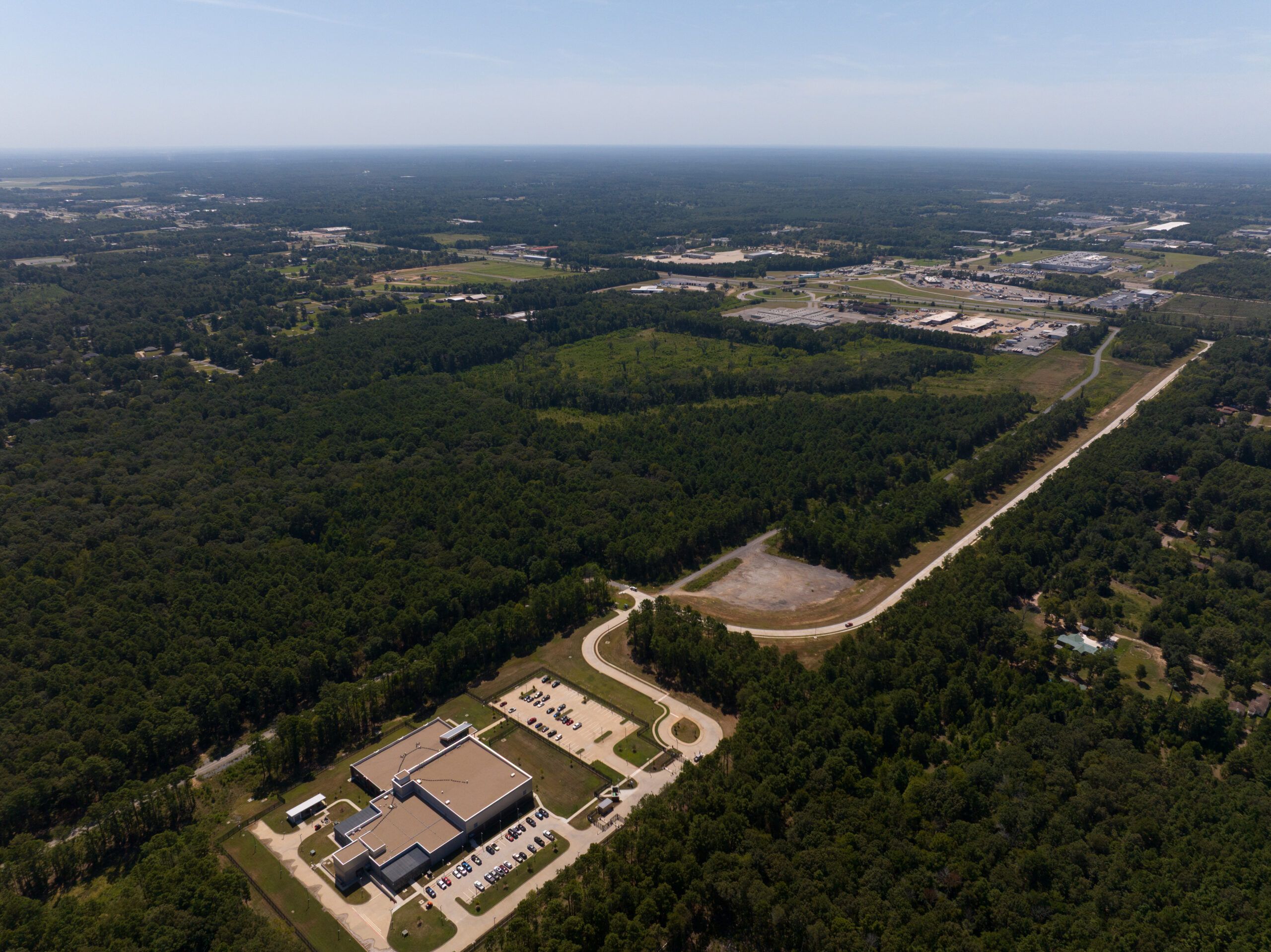
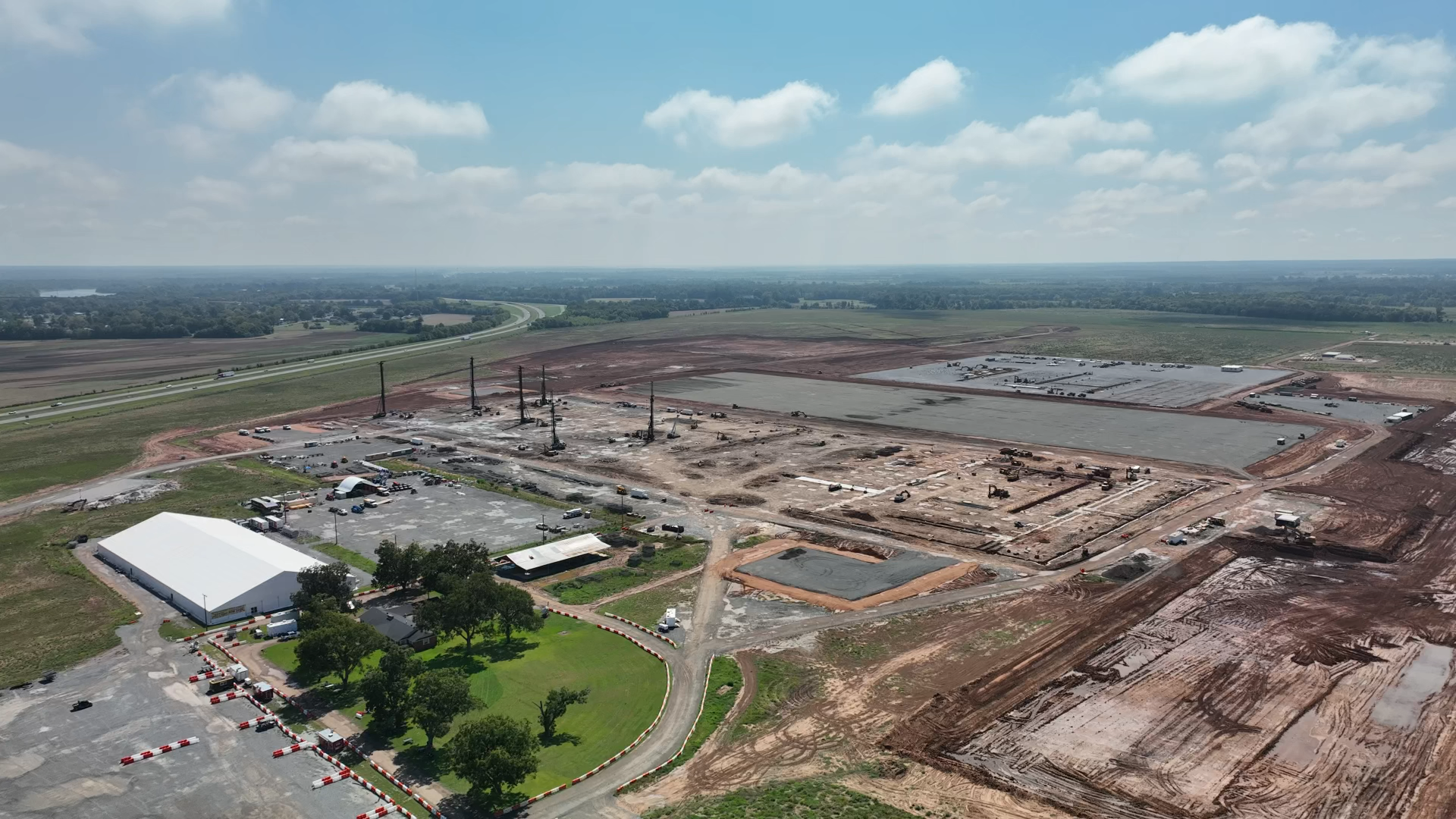
Amazon is already building two campuses in Bossier and Caddo parishes with a third at Resilient Technology Park in Shreveport to begin construction soon. The Amazon investment totals about $18 billion.
“The first two projects are blowing and going,” Dixon says, “and we’re starting to see some evidence of that. As of September, Bossier Parish had already hit its annual sales tax revenue projections. We’ve also seen the numbers come up in Caddo, although not to the same degree.”
Much of the early increase can be attributed to materials and equipment purchased for construction. For five area contractors, in fact, the Amazon contract represents the biggest in their company’s history. As for the rest of the economic data, “we’re still crunching the numbers,” Dixon says. “That’s some of the tussle back and forth right now … how much is actually going to end up going in the ground versus not, estimated jobs versus reality, etc.?”
Ultimately, the data center campuses are expected to generate some 750 jobs, with wages averaging $90,000 a year.
Unlike the state’s other data centers, the Amazon campuses are being built in or near an urban environment. That comes with certain advantages. “We already have much of the network in place to support it … Fibrebond in Minden makes mission-critical structures for data centers, Prolec GE in Shreveport manufactures transformers and SLB specializes in advanced manufacturing,” he says. “Combined, those companies have more than 4,000 employees in Shreveport/Bossier and they’re all growing.”
Dixon says that electricity, water and infrastructure assets are adequate to support the new demand, but there are nevertheless challenges to overcome. “There’s a discrepancy right now (among some residents) between perceived and actual risks in terms of the data center’s impact,” Dixon says. “Today, the AI process is more advanced. Amazon is only going to use water for cooling 13% of the time, and they’re going to pay for any needed upgrades to water, wastewater, power, etc.”
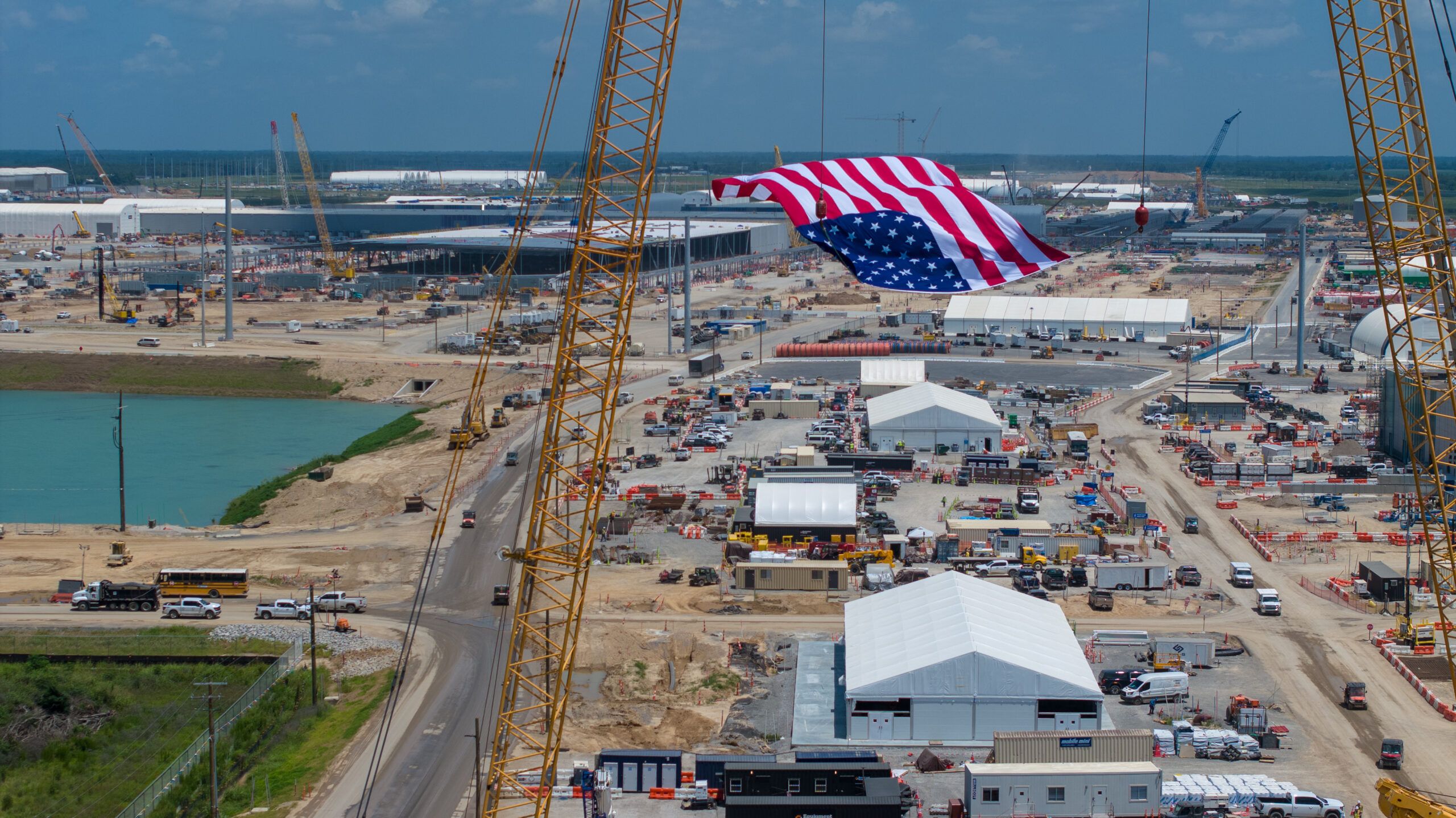
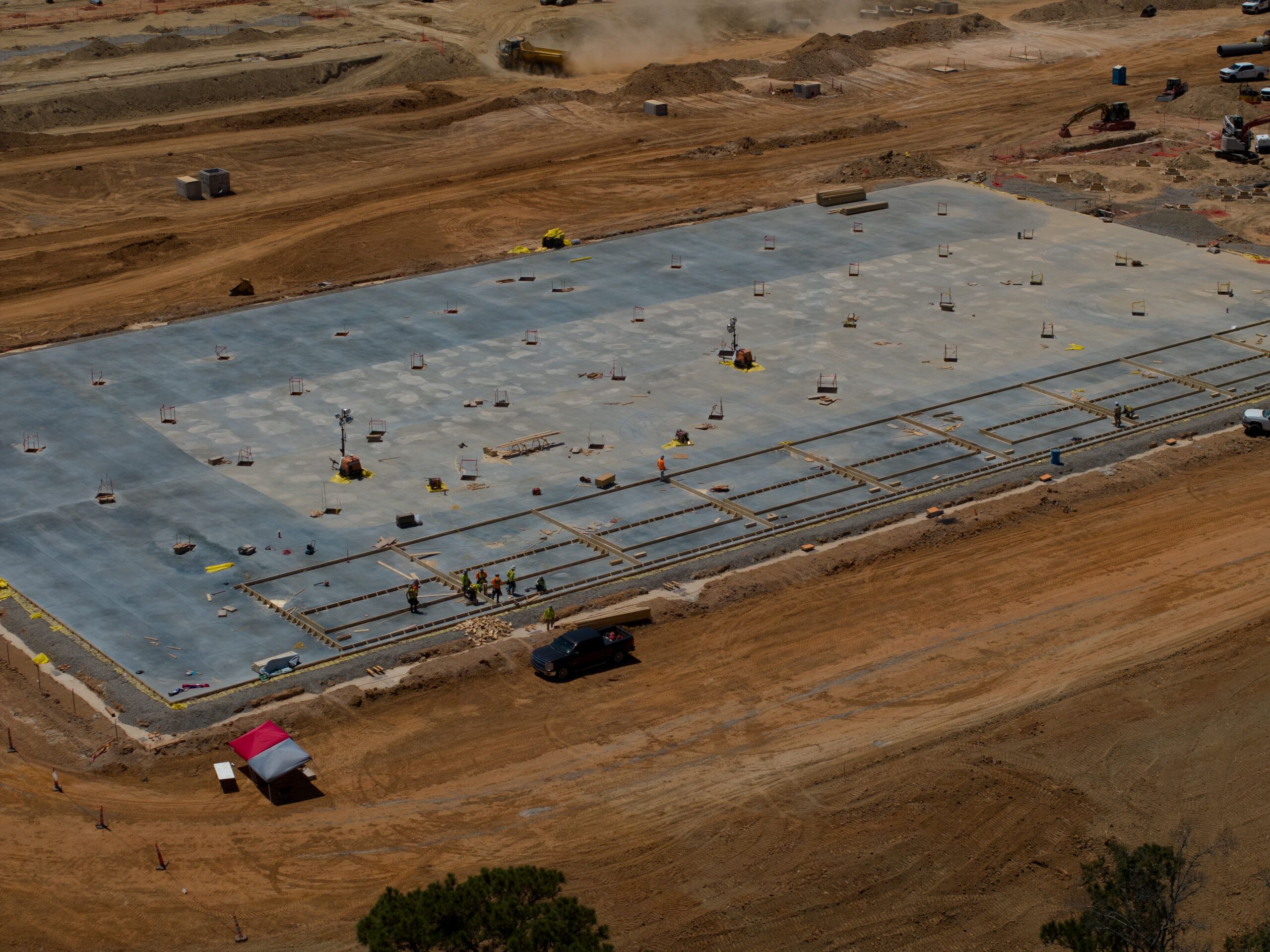
For now, it’s all about construction
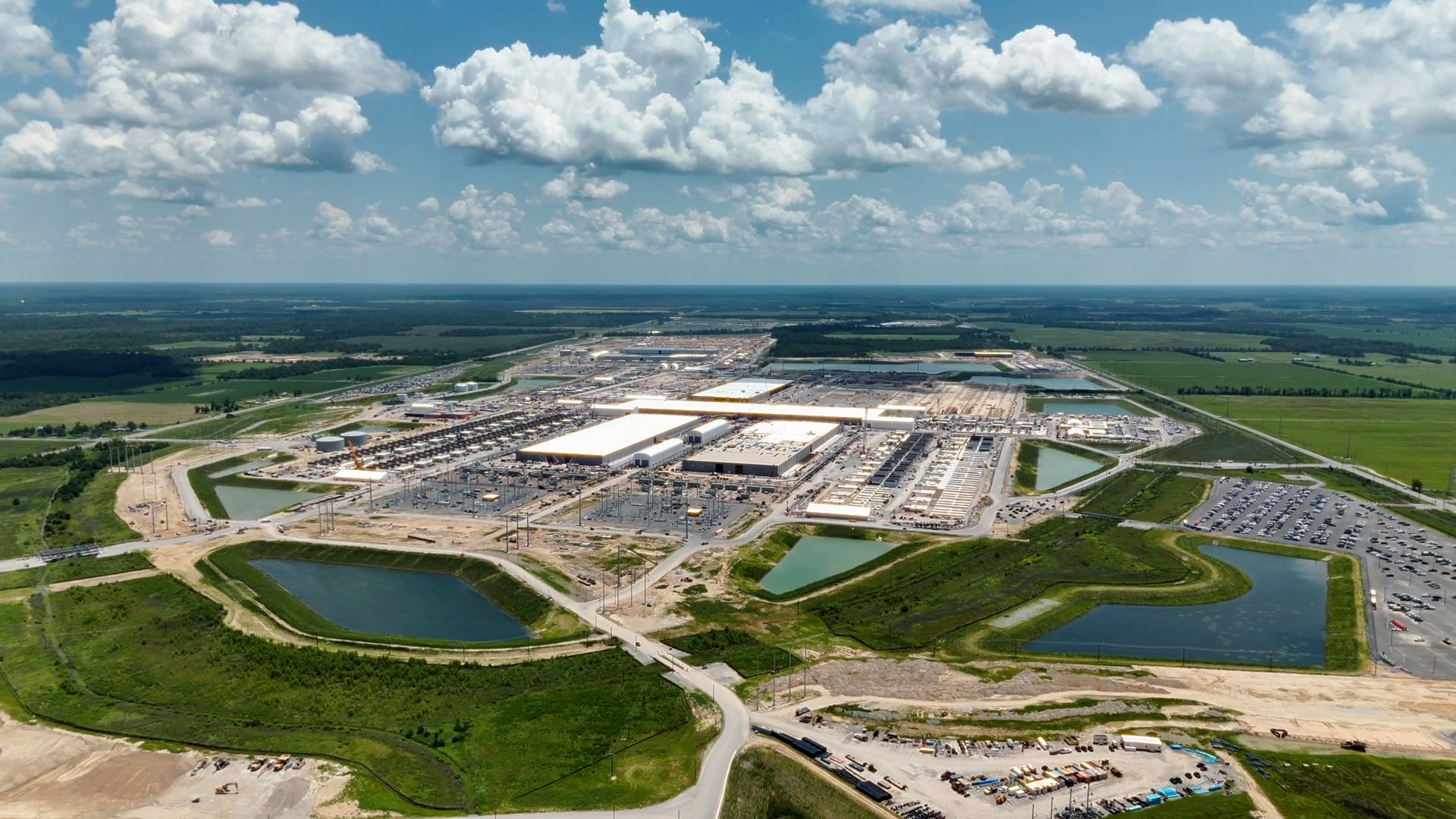
Being the first entrant into the data center market and the largest, the $50 billion Meta project in Richland Parish paints a clearer economic picture. Much of the current boost in sales tax revenue is being felt in retail-heavy Monroe/West Monroe some 30 miles to the west.
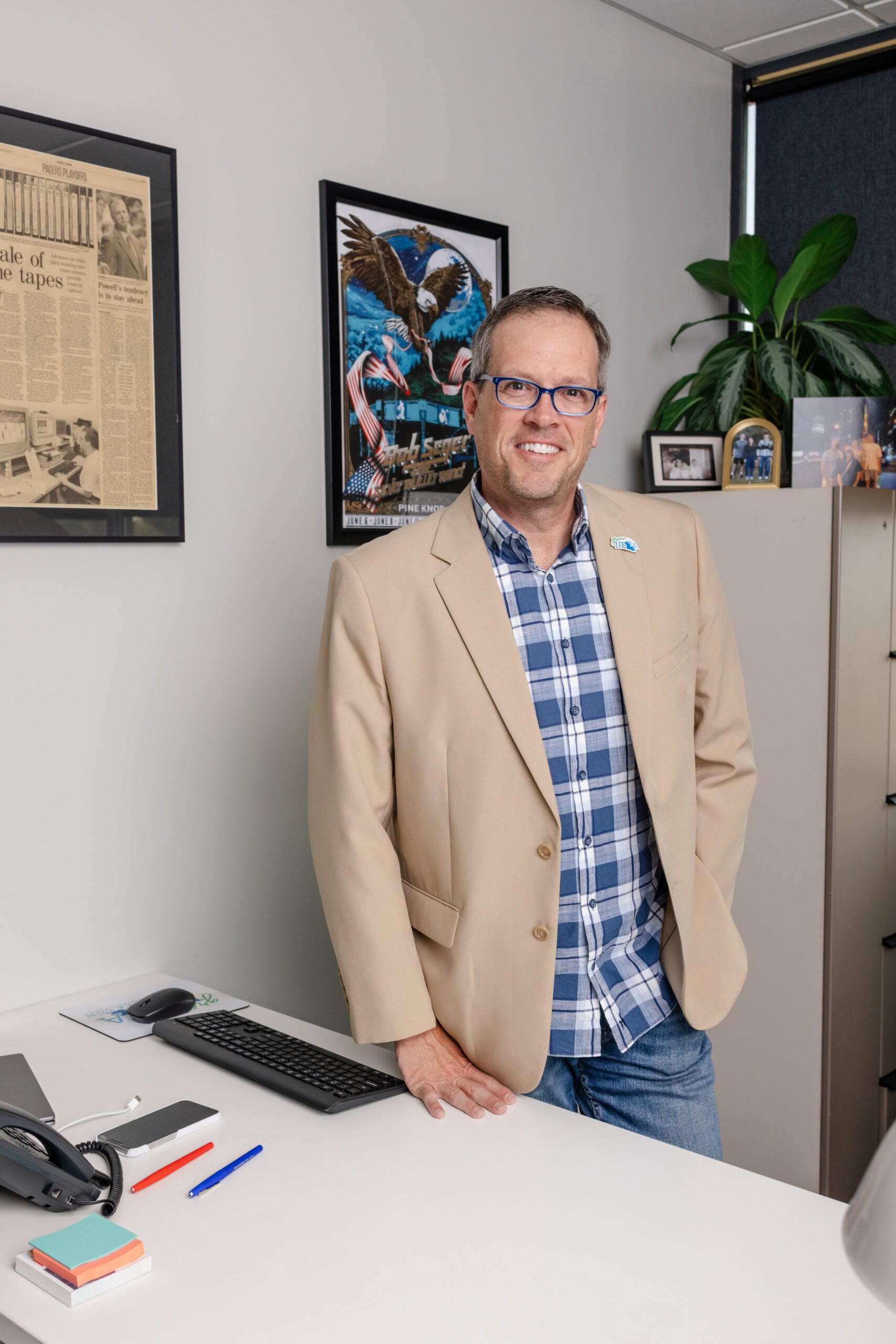
“More than 75% of the city of West Monroe’s budget comes from sales tax, so when they see a 30% jump in those numbers that has a huge impact,” says Rob Cleveland, president of Monroe-based economic development group Grow NELA.
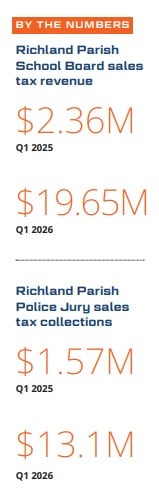
The numbers coming out of rural Richland Parish are comparably impressive: The Richland Parish School Board collected $19.65 million in sales tax revenue in the first quarter of this year versus just $2.36 million for the same time period a year earlier, and Richland Parish Police Jury tax collections increased from $1.57 million to $13.1 million.
As a whole, the northeast region collected $127 million in sales tax revenue during Q1 2026, up from $84 million in Q1 2025.
While it can be difficult to make a direct correlation between Meta and the increases in Monroe/West Monroe given the cities’ other income streams, “when the rural parishes see a significant increase and there have been no other major developments in the area, it’s easier to make that connection,” Cleveland says. Grow NELA will soon begin gathering property tax assessments and revenue data once the information becomes available.
The Meta facility has its local opposition, but it has been minimal compared to other parts of the country, Cleveland says. “The power question has been answered repeatedly,” he adds. “It’s been approved publicly by the PSC, Entergy has talked repeatedly about it and shown that Meta is paying for the additional power generation. Bottom line, it’s not going to increase people’s rates. They’ll either believe it or they won’t.”
To create a cohesive message, Grow NELA hired Crenshaw Analytics in Monroe to gather and interpret economic data attributable to the data center, with the resulting data posted on its newly created website—NELAgrowth.com.
Chris Masingill, president and CEO of Louisiana Central in Alexandria, says his economic development group is in the process of putting together its first economic analysis following Applied Digital Corp.’s January groundbreaking at the $3.6 billion Delta Forge 1 data center campus in Boyce. The facility is currently under construction on nearly 300 acres.
Preliminary data shows that the city of Boyce’s 2026 sales tax revenue has already surged a whopping 250% to date when compared to the same time last year, and 15% for all Rapides Parish.
Applied Digital is beginning work at an ideal time, Masingill says, as the closure of International Paper in Pineville and the recent cancellation of the $2.5 billion Beaver Lake Renewable Energy project had left the economy stagnating. “This is a region of the state where there are resources across the board,” Masingill says. “We have available power, the right site and geographical location, and a major fiber corridor coming through the region.
“We knew we were going to get a data center; it was just a matter of when.”
Perhaps most interestingly, Delta Forge 1 will use little to no water for its processes; instead, it will rely upon a closed-loop, glycol-based system for cooling. The only water needed will be for breakrooms and restrooms—the equivalent of six or seven households. “Once the system is charged and filled for the first time, it’s only a matter of maintenance,” he says, “just like the antifreeze in your car.”
Electricity isn’t an issue either, Masingill adds. The existing power grid can accommodate the entire project and “Applied will pay 100% of any additional utilities infrastructure that will be needed.”
Louisiana Central created a website as a clearinghouse for all information related to the project in hopes of educating area residents about the data center. “We have international actors trying to negatively impact America’s ability to position strategically for AI and we feel we have to put America first,” Masingill says. “Louisiana is definitely in the game, and these projects have a tremendous positive impact on the entire region.”
Once Applied Digital is operational, he plans to conduct a comprehensive economic analysis to examine the financial impact on the parishes surrounding Rapides.
Meanwhile, Hut 8 is developing the lone south Louisiana data center—the multibillion-dollar River Bend campus just south of St. Francisville. The project could face its own struggles as contractors compete for labor in a booming industrial market. The project is expected to create about 1,000 construction jobs and up to 200 permanent operations and technical roles.
In September, rumors emerged on social media about a possible data center in Livingston Parish near the Our Lady of the Lake Livingston campus, but as 10/12 Industry Report went to press, those remained unconfirmed. Baton Rouge Business Report did uncover that a 500-megawatt battery storage project proposed by energy giant NextEra to help support an unidentified commercial development with unusually large electricity needs in that parish is moving through an expedited regional review process.
The project is referred to as Steamboat Energy Storage. Entergy Louisiana is identified as the transmission owner, though company officials declined to comment at the time.
Success struggles
READ MORE
This Lafayette company wants to send data centers out to sea
For now, the sheer volume of contractors needed to build the data centers is providing the greatest source of strain. According to LED data, at peak of construction there will be some 12,000 construction workers building the four data center facilities—all at the same time.
Paige Carter, chief business development officer for Louisiana Economic Development, says her office monitors construction timelines to prevent the market from becoming overheated, “but sometimes we struggle with our own success, and that’s unfortunate,” Carter says. “We want to make sure we’re mindful of resource restraints and that we grow smartly. It’s our responsibility to balance that.”
The LED team also works with utility providers to ensure “that we agree on what’s best and what our resource availability is,” she adds. “We want to do economic development with our communities, not to our communities.” In that vein, The Rate Payer and Community Protection executive order signed by Gov. Jeff Landry in June establishes criteria to protect utility customers from the energy costs of large-scale industrial projects such as AI data centers.
LED develops a preliminary impact assessment for every new project, then takes the quantitative data and puts it into a qualitative format, which is then shared with regional and local partners and local governments. “The important thing is that we do that early during the site selection process,” Carter adds. “Once we get approval, that allows us to have conversations about what’s going on to ensure constituents are well represented.”
Workforce training has been a big part of the discussion, as some 7,000 permanent data center jobs will need to be filled, statewide. In Baton Rouge, Meta is propping up a “workforce academy” at Associated Builders and Contractors Pelican Chapter’s Baton Rouge training center, with the first cohort of students expected to begin training in November. Announced in June, the $115 million initiative is designed to train workers for jobs in AI infrastructure.
The program is free to participants, requires no prior experience and guarantees graduates a job offer with a Meta contractor. Baton Rouge was chosen as one of four pilot markets for the academy, along with locations in Indiana, Ohio and Texas.
David Helveston, president and CEO of ABC Pelican Chapter, says the connection was initially made between Meta and ABC’s national chapter. “Meta was intrigued by the partnership because of the infrastructure that ABC has in place, with chapter locations and training centers across the nation,” Helveston says. “Our hope is that everything will go well and this will continue to expand. Given our workforce training infrastructure and the investment that Meta is making in Louisiana, there’s a lot of interest in us expanding this across Louisiana to our different training centers.”
The training will be conducted in four-week cohorts consisting of 160 instructional hours. “We are going to have to staff up, but there wasn’t a lot required of us from a facilities perspective to be ready to go,” he says. “That’s one of the main reasons we were selected.”
Meanwhile, Louisiana Delta Community College in Monroe is “knocking workforce development out of the park,” says Grow NELA’s Cleveland. The college recently collaborated with Meta contractors to quickly prop up a data center technician training program, where students are trained in three-, four- and six-week programs to work at any data center in the country.
At present, existing Delta facilities are adequate to support the training, but the school could soon need to expand as demand increases.

In Alexandria, Louisiana Central is working to develop local training through Central Louisiana Technical Community College and has established a training working group with LSU of Alexandria, Northwestern State University and others. The Delta Forge 1 campus is expected to create some 400 permanent direct and indirect jobs, predominately electricians, welders and other trades. “We’re actively working toward scaling some of the existing programs to prepare for the project,” Masingill says. “The project should be completed in two and a half years, and we want to be ready to go.”
And in Shreveport, the North Louisiana Economic Partnership is hoping the Dallas market will help fill the employment void at Amazon. It recently hired a local marketing firm to create promotional messaging for some 2 million people in the Dallas metro area. To date, 30 applicants have applied to area manufacturers and health care providers as a result of the marketing effort.
It has also developed a six-week industrial “boot camp” training program in cooperation with area community colleges—dubbed Employment Preparedness and Workforce Readiness—where students learn basic skills and earn 12 certifications. “We’ve signed MOUs with over 30 companies, and they guarantee an interview when the student graduates,” Dixon says. “We had 100% placement in the last three classes.”