
The recent entry of AI data centers into the mix has added a new wrinkle to Louisiana’s age-old workforce shortage dilemma.
While not strictly industrial in nature, Meta’s massive facility in the northeast corner of the state and other data centers scattered across the south are already stealing skilled laborers from the south Louisiana labor pool.
It’s a trend only expected to accelerate as projects ramp up and a host of other projects get under way in the LNG, petrochemical, steel manufacturing and shipbuilding sectors.
The problem isn’t exclusive to the industrial sector. As economist Loren Scott of Loren C. Scott & Associates prepared his annual forecast last year, one commonality stood out among nearly all markets.
“No matter what industry or area of the state someone might be, everyone complains about labor issues,” Scott says. “That’s been exacerbated somewhat by recent federal actions to more aggressively remove undocumented aliens from the workforce.”
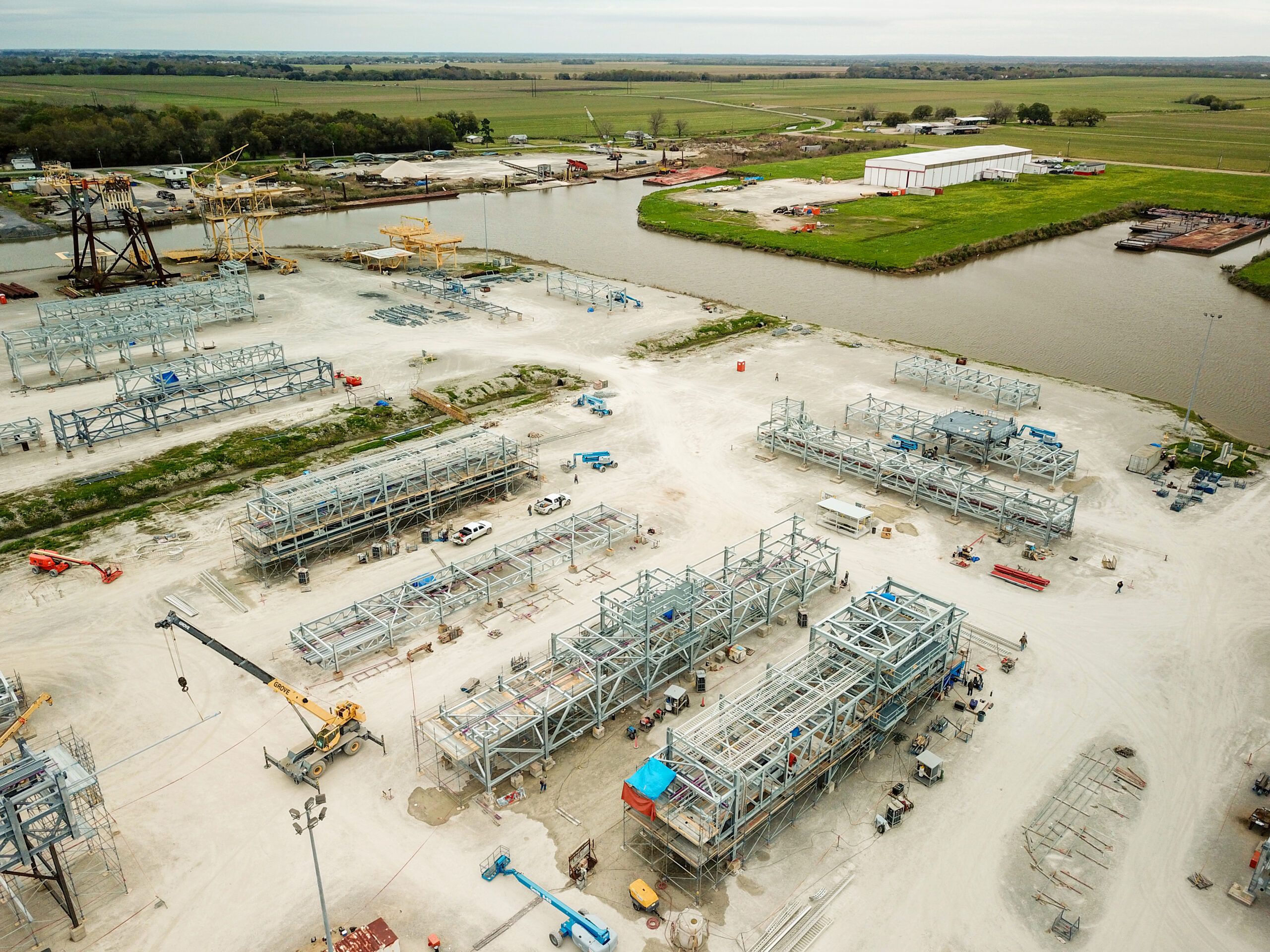
Nevertheless, a changing dynamic in the way projects are executed could help alleviate, or at least dilute, the problem. The increasing prevalence of modular construction—whereby industrial units are constructed in modules at off-site locations—will likely spread worker demand more evenly across the region.
Over the last handful of years, these remote fabrication facilities have popped up in St. Mary, Iberia, Lafourche and Terrebonne parishes. For example, Turner Industries, Cajun Industries and Chart Industries operate major modular fabrication/manufacturing facilities at the Port of Iberia; and Performance Contractors has a facility in Amelia.
“What you’re seeing is the demand for workers becoming more broadly spread across the area,” Scott says. That’s a good thing, as it creates more efficient jobsites and eases the localized workforce problems of the past.
“During the big industrial boom in Lake Charles a decade ago, contractors were having to compete with their own customers for workers,” he adds. “Everything was ‘stick built’ back then. That’s not the case today.”
And while these Acadiana-area module fabricators must still compete with existing fabricators and shipyards for welders, pipefitters and electricians “so far they’ve been able to find workers,” he adds. “Often, they have to pay higher wage rates or better per diems to get them, but they can get them.”
The move to modularization is particularly good news for areas such as Lake Charles and Ascension Parish, which are each shaping up to become epicenters of industrial construction in the coming years.
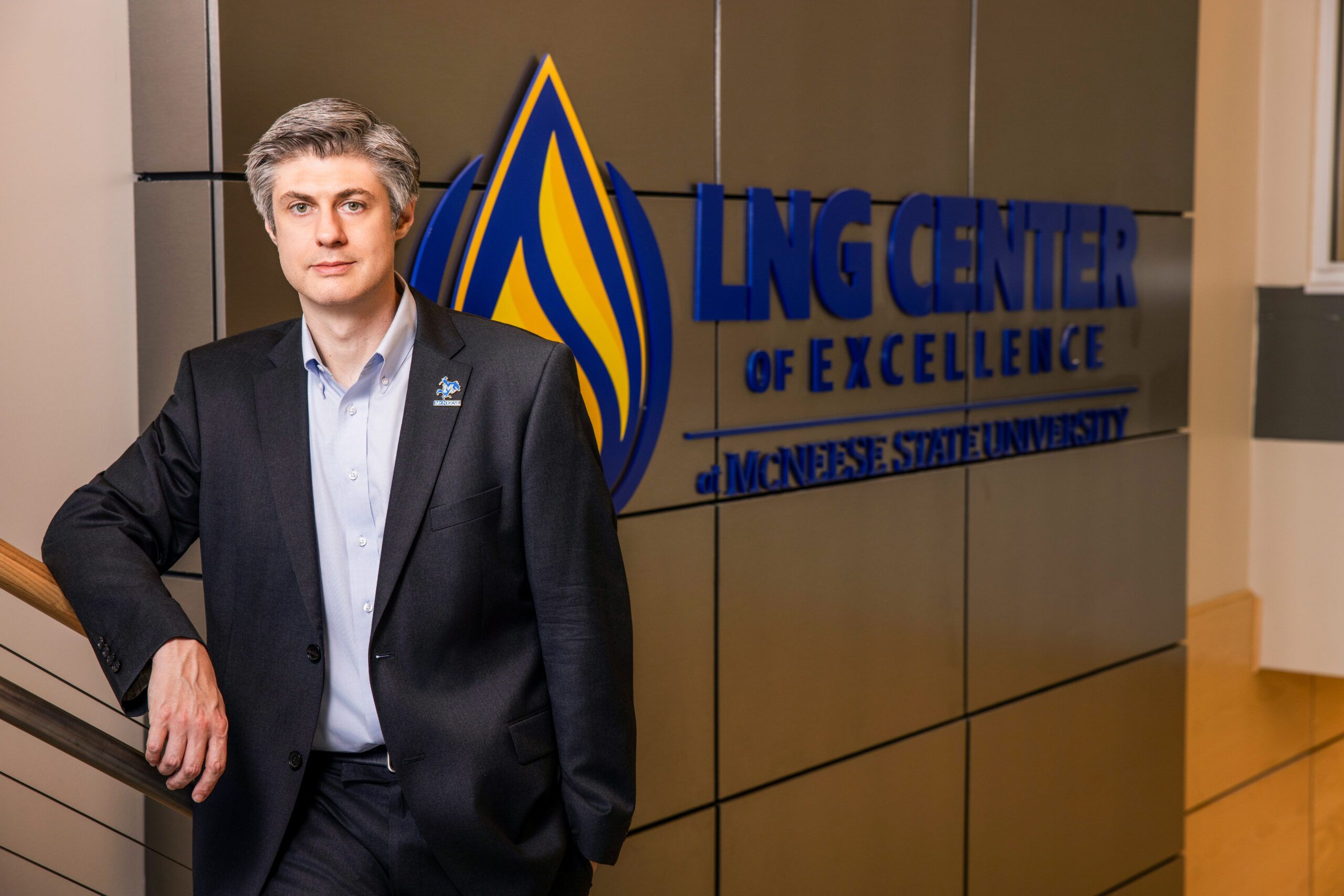
Dan Groft, director of the H.C. Drew Center for Business and Economic Analysis at McNeese State University, says the impacts of the data centers will be the biggest question mark in the coming months and years.
“There’s also these semiconductor chip facilities that will need to be constructed across the nation,” Groft says. Wage rates are likely to increase as a result, as contractors compete for a shrinking pool of workers.
In Lake Charles, housing will be another concern. Hurricane Laura decimated the residential market, leaving the city incapable of handling a significant surge in population.
“The city of Lake Charles is currently conducting a housing study to determine if they’re going to need more housing or apartments,” Groft says. “Ultimately, we’re going to have to have some housing for these people, because so much of the stock was destroyed.”
He’s also noticing another interesting development: increasing competition between the LNG industry and the city’s existing petrochemical owners for process technicians and operators.
“The LNG plants pay well, so they’re attracting a lot of workers,” he adds. “The others must compete with that. In other words, the industrial base is competing against itself.”
That’s led to growing demand for additional training at places such as SOWELA Technical Community College, McNeese State University and the soon-to-open LNG Center of Excellence. “Owners are just trying to keep their workforce pipeline flowing,” Groft says.
Later this year, Associated Builders and Contractors’ Pelican Chapter will open a new $20 million, 40,000-square-foot training center on 14 acres of donated Sasol land in Lake Charles.
The two-building facility will include a large welding lab, classrooms, computer labs and administrative spaces. Outside will be a small process facility and a large area for equipment training.

“It’s timed well with these big LNG facilities going to market,” says David Helveston, president and CEO of ABC Pelican Chapter. “We’re well positioned to begin training next fall, just in time for those facilities that will be the midst of these massive construction projects. In a typical year, we’re expecting several hundred students to go through the facility.”
Growing demand for welders, pipefitters and machinists is the biggest concern for the Bayou Region, says Christy Zeringue, president and CEO of COLAB in Thibodaux. She projects as many as 500 new welders could be needed as the shipbuilding industry expands in the wake of a rising number of federal contracts.
To stay ahead of the problem, COLAB conducts “business retention and expansion visits”—as many as 80 are planned in 2026—to gauge workforce needs in the area.
“We’re trying to figure out how we can sustain the labor in our region for all of the regional growth coming up even as the data center work and all these other projects are going on elsewhere,” Zeringue says. “It’s a huge concern.”
Information gathered during the visits is communicated to area community and technical colleges and partners. COLAB also meets regularly with ABC’s Bayou Chapter in New Orleans to collaborate on future training needs.
Sounding the Alarm
While the Baton Rouge market has been a little slow over the past year, the city’s largest industrial contractors are already sending workers to other places in support of LNG and data center work. The result has been a tightening labor market.
“These data center projects, while not being strictly industrial in nature, still pull off that same skilled trade pool,” says Brandon Smith, director of safety, workforce development and operational strategy for the Greater Baton Rouge Industry Alliance, or GBRIA. “Industrial contractors are bidding and winning those jobs too. That could strain the system.”
GBRIA gets its statewide and regional labor data from Construction Industry Resources, which it in turn provides to its members. “Our gold and platinum annual partners get the full report so that they can see when peak demand is expected based on announced projects,” Smith says. “That enables them to plan better for future work.”
Currently, the most pressing need in the Baton Rouge market is for welders, millwrights and pipefitters. ABC’s Helveston also expects a surge in demand for electricians and instrument fitters due to the data center work. “We’ll need to backfill some of those positions locally,” he says.
ABC’s spring enrollment is up from last year at more than 1,100 students, and it’s expected to rise. In preparation, the organization is setting up satellite locations across Baton Rouge, including welding, electrical and millwright classes at the West Baton Rouge Career Academy and Central High School.
Recognizing that it’s also an awareness problem, ABC Pelican is creating partnerships and programs to attract younger workers to the market. It recently partnered with Junior Achievement of Greater Baton Rouge to raise awareness among middle school-age students in East Baton Rouge and Ascension parishes, and at the state level is partnering with Louisiana Works in developing a statewide career awareness campaign.
Meanwhile, GBRIA launched its sister organization—the New Orleans Region Industry Alliance, or NORIA—in 2025 and unlocked additional resources and funding for workforce development in the greater New Orleans area.
“It’s exciting to see what’s happening there,” says Smith, who also oversees workforce development at NORIA.
In 2025, the group expanded its Educator Externship Program to New Orleans and also opened up the program to teachers from Livington Parish and Northshore areas, with the help of a $100,000 Future Use of Energy in Louisiana grant. The program is a three-day paid professional development experience for middle and high school teachers, held in June in Baton Rouge and in July in New Orleans.
GBRIA also sponsored a Women in Industry Forum for girls in grades 11 and 12, and on April 2 launched “Journey to Industry,” giving 200 10th graders hands-on exposure to careers that don’t require a four-year degree.
A government initiative
To tackle the problem at the state level, Act 376 of the 2025 state legislative session provided for a new income tax credit intended to support employers who provide work-based learning experiences for apprentices, interns and youth workers. The new law repeals two existing and underutilized credits and replaces them with the new and enhanced Work-Based Learning Tax Credit.
That credit is available to businesses who make eligible hires in 2026. They can claim the credit on their tax returns beginning in 2027. For the current tax year, the total tax credit available to be claimed is $1 million, which is allowed to grow to a maximum of $7.5 million in future years based on utilization.
“Unfortunately, Louisiana lags well behind other southern states in the number of young people participating in internship and apprenticeship programs, even though they can be an important component in the workforce pipeline,” said Adam Knapp, CEO of Leaders for a Better Louisiana, in a statement.
“That’s why we want Louisiana businesses to be aware of this new credit and learn more about how it can help them meet their workforce needs.”