
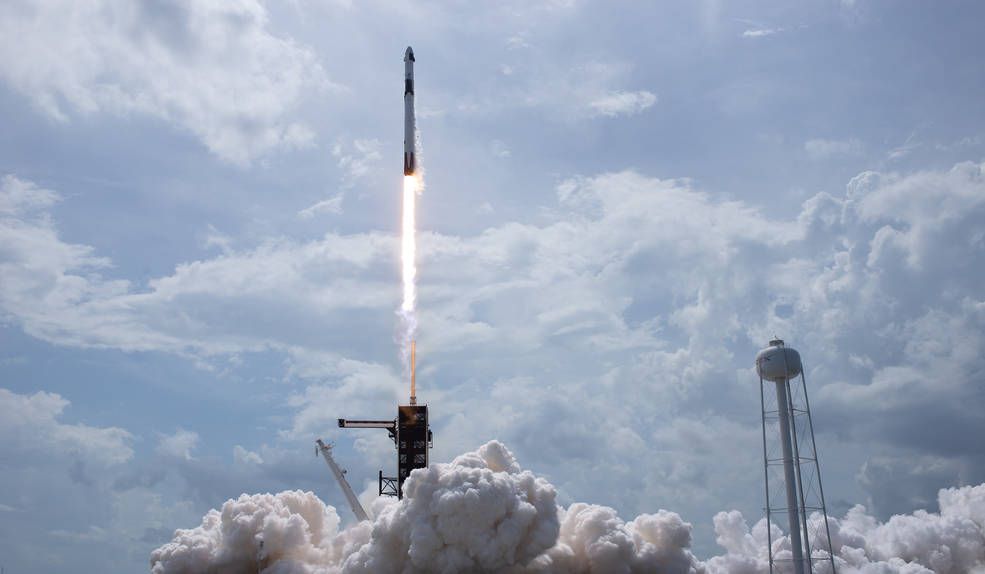
SpaceX, the Elon Musk-led aerospace company, is investing $100 billion to build a launch facility in coastal Vermilion Parish, state officials announced Tuesday morning in Abbeville.
The long-rumored spaceport, dubbed Starbase, Louisiana, will be designed to support thousands of launches per year. Construction is expected to begin in 2027, with a first launch targeted for 2029.
The campus will be SpaceX’s fourth—and largest—launch site. Plans call for five launch complexes, each with two launch pads and a propellant farm, as well as propellant production, power generation, vehicle processing and deep-water shipping infrastructure and residential housing for employees and their families. The company is also considering an airport.
The spaceport will serve as a hub for Starship, SpaceX’s fully reusable rocket system. The company plans to sharply increase the frequency of Starship launches to expand its Starlink satellite network, build orbital data centers and, eventually, carry crew and cargo to the moon and Mars.
“We’re preparing to build a spaceport that, until now, has only existed in science fiction,” Musk said in a statement. “SpaceX was founded to bring about a future where humans are out exploring amongst the stars, which will only be possible when we make going to space as routine as flying on an airplane. Starbase, Louisiana will unlock that future.”
SpaceX is expected to create at least 3,000 direct new jobs over the next 10 years with an average annual salary of $92,600.
SpaceX President Gwynne Shotwell said Tuesday that the final job count may end up being closer to 10,000, and that a significant portion of those workers will be hired locally. The jobs will extend beyond engineers and scientists to technicians, welders and other workers needed to operate the spaceport and its supporting infrastructure.
“Between 60% and 80% of new hires at our Texas sites are local residents, something that we will repeat here in Louisiana,” Shotwell said.
The Vermilion Parish site offers several characteristics SpaceX considers essential for a high-volume launch operation, including access launch trajectories over the Gulf, large amounts of land, relatively few nearby residents and abundant natural gas that can be used for power and rocket fuel.
The spaceport will be built on former ExxonMobil property that the state is selling to SpaceX. The property encompasses about 125,000 acres, but SpaceX does not intend to develop all of it. Launch infrastructure will be concentrated near the coast, and large portions are expected to remain wetlands and wildlife habitat.
Shotwell said SpaceX is partnering with state and federal agencies on shoreline protection, marsh restoration and wildlife conservation.
“We’ll work with wildlife agencies, landowners and conservation groups to help reverse the losses from both natural erosion and the careless industrial use of the past,” she said.
The state offered SpaceX a “competitive” incentives package on the condition of capital investment, job creation and a $25 million donation to the Community Foundation of Acadiana, according to Louisiana Economic Development. The company is expected to participate in the state’s new Aerospace Facilities and Activities Rebate as well as its High Impact Jobs program.
SpaceX has also entered into a payment-in-lieu-of-taxes, or PILOT, agreement with local taxing bodies. Under the agreement, the company will make an upfront payment of $20 million to Vermilion Parish and pay the parish $25 million annually for 25 years, with the annual payment increasing each year under an agreed-upon escalator. LED estimates the agreement will generate more than $820 million in direct local payments.
“Make no mistake about it,” Gov. Jeff Landry said. “Today is nothing short of a transformational moment.”
The announcement comes after Louisiana lawmakers passed a package of bills positioning the state to land a major aerospace project. The bills, which have since been signed into law, address tax incentives, legal liability and public records, among other matters.