The Ascension Economic Development Corp. is turning its focus toward building the infrastructure needed to attract the next wave of industrial projects at RiverPlex Mega Park. While roughly $10 billion in investments have already been announced, thousands of acres remain available.
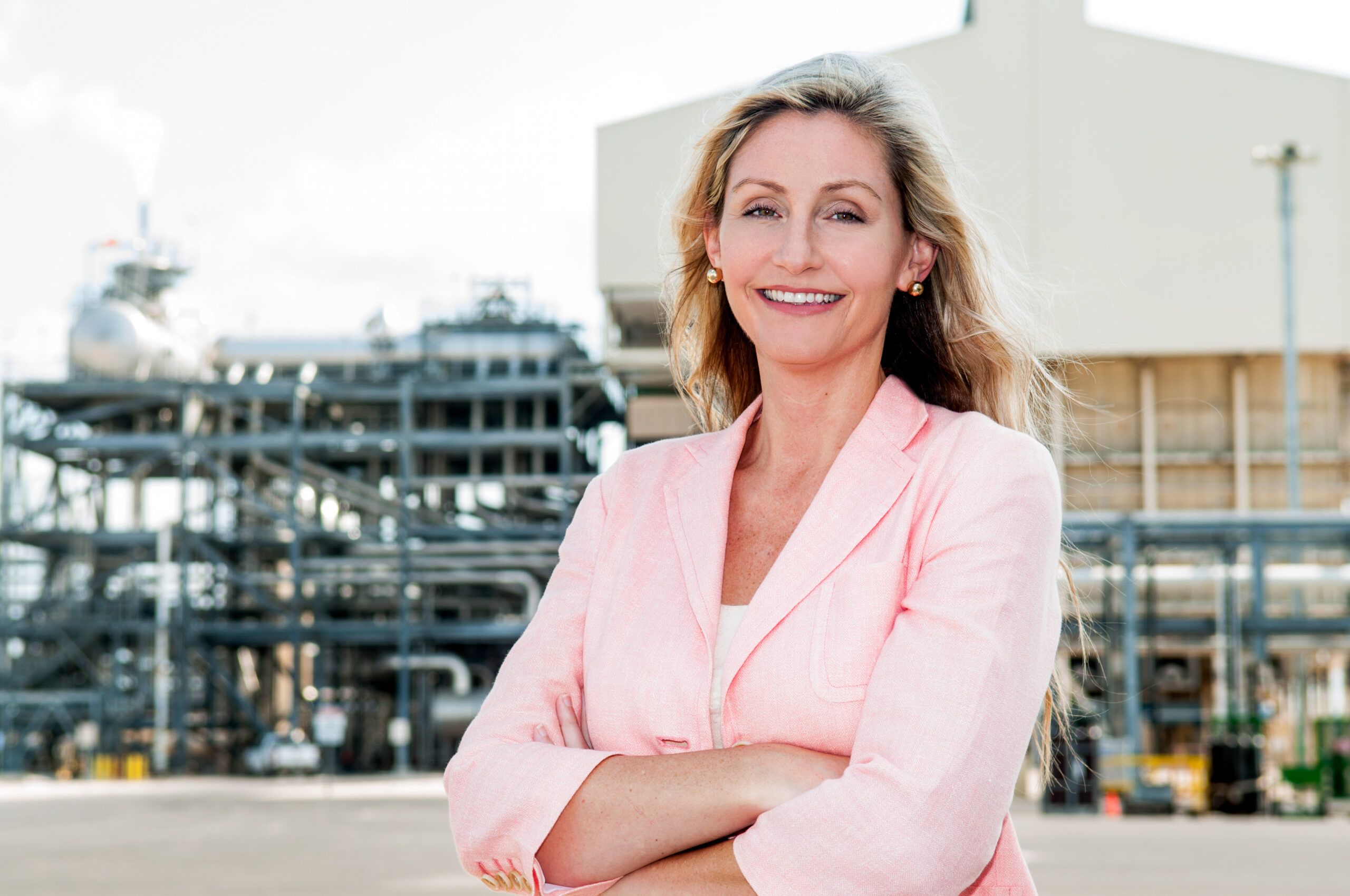
“We will continue to market all of the additional land within the RiverPlex MegaPark for other projects that are looking to locate in this area,” says AEDC President and CEO Kate MacArthur. “With each project that we add, we can continue to expand the infrastructure, which is really going to help that entire area.”
The mega site already includes Hyundai-POSCO Louisiana Steel’s planned $5.8 billion facility, CF Industries’ roughly $4 billion low-carbon ammonia project and Linde’s more than $400 million air separation unit. Another proposed clean hydrogen project from Ascension Clean Energy remains in the due diligence phase and is expected to make a final investment decision by year’s end.
Clean Hydrogen Works, a project development company established in 2021 focused on energy decarbonization solutions, announced in 2022 that it was exploring plans to build a large-scale hydrogen-ammonia production and export facility in Ascension Parish.
Doing business as Ascension Clean Energy, in partnership with Denbury Carbon Solutions and Hafnia, the company estimated at the time that the proposed $7.5 billion project would create 350 new direct jobs with an estimated average annual salary of $73,412 by 2030.
“They’ve been going through their permitting processes and kind of their site evaluations, and so they’re going to make a decision by the end of this year,” MacArthur says. “They went in and made their feasibility announcement early, where they said if all goes well, this is the location that we’re choosing, but they just have to get through their process before they can commit.”
She estimates between 7,000 and 13,000 acres remain available within the park, depending on the outcome of ongoing site evaluations and land options. Because the property is owned by multiple landowners and project sizes vary significantly, she says it is tough to estimate how many additional companies the site could ultimately accommodate.
Rather than targeting a single industry, AEDC is prioritizing companies that complement Ascension’s existing manufacturing base.
“Our main focus is attracting complementary industries, so ones that kind of fit into our existing framework,” MacArthur says. “They may be customers of other companies in this region or have some kind of synergy with them.”
That includes advanced manufacturing, specialty chemicals, hydrogen and emerging energy technologies, as well as rare materials processing.
MacArthur says the site’s biggest competitive advantage is its scale. “There aren’t very many mega parks,” she says. “If you’re looking for a park that actually has infrastructure, there really are not that many.”
Its location along the Mississippi River also provides access that few competing sites can match for large-scale industrial projects requiring water transportation.
Much of the next decade will center on infrastructure.
The first segment of the Energy Transition Parkway is under construction and expected to be completed by December. Additional roadway segments remain in the design, engineering, and permitting phases, while the Port of South Louisiana is planning new dock facilities and rail infrastructure to serve the broader industrial corridor.
MacArthur says expanded road capacity remains the parish’s highest infrastructure priority, followed by improved river shipping assets and utility capacity.
“I think infrastructure plays the largest role in a site selection process, either because it exists or because it can exist in the future.” MacArthur says. “It’s always one of the first requirements whenever we get a request for information.”
Beyond the multibillion-dollar projects themselves, MacArthur says the long-term vision includes smaller industrial parks where suppliers and service companies can locate close to major manufacturers.
She expects demand for those sites to grow once Hyundai and CF Industries begin operations.
“I would love to see a landowner take a section of property and work to create that,” she says. “We do have a lot of interest from smaller companies that would be looking for something like that.”
The economic impact, she says, extends well beyond the industrial facilities themselves.
CF Industries’ $2 billion expansion in Donaldsonville roughly a decade ago generated enough tax revenue to fund three freshman academies for Ascension Parish schools. Projects of the scale planned at RiverPlex create ripple effects throughout the regional economy by generating work for contractors, trucking firms, suppliers and professional service providers.
“That’s really the ultimate show of why economic development is important,” she says. “It’s having the ability to continue creating more businesses that are small and midsized that will continue to invest in and employ more people.”
Looking five years ahead, MacArthur defines success as having Hyundai and CF Industries operating, key infrastructure completed and population decline on Ascension’s west bank halted.