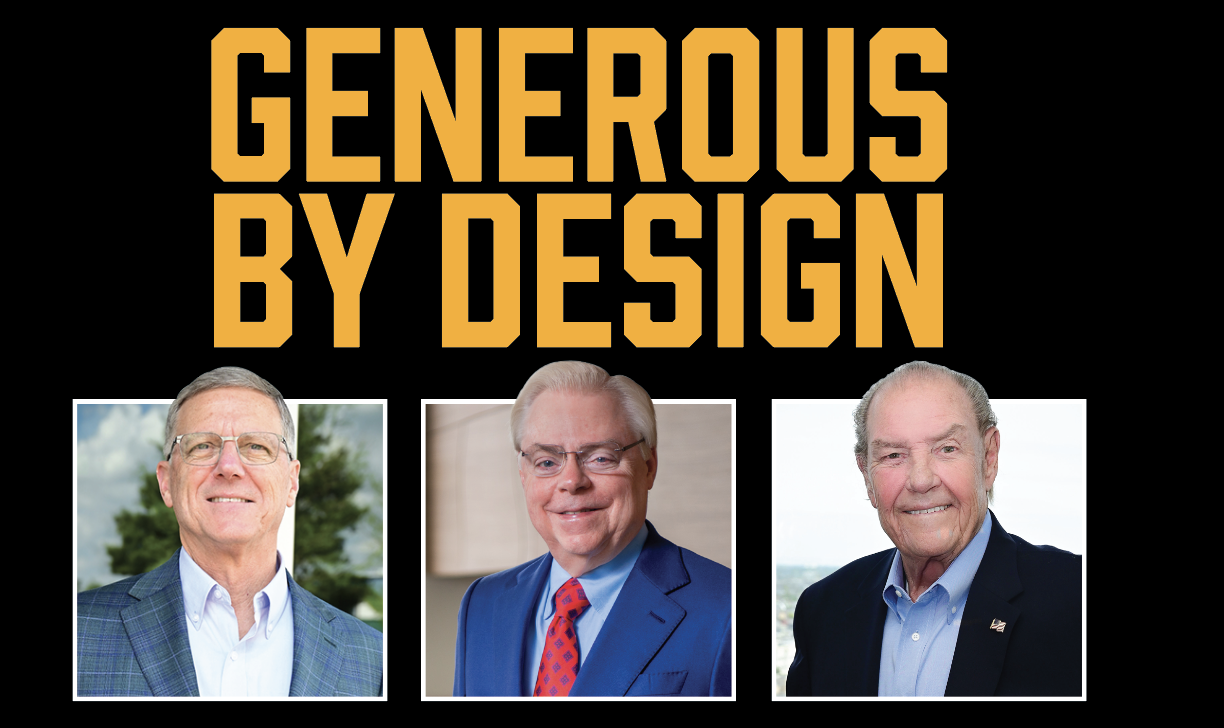
South Louisiana’s industrial economy has created more than jobs and investment—it has also produced some of the region’s most influential philanthropists. Across the region, executives who built their careers in energy, construction and maritime industries are channeling their success back into the communities and institutions that helped shape them.
Often, their giving helps strengthen the very ecosystem that sustains Louisiana’s industrial sector.
Among them is former Shell executive Greg Guidry, whose philanthropy has focused heavily on advancing engineering education at the University of Louisiana at Lafayette. Baton Rouge industrial contractor Art Favre has directed major gifts toward LSU’s construction management program and regional health care institutions, while New Orleans business leader Donald “Boysie” Bollinger has supported everything from maritime education to youth-focused nonprofits and cultural institutions across the region.
The stories that follow explore what motivates these three leaders to give, how their philanthropic priorities have evolved over time and why many see charitable investment as a natural extension of the industries that built their success.
Greg Guidry comes to a stark realization
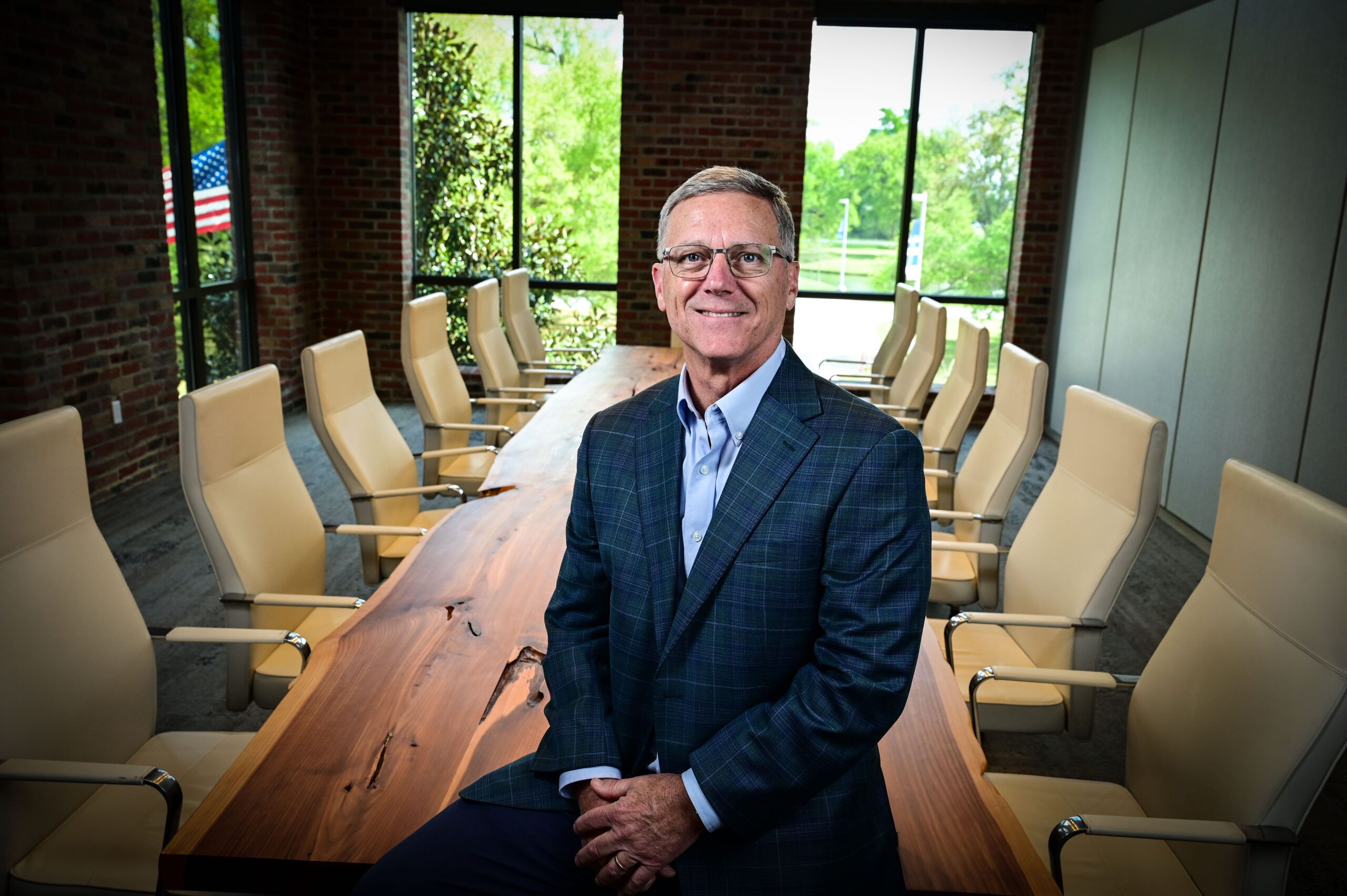
As Greg Guidry’s income was getting slammed with a nearly 65% tax rate as he worked for Shell in Europe, he began to appreciate one very notable—and stark—contrast between the U.S. and most other countries.
“Outside of this country, there’s not a lot of charitable giving because that’s not their model,” Guidry says. “Instead, those governments do the job for them by providing free health care, free education, subsidized housing etc., and in turn assess very high tax rates. Our country’s ‘true capitalism’ model literally requires charitable giving for it to be sustainable. So for me, it’s an obligation, not a choice.”
Since retiring from Shell in 2018, Guidry has funneled much of his time and money into his alma mater, the University of Louisiana at Lafayette. In November, the Abbeville native and his wife, Alexis, donated $1.6 million to the university with the hope of transforming the College of Engineering.
The investment is being used, in part, to establish the Greg Guidry Energy Systems Lab, a new facility in mechanical engineering designed to provide students with hands-on technical training. Additionally, the money will go toward the Engineering Innovation Endowed Chair, aimed at attracting and retaining world-class faculty, and the Engineering Center of Excellence Fund, intended to bridge the gap between academic learning and real-world industrial demands.
The Center of Excellence will eventually reside within a new $55 million Engineering Student-Centered Collaborative Building, currently under construction and scheduled for completion later this year. The center intends to go beyond classical skills building. “It focuses more on critical thinking, on communication and teamwork,” Guidry says, “as well as community service and on study abroad to enhance a global mindset.”
Guidry, who currently chairs the College of Engineering Dean’s Advisory Council, has been “blown away” by the growth in the College of Engineering in terms of research funding, enrollment and profile. “ULL punches above its weight,” he says. “The cost is reasonable and you learn more than just the classical fundamentals of engineering.”
Soon after graduating from the university in 1982, he found himself competing against “Ivy Leaguers” and graduates of some of the best universities in the world. “It wasn’t purely academics that enabled me to succeed,” he says. “It went way beyond that in terms of leadership capability, and I very much credit my experience there.”
Guidry, therefore, views philanthropy as a return on investment. He cites a study by Lightcast, a global leader in labor market analytics, which estimates that every $1 invested in ULL results in $7 of incremental income for the state of Louisiana. “I have a lot of options in terms of philanthropy,” he says, “but this gives me the ability to actually bring some of the things I learned while in industry to this campus.”
Art Favre strives to be impactful
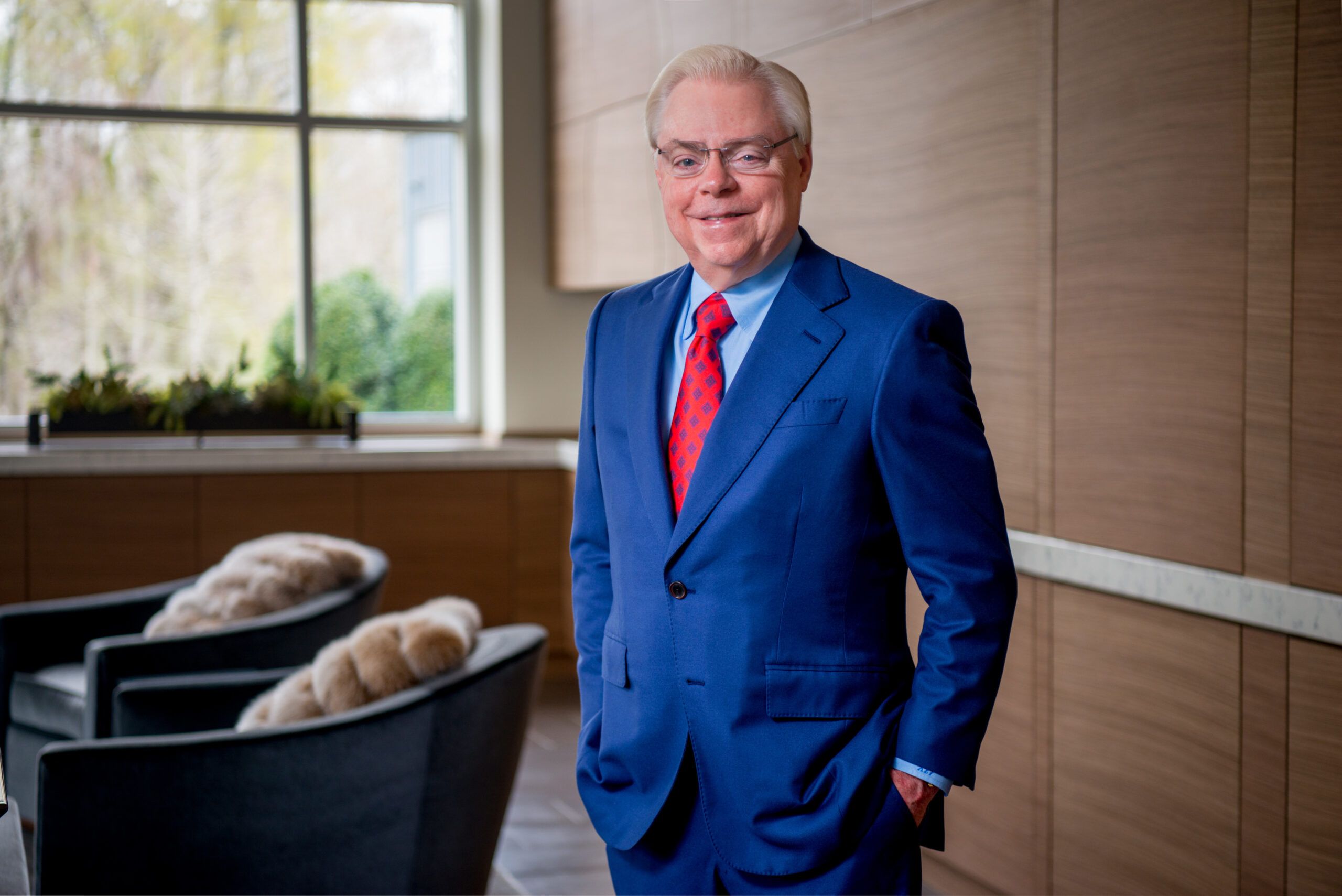
Baton Rouge-based industrial contractor Performance Contractors has experienced exponential growth in the years since its founding in 1979. Over that time, founder and owner Art Favre began to realize that he had an opportunity that most others did not: The ability to make consequential life-changing donations that impacted the lives of his employees, the construction industry and community.
“I feel I’ve become more mature about my giving,” Favre says. “There are a lot of people who can give $100 here and $100 there, but there aren’t a lot of people who can give seven figures toward something that’s going to change the dynamic of the community and touch many people.”
Favre has become a notable philanthropist in the Baton Rouge area, with higher education being a particular passion. In 2024, he presented a $15 million gift to LSU for the design and construction of a new $107 million standalone Construction & Advanced Manufacturing Building, enabling work on the project to begin earlier than planned. The building is scheduled to break ground in 2027.
It has been a deeply personal endeavor. Favre, MMR Group President and CEO James “Pepper” Rutland, ISC co-founder Eddie Rispone and a handful of others were among LSU’s first graduates in construction management in the early 1970s. Today, it is the largest single department in the College of Engineering, with nearly 2,000 enrolled.
“It’s dear to all of our hearts because we’ve been very blessed over the years to go from startup companies to where we are today,” Favre says. “All of us have had a lot of success.”
He also leads the fundraising effort for the project, having helped secure some $45 million of the remaining $60 million needed in private donations.
“This is a project that I and others in the construction industry have been wanting for about 30 years,” Favre says. “When we first started talking, we probably weren’t ready to get our own school to be honest. We weren’t a big enough group to do it, but we always knew that we were going to grow into it. We just planted the seed.”
Favre’s other big passions are Pennington Biomedical Research Center and Mary Bird Perkins Cancer Center. About three years ago, he made a sizeable donation to Mary Bird Perkins that enabled the facility to purchase a new adaptive radiation therapy machine—a “gamechanger” in regional cancer treatment. Today, it remains the only machine of its type in the Gulf South.
Favre credits his Christian upbringing for his desire to help the less fortunate. He didn’t grow up surrounded by wealth, and his parents worked hard their entire lives to make ends meet.
“We didn’t have a lot, but we got by,” he says. “One thing they instilled in us—that we had to go to college and get a good education. Neither one of them had a college education, and they saw it as a ticket to a better way of life.
“Then, when I got out of college and started having some success, it was pretty easy to put two and two together,” he adds. “I had been fortunate in my success, so it felt only natural to give those same opportunities to others.”
Donald ‘Boysie’ Bollinger learns as he gives
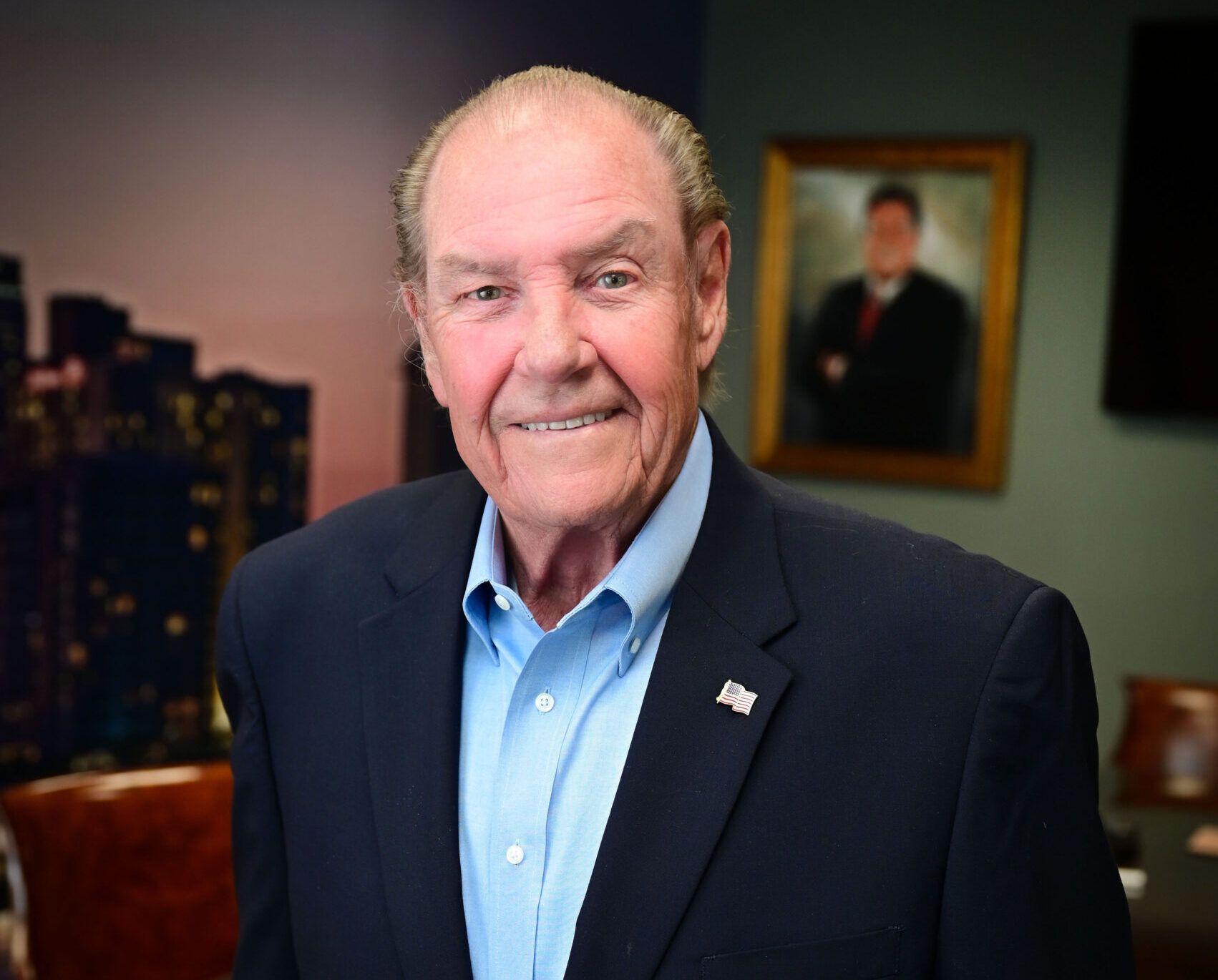
Donald “Boysie” Bollinger rarely turns down a meeting with someone needing help.
The chairman and CEO of Bollinger Enterprises in New Orleans wants to change lives, so he intentionally seeks out low-income facilities that can provide opportunities for better community outcomes. He has a particular soft spot for schools and programs, and has given extensively to institutions such as Anna’s Place NOLA, Good Shepherd School and the Youth Empowerment Project, all of which cater to at-risk children.
After selling Bollinger Shipyards Inc. in 2014, the Bollinger family forged Bollinger Enterprises to handle their private and public equity investments, along with a “fair amount” of philanthropy.
“My sisters and I observed our parents growing up, and they were very much the philanthropists,” Bollinger says. “My dad always taught us all that we had to give back. To those who are given much, much is expected. I think we all absorbed that. All three of us have been generous with funds to support causes that we believe in.”
One of his biggest and earliest passions was The National WWII Museum. Shortly after selling his business, Bollinger donated $20 million to the museum—at the time the largest private gift in its history—and has served on the museum’s board of directors since 1996.
Bollinger also champions the industry that gave him his livelihood. In 2021, he donated $3 million to the University of New Orleans School of Naval Architecture and Marine Engineering, which his father and uncle helped create in the 1970s.
The school was renamed the Boysie Bollinger School of Naval Architecture and Marine Engineering in recognition of the gift.
“Over the years, we’ve hired a lot of the graduates from that program,” he says. “It deserves our support.”
The Audubon Nature Institute is another passion. In 2016, Bollinger gave $5 million to fund a new African lion habitat—the largest single gift in the zoo’s history—and he recently committed to another $2 million.
Not surprisingly, many causes and institutions in New Orleans have learned to seek Bollinger out whenever there’s a need. He’s usually willing to listen and will typically visit a facility to see how they operate.
“I get a lot of inquiries and take almost every meeting,” he says. “I like to learn, and every meeting teaches me something that’s going on in this community. I don’t support everything, obviously, but sometimes I support things I didn’t think I was going to support, and sometimes I don’t support things that I thought I would support.
“Learning about them is part of the process.”