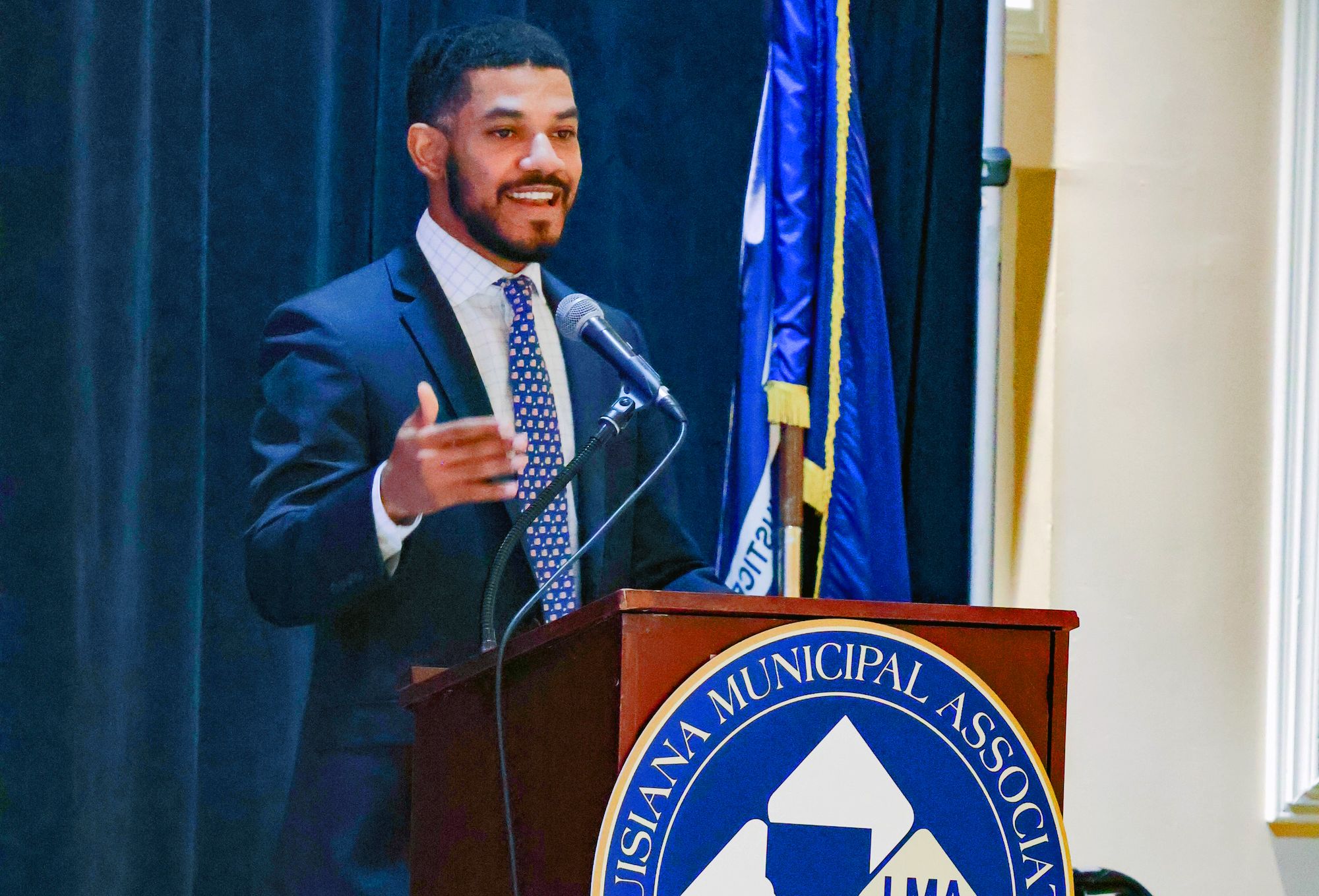
Since his appointment as secretary in September, Dustin Davidson has busily gone about the task of transforming the Department of Conservation and Energy by removing layers of unnecessary bureaucracy and beefing up key offices.
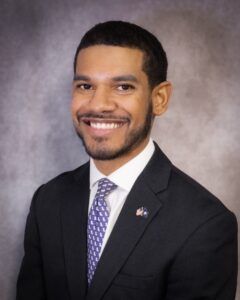
Many Louisiana residents still mistakenly refer to his department as DNR, the shortened version of the Department of Natural Resources. That was its moniker for decades before it changed to the Department of Energy and Natural Resources in early 2024, then again to the Department of C&E last fall.
The most recent iteration is more than simply a name change. Davidson is overseeing a major modernization of the agency, which now includes centralized offices for permitting, enforcement and an expanded Office of Energy.
Before his state-level roles, Davidson was the director of government relations at Waterways Council Inc., where he secured federal funding for critical Louisiana infrastructure, including lock and dam modernizations.
He spent several years on Capitol Hill, serving as a professional staff member for the House Select Committee on the Climate Crisis and as a legislative assistant to Congressman Garret Graves. In those roles, he focused on energy revenue-sharing, ecosystem protection and the Water Resources Development Act. He has also been a key advocate for carbon sequestration and updated regulatory frameworks to balance economic growth with environmental protection.
10/12 Industry Report recently posed these questions to Davidson to discuss the numerous changes at the department over the last six months, as well as his future aspirations.
Why the most recent name change?
Our focus is on conserving the quantity of our resources. We want to make sure that we produce them responsibly and conserve them for future generations so that Louisiana can continue to be an energy provider, not only to the nation but the world. When we boil it down, those are the two main missions of the department. We felt that it was most important to home in on that conservation and energy role and how they work hand in hand.
What specific organizational changes are helping you achieve that goal?
The biggest change was getting rid of the role of commissioner of conservation and removing the separation between what was previously the Department of Energy and Natural Resources and the Department of Conservation.
They were two separate offices in the same building, effectively on the same payroll, but performing different functions and not really communicating with each other.
If you were pursuing oil and gas development in the coastal area, you would go to Conservation to get your oil and gas permit and then you’d have to go to the Office of Coastal Management to get your coastal use permit. Same building, two different permits, two different departments, and it made no sense.
There were just layers and layers of bureaucracy that we felt weren’t necessary. Through the reorganization, we identified how we could put all our permitting aspects into one office, known as the Permitting Compliance Office.
Additionally, we’re focusing all our enforcement mechanisms into one Office of Enforcement, and we also handle the leasing of state lands for energy development through the State Mineral and Energy Board. Everything is becoming a one-stop shop.
Any other changes that would be of interest to the industrial sector?
We also expanded our Office of Energy. If you look at the federal Department of Energy, they don’t really make regulations or enforce laws. They operate more like a think tank, and in doing that they allow for new technologies, new developments and new projects to get off the ground through grant funding, or through the collection of data and using that data to better inform decisions.
We want to do the same thing here, where we have all our state data as it relates to energy development or power generation so that it can be used to drive better decisions. If the City of New Orleans wants to produce more solar power, for example, we want to be able to have that information here to provide to the city of New Orleans and tell them what makes sense and what doesn’t.
Tell us a little more about the process.
Before I came on board, the Office of Energy was receiving about a billion dollars in federal grants from the Infrastructure Bill and Inflation Reduction Act, but the office was not set up to handle grants of that size.
Previously, the office had about six staffers handling about a billion dollars’ worth of grants. We expanded that from six to 28. We also located our GIS department there. We have an entire team solely dedicated to data and an entire team solely dedicated to policy and rules.
Currently, we are going through some of these grant programs that have been funded and creating pilot projects throughout the state. Our website has all the information related to applying for those projects, and Amanda McClinton, executive director of that office, and her staff are getting the message out that we have this money and we want to use it for good projects.