
It has been a bipolar year for Louisiana’s industrial complex. The elation over a tsunami of new investments, lower tax rates and softening regulations has been dampened in many ways by ever-changing tariffs, consistently high interest rates and across-the-board inflation.
That’s causing the price tags of many of the record-breaking $61 billion in announced industrial projects—as well as the $100 billion in active investments—to skyrocket and creating just as many questions as answers.
These conflicting economic realities are set against a backdrop of increasing ambiguity and uncertainty in everything from carbon capture and renewable energy to infrastructure and environmental regulation. 10/12 Industry Report takes a deep dive into several key issues that industry is facing to find out what leaders are saying and how the industrial sector is responding.

Tariffs are making Louisiana’s biggest deals too risky
Cost instability brought about by fluctuating tariffs and persistent inflation threw a sizeable monkey wrench into many large investments over the last year.
“Uncertainty is the bane of economic growth,” says Loren Scott, an economist with Loren C. Scott & Associates in Baton Rouge. “The Trump administration lowered the tax rates and lowered regulations, and that’s all very good for economic growth … but then they imposed tariffs, which are very bad for economic growth. The policies just don’t match.”
In some cases, it has prompted local leaders to act. In February, Gov. Jeff Landry lobbied the Trump administration for targeted tariff relief when it became obvious that the steel tariff posed a significant threat to south Louisiana’s biggest project—Hyundai Steel’s planned $5.8 billion facility in Ascension Parish.
Scott compares tariffs to an anchor being dragged by a ship. “The Louisiana LNG project went from $16 billion to $17.2 billion just because of the steel and aluminum tariffs,” he adds. “At some point, an owner’s going to say this is impacting the rate of return too much and they’ll pull the plug.”
Fortunately, tariffs are a “one-time hit,” whereas inflation poses a more persistent threat—not only inflating input costs (lumber, steel, aluminum and copper) but also raising interest rates.
“Many of these projects are financed,” he adds. “They’re getting loans to get these projects going. In effect, it’s yet another factor that can impact the rate of return on a project. Inflation remaining high causes the interest rates to remain high.”
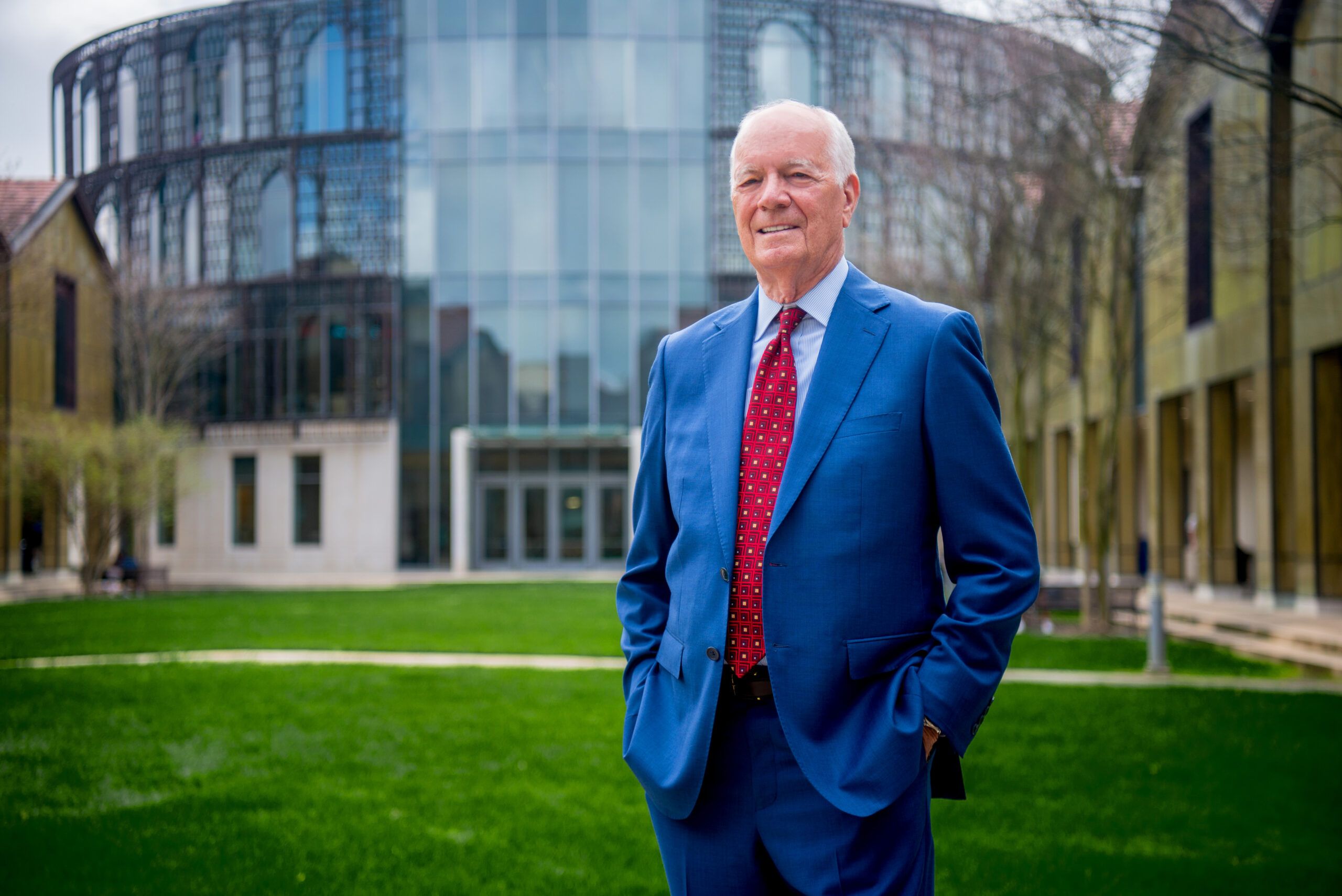
Forecasts don’t predict much movement over the next 12 months either. “That’s not good for industry,” Scott says. “The Federal Reserve can lower the rates all they want; that’s not going to do much. The market dictates what the rate should be.”
Ken Simonson, chief economist with the Associated General Contractors of America, says the impacts of the tariffs have been widespread and significant. In a recent analysis, he found that aluminum went up by some 30% and steel products by 17% in 2025. “This is a direct result of the tariffs,” Simonson says. The steel tariffs were not impacted by a recent U.S. Supreme Court decision, as it specifically addressed and invalidated tariffs imposed under the International Emergency Economic Powers Act.
Sage Policy Group’s Anirban Basu, a Baltimore-based economist consultant for Associated Builders and Contractors, says the tariffs have done little to accelerate the movement of production to the U.S., as they were partly intended to do.
“It takes years for a manufacturer to shift their production here, and by the time they do that the current administration won’t be in power anymore,” Basu says. “That means they could potentially spend a lot of money moving into the U.S., then suddenly become a high-cost producer paying higher wages with stiffer environmental regulations (should the next administration ramp up the regulatory environment). In turn, that would enable their competitors to undercut them. It’s just too risky for them.”

Louisiana’s carbon capture boom stalled before it started
The granting of regulatory primacy over Class VI well permits to Louisiana in 2025 seemed to green-light a host of carbon sequestration projects.
However, public and bipartisan legislative opposition has surged, and Gov. Landry subsequently imposed a moratorium on new permits, capping the number of permits at the Department of Energy and Natural Resources, or DENR, at 31.
At press time, only two projects had been approved—the Hackberry Carbon Sequestion LLC site in Cameron project and the Strategic Biofuels site in Caldwell Parish.
Public perception has been a growing problem, and several bills introduced in the current legislative session could hamper the ability of new CCS projects to move forward.
Unfortunately, that tilts the playing field in favor of Texas—which was also granted primacy—for landing billions of dollars in carbon capture and industrial carbonization investments. “Texas is sprinting to get permits approved,” says David Cresson, president and CEO of the Louisiana Chemistry Association. “If we’re not careful, we’ll be looking up at Texas again and that’s not where we want to be.”
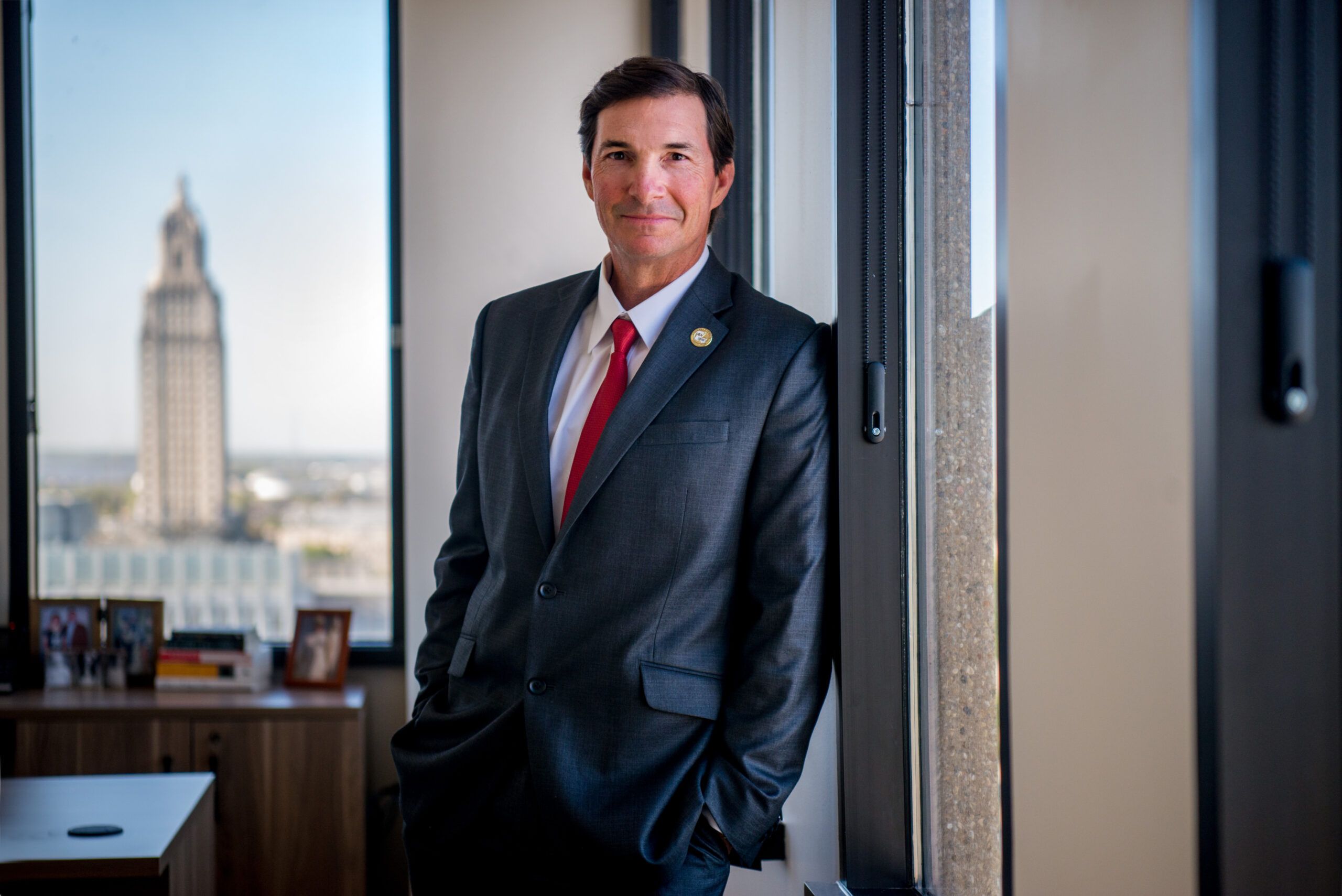
Dustin Davidson, secretary of DENR, says there remain some 29 projects under review by a 21-person team in his department’s engineering division.
“We’ve tried to focus on prioritizing our review based on how well an application is put together from a technical standpoint,” Davidson says. “We’re also looking at the economic development side of it, working with Louisiana Economic Development to determine the ad valorum tax that it would generate, how many jobs it would generate, etc.”
Carbon capture remains profitable from an economics standpoint, thanks to the continuation of the 45Q credit in the “One Big Beautiful Bill,” albeit with modifications. “The Inflation Reduction Act under the prior administration increased the 45Q tax credit to $85 per ton of carbon (captured and stored), with a lower tax credit for enhanced oil recovery (a process where techniques are used to extract more oil from a reservoir),” says Greg Upton, executive director of the LSU Center for Energy Studies. “More recently, the One Big Beautiful Bill Act also increased the tax credit for enhanced oil recovery.”

Upton’s office recently created a dashboard to track current Class VI well applications and their review status. His team is also conducting an economic impact analysis, financed by ExxonMobil, on the potential of carbon capture/sequestration statewide—partly to gauge the effectiveness of CCS at reducing emissions.
“Our technical team is looking at all facilities that are currently operating and have economically capturable emissions,” he says. “We’ll determine how much carbon they could all potentially produce, in total, then determine the amount of carbon that could be sequestered with all the permits that have been submitted so … just to put it into perspective.
“What you find out is that there is so much sequestration potential in the state relative to the plausible emissions that are out there.”

The regulatory rollercoaster
reshaping Louisiana’s industrial future
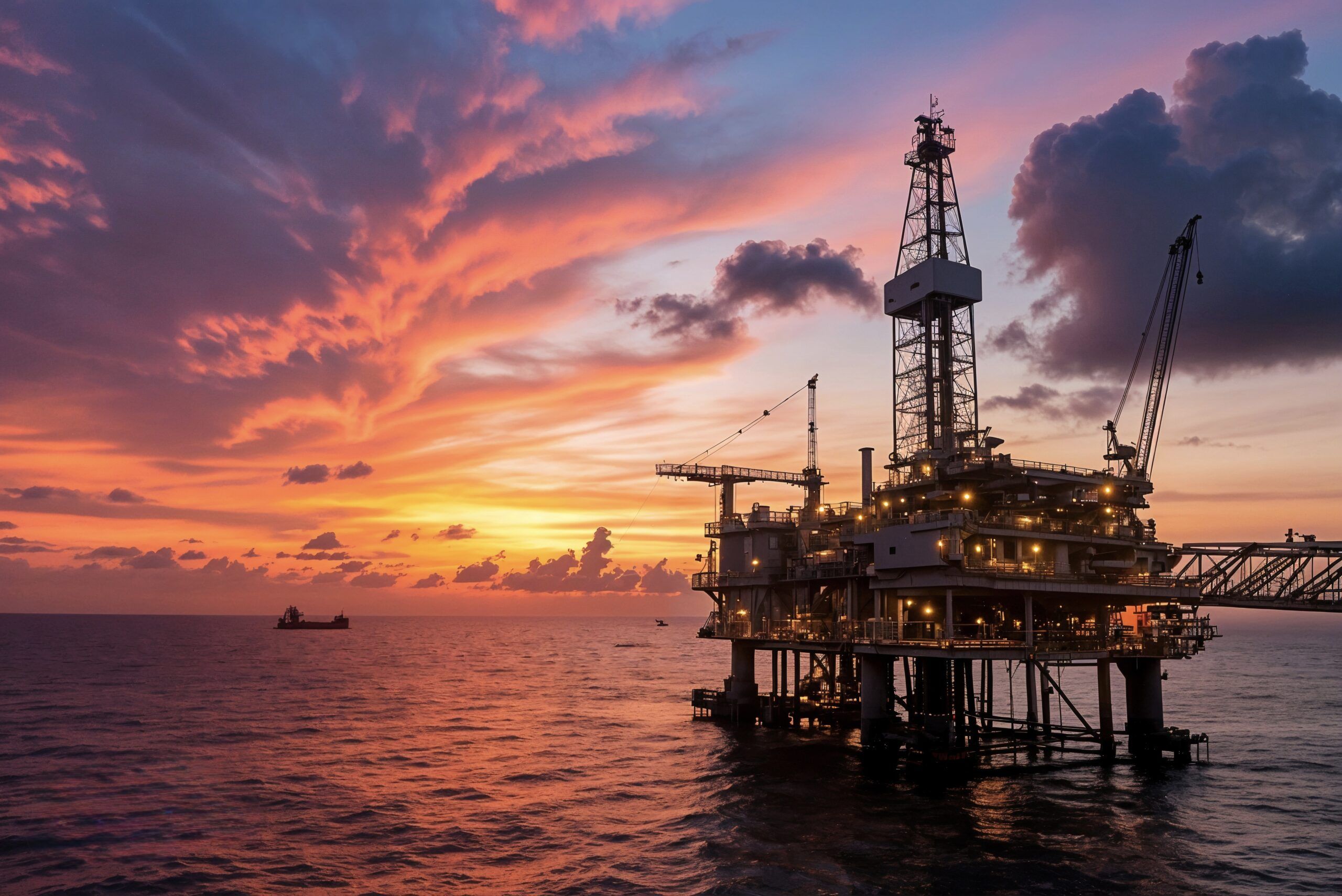
Shifting environmental regulations driven by federal rollbacks and new state-level initiatives are reshaping Louisiana’s industrial, oil and gas markets. Most significantly, perhaps, has been a statewide reduction in severance taxes for new oil wells, and the re-opening of the Gulf to federal offshore lease sales.
In 2025, the state lowered the severance tax rate (HB 600) from 12.5% to 6.5% for new oil wells in a bold move to improve Louisiana’s competitiveness with neighboring Texas.
“Before, it wasn’t a hard decision,” says Mike Moncla, president of the Louisiana Oil and Gas Association. “You could either drill in Texas and pay only 4.6% or cross the border and pay 12.5% in Louisiana. Lowering the severance rate makes us more competitive, so we were very pleased to get that done. We wish it could have been across the board for all production (not just new wells), but the fiscal note for the state would have been astronomical.”
The restart of offshore lease sales—previously halted by the Biden administration—has further fueled optimism in the oil and gas sector. The “One Big Beautiful Bill” scheduled the first in-person lease sale in New Orleans in December, with a second in March.
Over the long term, though, the federal government’s dramatic shifts in the handling of offshore oil will remain a threat, given that the next administration could undo much of what has been done.
“People want certainty in their investments, and offshore is a big investment,” Moncla says. “Look at Venezuela right now. It sounds great for another three years, but to gear up in Venezuela takes three years. Companies have already lost billions over there.”
And while two offshore lease sales are scheduled every year for the next 15 years “another president could come in and change all of that,” he adds. “We’re so divided as a country, and no one is changing their mind. It’s sad for our industry.”
In the petrochemical sector, the decision by the Trump Administration to rescind the Endangerment Finding of 2009—the legal basis for EPA protections limiting and regulating greenhouse gas pollutants—essentially dismantled the agency’s authority to set emission standards for industrial sources, including oil and gas facilities and chemical plants.
But regardless of the decision, Louisiana’s petrochemical complex won’t likely change course.
“Many of our companies are American owned but many are not, and in general our companies are going to respond to the demands of the global market,” says David Cresson, president and CEO of the Louisiana Chemistry Association and the Louisiana Chemistry Industrial Alliance.
“Regardless of what U.S. regulations might be, they’re going to build products that the global market demands. Our companies hold themselves to the highest standards because they want to be good stewards of the resources while also providing products that the global market wants.”
As with the offshore oil and gas market, flipflopping regulations breeds uncertainty in the petrochemical space and makes it difficult for owners to invest and plan.
“Our members are spending capital to meet certain regulatory requirements,” Cresson says, “and if they’re spending capital to reach a requirement that won’t be there in a year, how do you decide whether you go ahead and spend that capital or not?
“It’s difficult when the goal posts move. If you attract companies based on one set of rules, and then once they’re committed you decide you’re going to change those rules that creates issues.”

Louisiana’s clean energy future hangs in the balance
While federal policy changes over the past year have placed an increased emphasis on traditional fossil fuels, economists say clean energy will remain a priority due to global market demands.
“These things aren’t going away,” says Mark Zappi, executive director of the Energy Institute of Louisiana at University of Louisiana at Lafayette. “Companies should never build their business plans around presidential policy because it can be quite dramatic from one election to another, as the last two election cycles have proven.”
It boils down to economics. The solar energy market, for example, continues to pursue utility scale projects, since it remains cost-competitive with natural gas. And while there continues to be energy storage issues, the technology is maturing. “It’s still very viable,” Zappi adds. “It’s on a steady course; not quite on the same trajectory but it is moving forward.”
Public resistance to solar has been the biggest surprise, culminating in the passage of HB 459 in 2025, which sets state-level solar siting standards for projects that are 75 acres or larger beginning in 2026. The law mandates that solar facilities must have a 300-foot setback from the property line of adjacent residential homes (although parishes can request to use their own standards).
“It’s one of the larger distances that you’ll see in the country,” Zappi says.
Blue hydrogen projects are also advancing. Hyundai Steel’s proposed $5.8 billion steel mill in Ascension Parish is designed as a “hydrogen-integrated” facility that will eventually rely on blue hydrogen to produce low-carbon steel. Carbon capture and sequestration are essential to the process.
“A lot of these new installations are tied to blue hydrogen,” Zappi says, “but it all ties back to carbon capture and sequestration. If we don’t have CCS, then we don’t have those projects.”
Meanwhile, H2theFuture—a GNO Inc.-led initiative to establish a sustainable clean hydrogen cluster—has notched some impressive wins since its launching in late 2022.
Josh Tatum, vice president of retention and growth at GNO Inc., says H2theFuture’s five workstreams have served as a springboard for numerous projects, facilitating the creation of Future Use of Energy in Louisiana, or FUEL, at LSU and propping up tech hubs such as NEXUS innovation in New Orleans and Newlab New Orleans.
And in 2024, officials broke ground on the Louisiana Future Energy Center the University of New Orleans, which will serve as H2theFuture’s physical headquarters in fall 2026.
“Through our workforce development work stream, some 2,600 students have already benefitted from training at Delgado Community College, Nunez Community College, Northshore Technical Community College … and others in the LCTCS system,” Tatum says.
H2the Future also facilitated the development of a green hydrogen test bed at the University of Louisiana at Lafayette, which will provide industry with a location to test green hydrogen products at an industrial pilot scale. Additionally, the LSU Petroleum Engineering Research, Training & Testing Lab at LSU commonly known as known as PERTT is set to begin drilling a CO2-capable research well this spring, with the help of H2theFuture funding.
“That’s bringing together major corporate partners, and will give students, researchers and regulators the ability to study CO2 in all its phases,” Tatum notes.
Of course, offshore wind hasn’t fared nearly as well as others in the clean energy space. It was slammed hard by a total and complete reversal in federal support, bringing many projects to a screeching halt as they were no longer financially viable. RWE Offshore U.S. Gulf LLC, the sole award recipient of the first-ever offshore wind lease sale in 2023, has completely paused its offshore wind activities in the U.S., including its project off the coast of Louisiana, due to regulatory uncertainty.
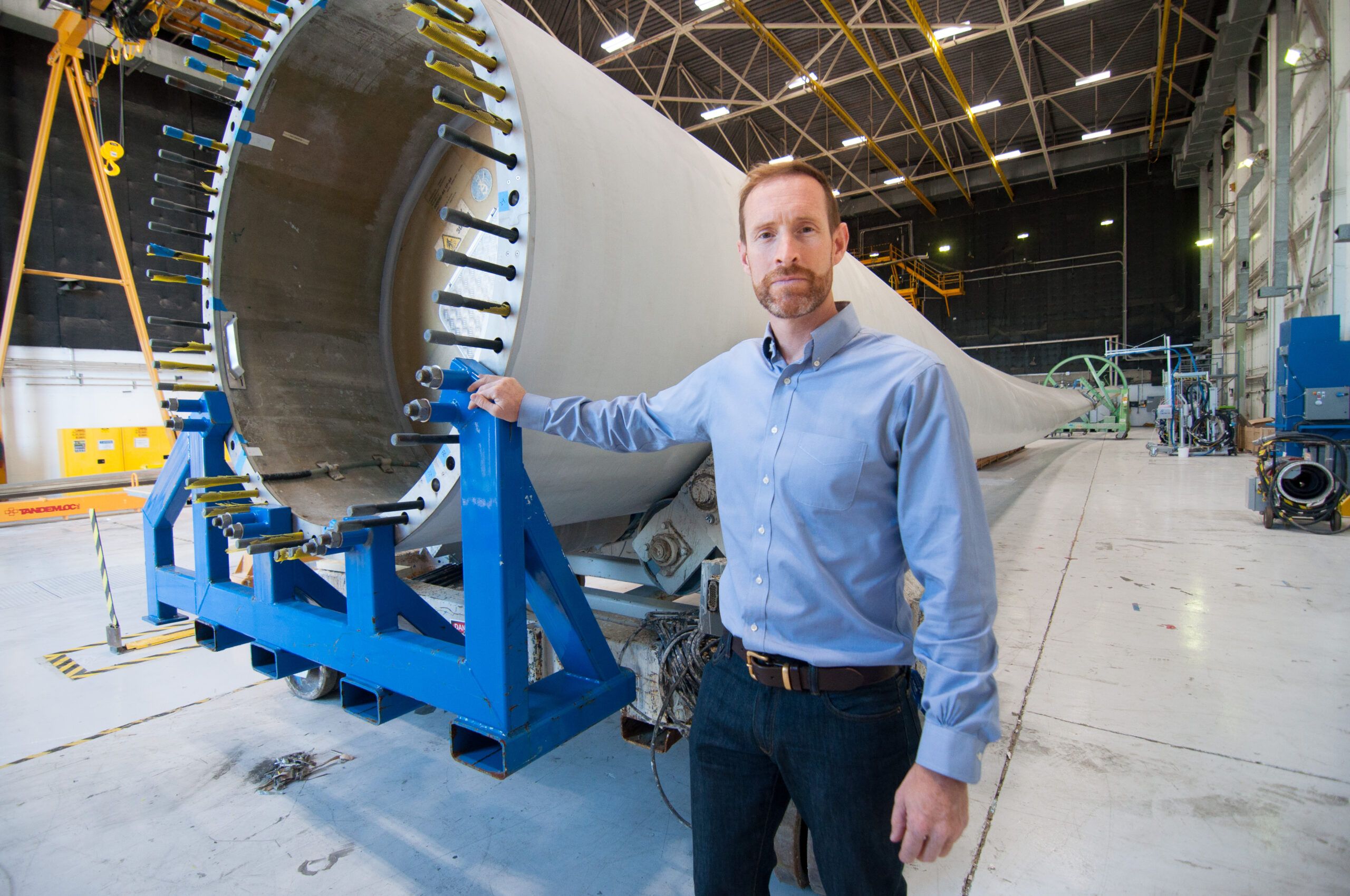
James Martin, CEO of Gulf Wind Technology in New Orleans, says he’s also delayed the installation of a much-heralded test wind turbine at Port Fourchon. The turbine was meant to demonstrate and test their rotor and blade technology for potential use in an offshore application, as well as provide some power to the port.
The demand for GWT’s “low wind speed” blades (primarily for southern waters) was simply no longer there.
“The demand is now in other regions,” Martin says, “and we’ve moved our team to working on turbines that are currently spinning today. There are about 100,000 onshore wind turbines in the U.S. that can benefit from the technologies that we’ve developed for the Gulf.”

Louisiana’s transportation backlog finally has a game plan
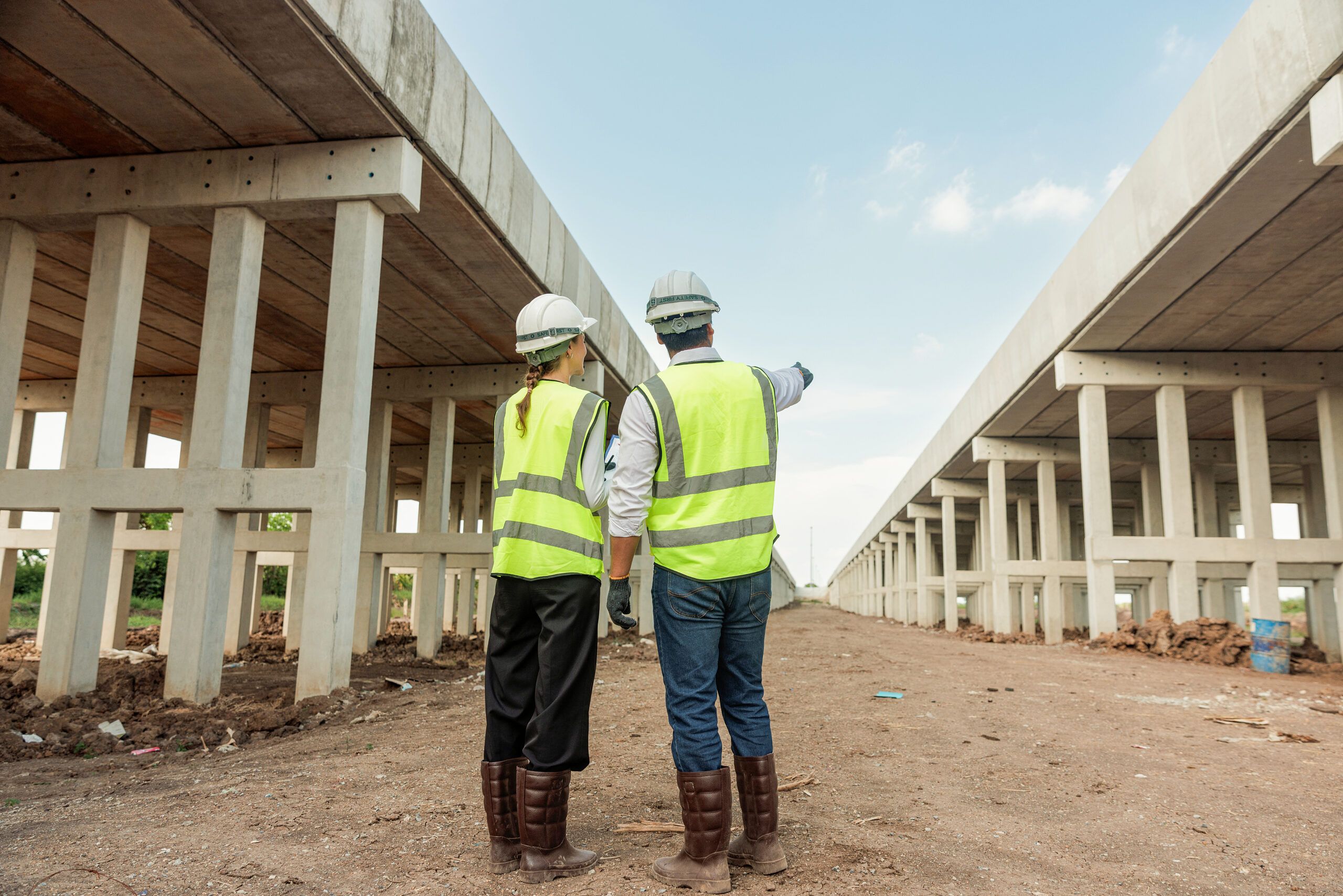
Louisiana’s highways and byways are vital to the industrial sector, but budget shortfalls and aging infrastructure have long impeded the ability of many companies to operate efficiently.
Hoping to change that dynamic, Glenn Ledet, secretary of the Louisiana Department of Transportation and Development, began transforming DOTD operations in 2025 to improve project delivery times and departmental efficiency.
“We’re looking at our processes to find innovations and tools that can help us achieve those goals, while learning from the successes of other states,” Ledet says.
The goal is to make meaningful progress on the state’s persistent backload of projects, many of which are of particular significance to industry.
Several mega projects, in fact, are currently in various stages of planning, design and construction:
Mississippi River Bridge, South Baton Rouge
DOTD has narrowed the possible locations for the estimated $2 billion Mississippi River bridge south of Baton Rouge down to three and is awaiting the completion of a National Environmental Policy Act review before naming the final location and developing a project timeline.
Once the environmental assessment is complete, typically a 12-month process, the agency will select the location with the least environmental impact to the region. Just how the bridge will be funded remains undetermined, although it will likely incorporate a public-private partnership. A toll is also being considered.
New I-10 Bridge, Lake Charles
The long-anticipated $2.3 billion I-10 bridge in Lake Charles, north of the existing bridge, is expected to break ground in late April. The costliest highway project in state history, the bridge will take about six years to complete. “We’re currently working on the acquisition of rights of way and property as it needs to be realigned north of the existing bridge,” Ledet says. The project will significantly alleviate traffic loads in the area once completed, a long-standing problem for industry.
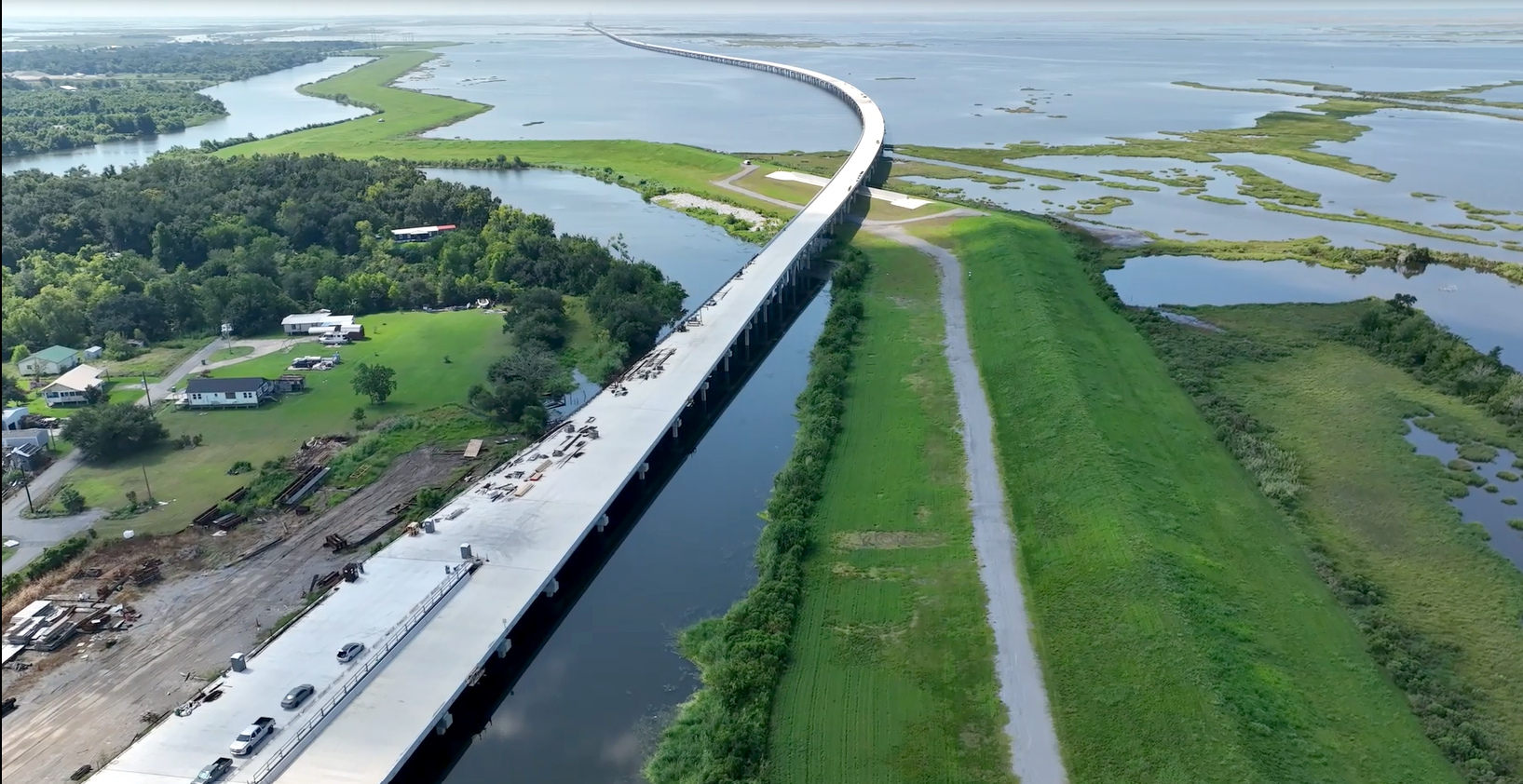
LA 1 Corridor
The $500 million, 8.3-mile stretch of elevated LA 1 between Golden Meadow and Leeville is about 70% complete, with a projected opening in fall 2027. Once completed, the much-anticipated project will provide a resilient, elevated route for the energy corridor, as traffic will be able to travel unimpeded from Golden Meadow to Port Fourchon.
St. Bernard Transportation Corridor
Estimated to cost a staggering $1 billion, this P3-funded mega project will support Port NOLA’s Louisiana International Terminal and is currently in the preliminary phases of study. “We’ve finished the pre-NEPA work and we’re moving into a comprehensive environmental review process … that’s kicking off next month,” Ledet says. The review will take about 24 months to complete.
LA1/LA 415 Connector
At nearly $400 million, the LA 1/LA 415 project in West Baton Rouge will include a new four-lane connector road stretching from LA 1 to the LA 415 interchange and span the Intracoastal Canal with a new four-lane bridge. “It will significantly relieve traffic congestion on LA 1 and I-10,” Ledet says. The project is expected to break ground in late fall or early winter 2026.
I-10 Widening in Baton Rouge
The I-10 widening project in Baton Rouge is a multiyear construction endeavor spanning from Perkins Road to the I-110 interchange and is expected to be completed in 2031. Work also includes improvements to the Perkins Road corridor, and in 2025 contractors began widening the I-10 westbound flyover at the I-110 split.
CRISIS, an industrial advocacy group and one of the early proponents of the project, is currently promoting the enhancement of Baton Rouge’s three primary corridors—the I-10 corridor expansion currently under way, Mississippi River Bridge South and the eventual development of a northern corridor to incorporate the Huey P. Long Bridge.
“You need to enhance all three corridors for the long-term success of Baton Rouge,” says Scott Kirkpatrick, executive director of the group and a lobbyist for K2 Advocacy.
“We are making sure that businesses remain engaged in the process,” he adds. “We’re also continuing to work with our legislative delegation to get the funding to complete those projects.”